
Packers’ wide receiver trio carries hidden schematic benefit that could transform Green Bay’s offense in 2026
A new personnel approach at the position could show the Packers are getting ready to counter a defensive trend around the NFL.


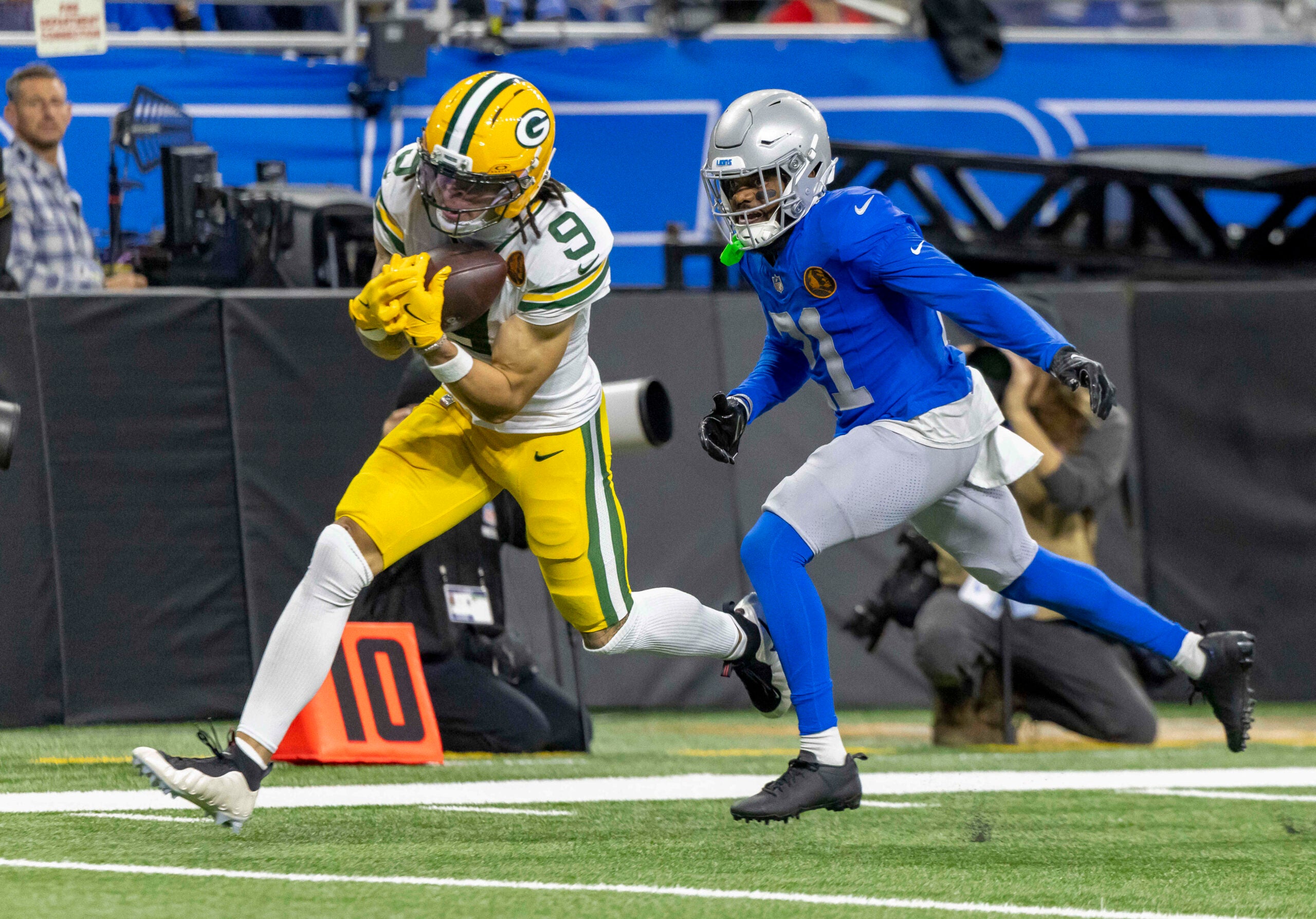
The Green Bay Packers are shifting their offensive approach at wide receiver, and the change carries a tactical advantage that goes beyond simple volume. After allowing Romeo Doubs to sign with the New England Patriots in free agency and trading Dontayvion Wicks to the Philadelphia Eagles, the Packers are betting on a starting trio of Christian Watson, Jayden Reed, and Matthew Golden to carry the biggest snap share on the roster. That decision aligns with a league-wide schematic trend that could make life significantly harder for opposing defenses.
The illusion of complexity
Robert Mays of “The Athletic Football Show” discussed this trend in a recent episode, noting that good offenses around the NFL are prioritizing not revealing to the defense what the offense plans to do. Head coach Matt LaFleur has talked extensively throughout his career about what he calls the illusion of complexity. With defenses playing more disguised coverages and varying their looks after the snap, it matters that the offense presents the same picture before the snap regardless of the play call.
This is where the Packers’ previous rotation created a problem. When Green Bay deployed specific wide receivers in specific formations, defenses could anticipate route concepts based on the type of receiver on the field. Doubs was a possession receiver, Wicks was a craftier route runner, Watson was the explosive downfield threat, Reed was a slot-only option. The personnel grouping itself telegraphed the play design to some extent.
Fewer receivers, fewer tells
By leaning on Watson, Reed, and Golden as the primary trio, the Packers remove that extra layer of information. Those three players will be asked to run a wider variety of route concepts, and their presence on the field won’t signal a specific play type the way rotating specialists did. The formation looks the same whether the play calls for a deep shot or an underneath route. That ambiguity is the hidden benefit.
The challenge, of course, is that each receiver has to play a complete route tree. Watson proved down the stretch last season that he can function as a true No. 1 in terms of route-running variety, and this is his next step: making that his full-time job. Golden is already a polished route runner, and Reed dominates the slot. Combined with tight end Tucker Kraft, who can both catch and block, the Packers have the pieces to make this work.
Snap distribution will look very different
Last season featured heavy rotation at wide receiver. Doubs led the group at 74% of snaps, but the rest of the group rotated a lot. Golden played 43%. Watson, who didn’t start playing until Week 8, logged 39%. Wicks played 38%, and Malik Heath played 20%. Reed, because of a broken collarbone that cost him 10 games, played only 16.18%. That’s five or six players sharing time, with no single receiver outside of Doubs commanding a majority of snaps.
Other teams from the same coaching tree offer a useful comparison. The Los Angeles Rams had two wide receivers above 50% of snaps last year in Puka Nacua and Davante Adams, even with Nacua missing one game and Adams missing three. The San Francisco 49ers also had two players above that threshold in Jauan Jennings and Kendrick Bourne. Those offenses lean on their top options to play significantly more, and Green Bay appears ready to follow that model.
The Packers can still vary their approach. If they increase their use of 12 personnel (two tight ends), that could reduce snap counts for a player like Reed. Role players like Savion Williams, who served as a gadget piece last year, and Skyy Moore, who can contribute on jet sweeps and end-arounds as a horizontal speed option, will still have designated roles. But when wide receivers are on the field, the starting trio will dominate the workload.
This shift fits a pattern for LaFleur. He follows schematic trends around the league and finds ways to apply them to the Packers’ roster. If Watson, Reed, and Golden can handle the expanded responsibilities, the Packers’ offense could look fundamentally different this season.
