
A once-defining Dolphins superpower has officially collapsed, and the bye week break must further push Miami into the next stage of its offensive evolution
Here lies ‘Miami Dolphins’ 21-personnel’. 2022-2025.


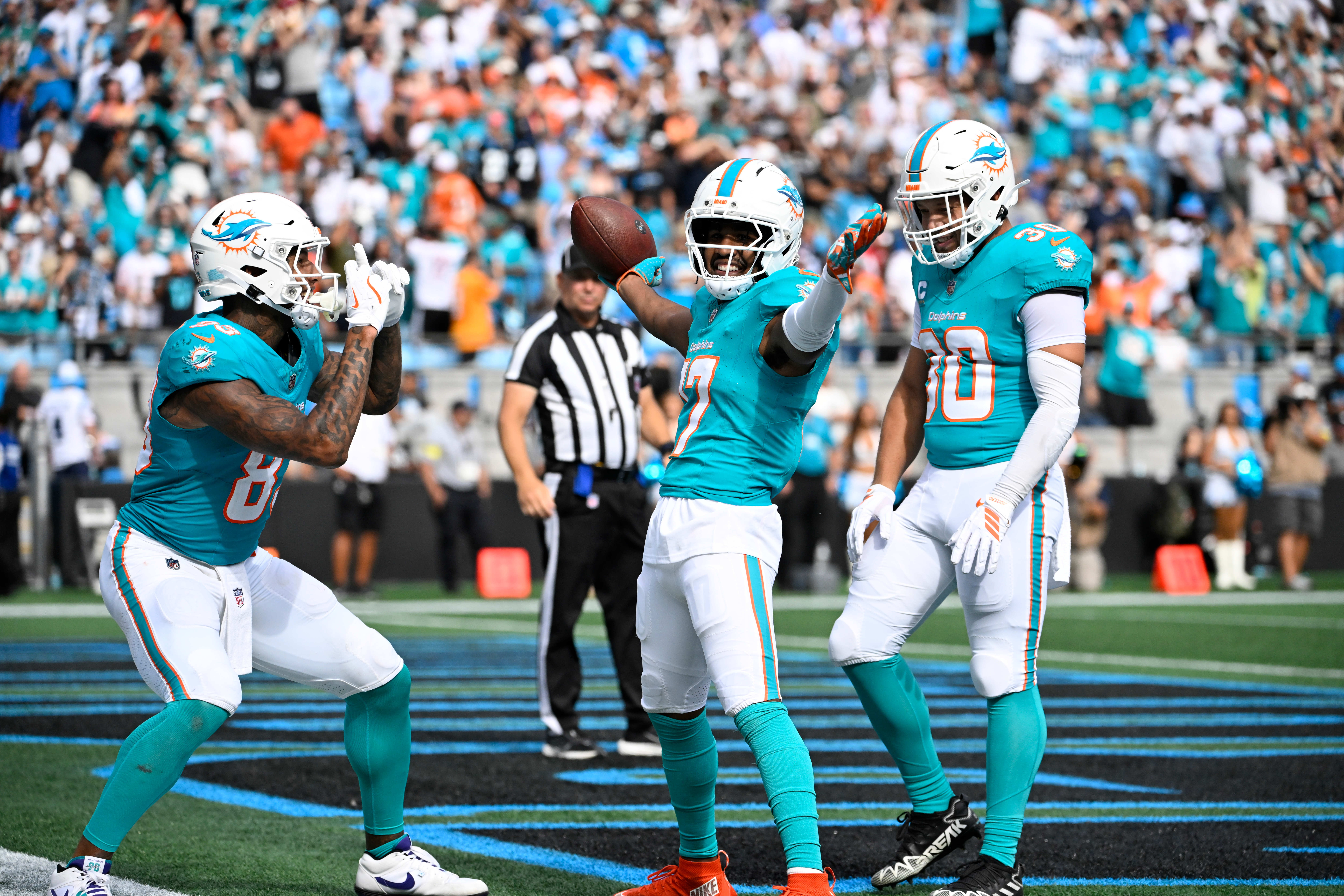
The Miami Dolphins‘ bye week should be spent extensively scouting the trends and tendencies of their personnel usage and play-calling. It’s how most teams take advantage of a bye week and no opponent to scout — so they scout themselves instead.
And as the Dolphins’ self-scouting unfolds, Miami may stumble upon an unsettling truth. One of the troubling trends of the 2024 season has returned, and it could make the formal death of one of Miami’s signature personnel groupings under the early years of Mike McDaniel. Or at least it should, if Mike McDaniel and company know what’s good for them.
Dolphins’ 21-personnel package has gone from ‘hero’ to ‘zero’ for the second straight year

The Dolphins have been one of the league’s most prominent “21-personnel” teams since McDaniel arrived in 2022. With two running backs and one tight end (2-1), the package has put Miami in a position to present run and pass challenges to opposing teams in ways that mesh with the wide zone running concepts that this offense is rooted in.
Since the start of 2022, Miami ranks first in the NFL in plays out of 21-personnel (1,319), just ahead of the San Francisco 49ers (1,306). The next closest team, the Baltimore Ravens, has fewer than 800 plays. So this is really a two-horse race for teams that use this personnel grouping the most.
Miami, in the first two years under McDaniel, was sensational with this combination of players on the field. Across 2022 and 2023, no team had more touchdowns, yards, or first downs out of the personnel package than Miami. And it wasn’t just because it ran it more than everyone else, either.
Miami ranked second in the NFL in offensive EPA added out of the grouping, including nearly twice the EPA of the second-best team in the league on non-quarterback rushes. 21 personnel was the Dolphins’ calling card, and they did it better than anyone, except at times, San Francisco or Baltimore.
NFL’s 21-personnel leaders since 2022
- Miami Dolphins: 1,319 plays
- San Francisco 49ers: 1,308 plays
- Baltimore Ravens: 798 plays
- Atlanta Falcons: 499 plays
Then 2024 happened. Miami was again near the top of the charts in 21-personnel usage in 2024, but its efficiency bottomed out. It went from second in the NFL in EPA out of the grouping to last, including last in non-quarterback rushes after being twice as good as the next best contender in that measure of success in McDaniel’s first two years. Miami’s passing measures were still good out of the package, but the Dolphins simply couldn’t control the line of scrimmage.
The Dolphins invested in their offensive line grouping this offseason, signing James Daniels in free agency and drafting Jonah Savaiinaea in the top-40 to serve as a starter. We haven’t seen Daniels all season due to a Week 1 pec injury, and Savaiinaea has struggled like a rookie. And Miami’s 21-personnel grouping? It’s somehow even worse in 2025.
The Dolphins are again last in EPA out of the package while ranking second in the NFL in their usage. They’re 31st in total run EPA and now the pass game has faltered, too — a byproduct of no Tyreek Hill on the field in this package, perhaps?
The whole thing is a mess. They rank 16th in yards per attempt out of 21-personnel and average 3.7 yards per carry. But there’s an answer on the other side of the bye. You probably know it well by now.
Miami’s leaned into jumbo packages after a mid-season injury to tight end Julian Hill. And the Dolphins, forced into some uncomfortable evolution out of necessity, have got their groove back. By transitioning to 22 personnel, with two backs and two tight ends on the field (including, in some cases, an extra tackle), Miami has recaptured its efficiency out of heavy personnel sets.
From 2022 through 2024, the Dolphins ran 139 plays out of 22 personnel variations (seventh-most) and were the league’s least impactful offense in that grouping, as measured by EPA. Neat!
But in 2025, they’re sitting at 72 plays on the season out of the grouping, which ranks third-highest in the NFL, and they’re the league’s best offensive EPA unit out of the personnel combination. They’re number one in total offense and passing, while ranking second in total rushing. Their cumulative EPA, out of 22 and 22-jumbo personnel, is nearly three times that of the next-best team in the league, the Denver Broncos.
So, Miami, let the bye week tell you what you already know. Going heavier is working. Load it up, force the conflict from opposing defenses that you’ve preached for years, and when they overcommit to load the box, use Jaylen Waddle’s game-breaking ability to make them pay. The formula is set. Let’s see how this coaching staff embraces the data upon further review.
