
Cam Ward Tape vs. Analytics: Why the Titans rookie season points to cautious optimism for his future despite dismal numbers
A final word on Titans QB Cam Ward heading into his second season: Why there’s reasons for optimism despite the numbers, where he can be elite, and where he must stabilize in 2026.


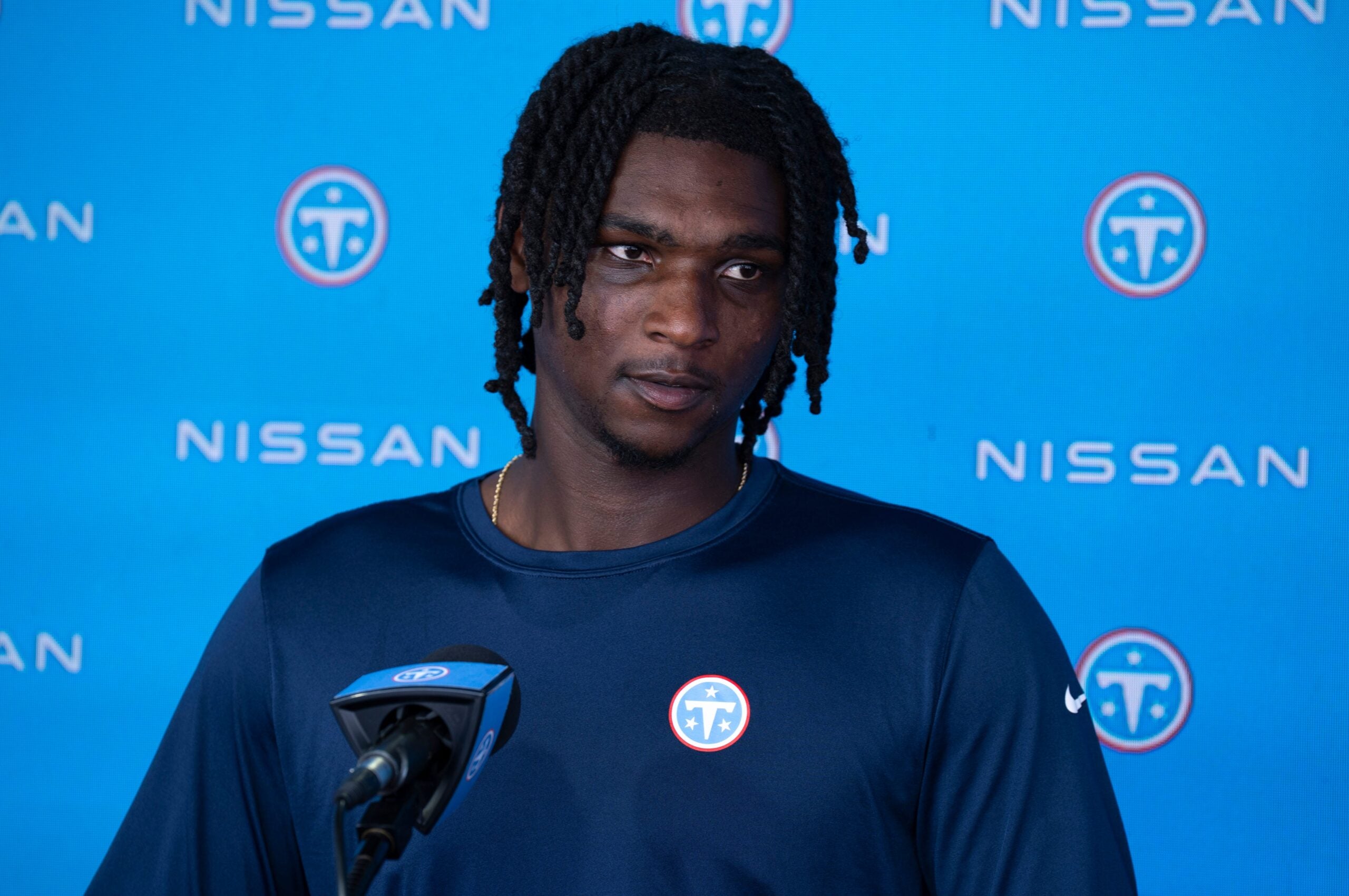
The Tennessee Titans finished near the bottom of the league in nearly every offensive efficiency metric last season, and Cam Ward’s analytics reflected that ugly reality. Completion percentage, accuracy markers, EPA per play: all objectively concerning on paper!
But reducing Ward’s first NFL season to a spreadsheet misses the what he actually has going for him. Evaluating the Titans’ franchise quarterback requires separating what you can teach from what you can’t, what’s a stable indicator of future success and what’s not. The story on Ward’s numbers last year are much more a tale of two halves than his detractors want to admit. And his unteachable traits are doing a lot of heavy lifting for good reason.
Cam Ward’s sticky QB traits
Let’s start with the stats themselves, which aren’t the primary point of this piece. As acknowledged, his season-long numbers are mostly at the very bottom of the league. But it’s disingenuous to ignore the fact that they improved markedly in the second half of the season. A refresher:
- First half (Weeks 1-9): 170/295 (57.6%), 1,760 yards, 5 TD, 6 INT, 72.1 rating
- Second half (Weeks 10-18): 153/245 (62.4%), 1,409 yards, 10 TD, 1 INT, 90.0 rating
But more to the point of this article, here’s what I know about Cam Ward after watching every game of his rookie season: he has the intangible qualities that matter most at the position, and he has them in spades. By all accounts, people who work in the Titans’ building and around the league point to the same thing. You can’t teach somebody to be an alpha. That word comes up constantly when I talk to football people, and so many fewer players possess that quality than we often think.
Ward’s pocket feel and field vision are potentially elite traits as he develops. He’s not there yet. But those are the characteristics that, if we look down the line and see Ward becoming a perennial top-5 or top-10 quarterback, will be the reason why. His arm talent—angles, release, creativity—can be another elite trait without question. His arm strength is above average. His scrambling ability won’t ever be a dominant part of his game, but his ability to navigate the pocket and extend plays can be.
From a 10,000-foot view, I’m evaluating five things with any quarterback: how accurate are you, how physically talented are you, how well do you see the field, and how well do you feel a pocket. The fifth category is everything off the field, which Ward excels in. Of the first four on-field categories, he checks two of those boxes with potential elite upside and grades out as above average in a third.
The fourth, accuracy, is the concern. You can improve accuracy some with mechanics and footwork, and those mechanical elements are teachable. But in terms of whether accuracy is something you hang your hat on as a high-level skill, the reality is there’s only one quarterback in modern history who went from “absolutely not his thing” to “absolutely his thing”: Josh Allen.
You simply can’t expect anyone else to replicate that, because no one else ever has. That said, if Ward can become acceptably accurate, I don’t think pinpoint precision is a prerequisite for being a top-10 quarterback. Pinpoint accuracy is most important for guys who don’t have another elite trait to lean on. Ward has multiple potentially elite traits to lean on!
Situation matters!
A lot of the analytics that looked so ugly last year are tied to things that improve naturally. Understanding of the game, the game slowing down, overall offensive efficiency: those come with experience and improved personnel. Tennessee’s roster was bad last year. That’s not an excuse for Ward, it’s just context for the numbers.
Footwork, mechanics, game management: all teachable. The question becomes whether Ward is receptive to coaching and mentally capable of processing the adjustments. I think the answer on both counts is yes, and that circles back to the intangible makeup that the people around him rave about.
Why Ward stock is an optimistic hold
Drake Maye is the example people point to when discussing a young quarterback on a terrible team. Maye’s stable metrics as a rookie—the ones that are genuinely sticky indicators of future success—were strong even as New England struggled all season. Those of us paying attention saw a quarterback who was primed to pop. Then he became arguably the league’s MVP the following season.
Cam Ward wasn’t that as a rookie. His stable metrics weren’t as encouraging as Maye’s, and I’m not going to pretend otherwise. Not every quarterback who flashes on a bad team deserves a free pass because the roster was lacking. But Ward is absolutely, to me, an optimistic hold. I’m not in a position to say the Titans definitely have their guy. What I will say is this: if you compare Will Levis going into Year 2 to Cam Ward going into Year 2 and ask both sides to write a thesis on why their quarterback will or won’t work, the pro-Ward argument is a good deal stronger than the pro-Levis argument ever was. And I was a Levis defender!
The bottom line is that Ward’s unteachable traits give the Titans legitimate reason for optimism. The teachable stuff must improve, and the roster around him must improve. But the foundation for something real is there, if you’re willing to look past the box score.
