
Chris Johnson’s ALS diagnosis sparks Ice Bucket Challenge revival, but expert says awareness alone won’t move the needle
ALS is a hot topic this summer in the wake of Chris Johnson’s diagnosis. But what can be done besides the revival of the Ice Bucket Challenge? The answer might surprise you…


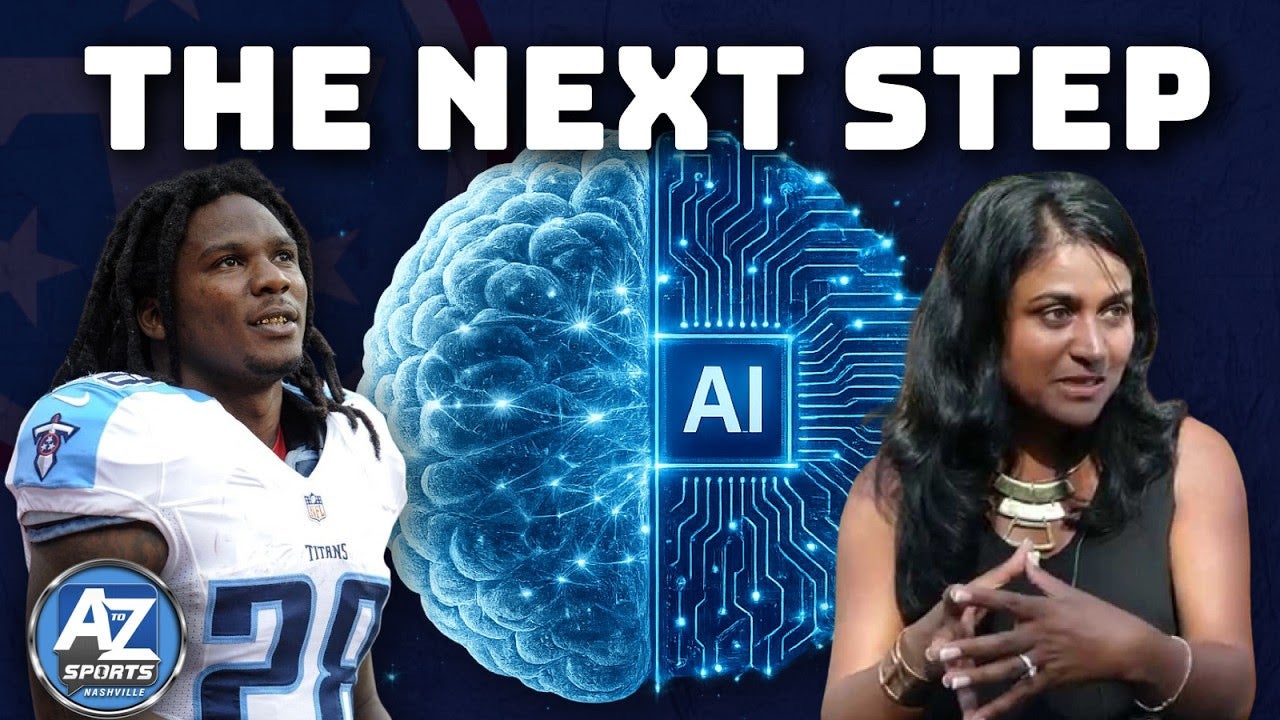
Chris Johnson’s ALS diagnosis sent shockwaves through the NFL and the Nashville community, and the outpouring of support has reintroduced the Ice Bucket Challenge to a new generation. But 12 years after the original viral sensation raised millions for medical advancement, the question remains: why is ALS research still so far behind?
I sat down with Indu Navar, founder and CEO of Everything ALS, to find out what has actually changed, what hasn’t, and what people like you and me can do right now to help.
The Ice Bucket Challenge raised awareness, but ALS treatment hasn’t kept pace
Navar, who lost her husband to the disease in 2019, didn’t mince words about the state of ALS care. The numbers are staggering and upsetting. Every 90 minutes, someone in the United States is diagnosed with ALS. Every 90 minutes, someone dies from it. And the diagnostic process hasn’t meaningfully changed since Lou Gehrig’s famous speech in 1939.
“We’ve known this for 90 years,” Navar said. “And up to today, we’re still diagnosing somebody the same way and saying every 90 minutes, ‘you have 2 to 5 years to live.’ That’s what we did 70 years ago!”
She pointed to the comparable diseases that have seen breakthroughs. Multiple sclerosis now has roughly 40 different treatments available. Spinal muscular atrophy, a pediatric motor neuron disease, has seen near-cure therapies developed in the 21st century.
ALS has seen nothing close to that level of progress.
The 2014 Ice Bucket Challenge generated enormous awareness, but Navar was candid about its limitations. For most people, it was a social media moment first and a genuine charitable cause second. The deeper understanding of what ALS actually does to the body, and how woefully underfunded its research remains, never fully took root.
Why ALS research keeps starting from scratch
Funding is part of the problem, but Navar identified something more fundamental about the problem: ALS moves fast. Patients deteriorate rapidly, and families are devastated. Then they walk away from the cause, because the person they loved is gone.
“You really don’t get the staying power,” Navar explained. “The movement is a revolving door. You start a movement, everybody starts something when they’re shocked, and then it dwindles down.”
That revolving door means institutional knowledge leaves with each wave of families. New patients and caregivers enter the system with no foundation, asking the same basic questions about speech pathologists, occupational therapists, and treatment options that the previous generation already answered.
That cycle is exactly why Navar founded Everything ALS as a tech nonprofit. Her organization hosts expert talks where patients and families can ask questions. The goal is to build a permanent platform of accumulated knowledge rather than letting each new family start from zero.
How technology and AI could finally change the trajectory
Here’s where Navar’s background as a tech entrepreneur shines. She argued that ALS measurement tools are stuck in the past. The current standard asks patients to rate their own speech, walking, and breathing on a scale of 0 to 4. That subjective, rudimentary scale is the primary measurement used in clinical trials.
“How do you know what a 3, 2, 1 is?” Navar asked. “It’s not like you know the disease. Everybody’s slope is different.”
Everything ALS is building objective measurement tools using AI and machine learning. Their speech study collects voice data from both ALS patients and healthy individuals of the same age, allowing algorithms to track real changes over time rather than relying on patient guesswork. That data can then be fed back to clinicians and used to optimize clinical trials.
The organization also built an AI product called Sava AI, a generative AI chatbot that helps patients find clinical trials in their region. Navar said that roughly 78% of ALS patients who want to participate in clinical trials don’t know where to go. Her tool is designed to change that.
What you can do right now
Johnson’s decision to use his platform to revive the Ice Bucket Challenge and rally donations has been impactful already. But Navar stressed that the average person can contribute beyond dumping ice water on their head. Downloading the Everything ALS app and participating in the speech study takes as little as two minutes. You don’t need to have ALS or even know someone with it. Researchers need healthy control data just as much as patient data to build the AI models that could accelerate treatment development.
The sports world, and Nashville in particular, is fired up right now. The challenge is converting that energy into something that outlasts the news cycle. Johnson gave ALS its highest-profile moment in years. What people do with that moment beyond social media will determine whether this time is any different.
