
ESPN roster ranking reveals Titans’ true ceiling as revamped receiver room shines while thin depth threatens their 2026 push in defensive secondary
ESPN recently published am NFL roster rankings that pegs the Titans appropriately low with so much left to prove. But the strengths and weaknesses they identify deserve scrutiny…


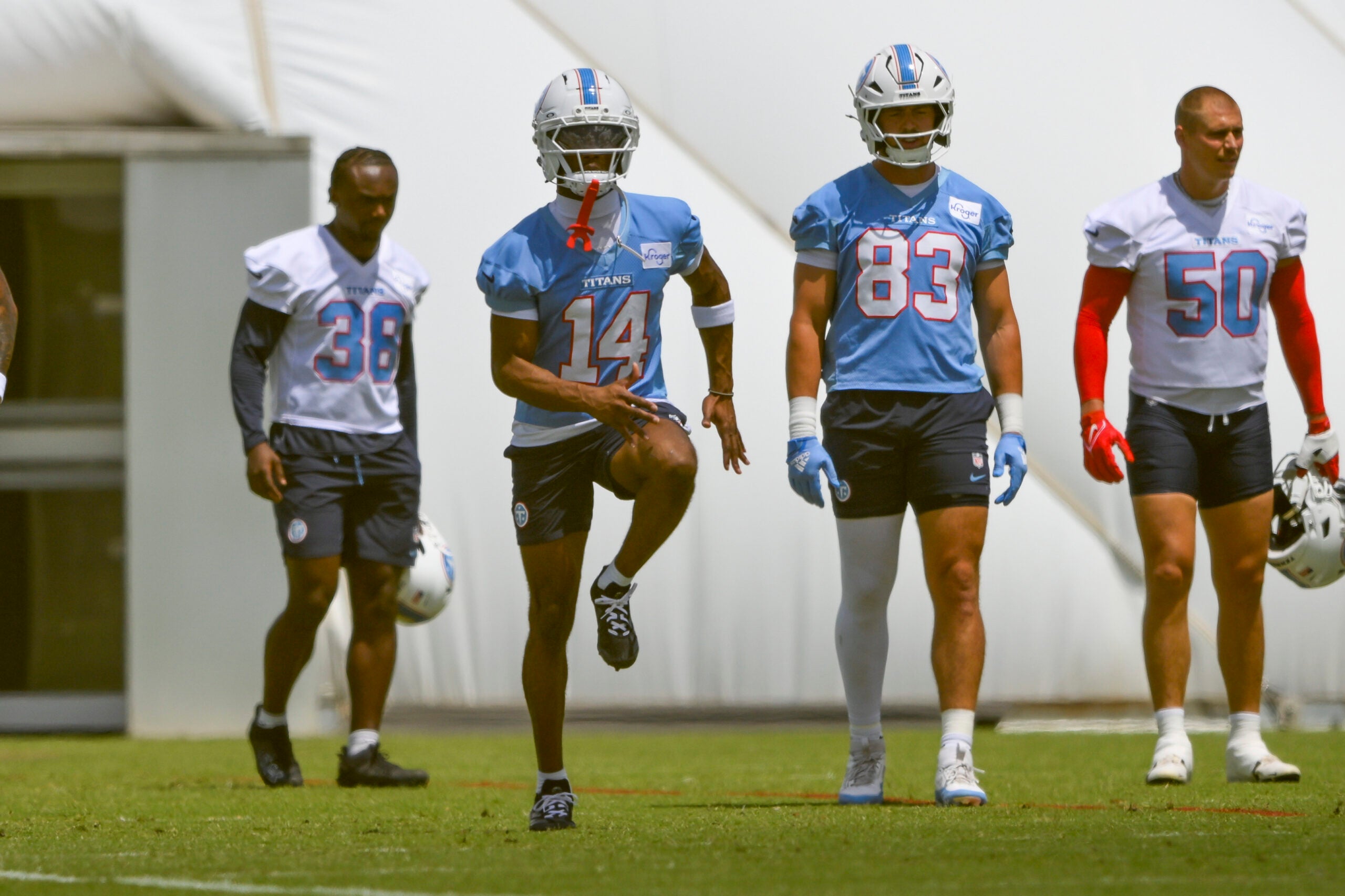
The Tennessee Titans landed 28th in a recent ESPN roster ranking assembled by analysts Seth Walder, Aaron Schatz, and Mike Clay. That’s pretty bad, but also pretty appropriate right now.
For a franchise coming off back-to-back 3-win seasons, the placement is fair. Tennessee overhauled its roster this offseason through free agency and the 2026 NFL Draft, but none of those upgrades have been proven on a football field yet.
But the ranking itself isn’t what caught my eye. Whether the Titans belong at 28th, 26th, or 24th is a debate better saved for the preseason. The four categories ESPN used to frame each team tell a far more compelling story about where this roster stands right now.
Biggest strength: Wide receiver
Mike Clay named wide receiver as the Titans’ biggest strength, and I can see the logic. My gut reaction would have been defensive line, given that Jeffrey Simmons is the best player on the roster and Tennessee has stacked bodies up front. But the receiving corps might be the most improved group on the team.
Wan’Dale Robinson is a volume monster and a proven producer in Brian Daboll’s exact system. That 1-to-1 schematic fit is something you can hang your hat on. Then there’s Carnell Tate, drafted 4th overall to be the new centerpiece of this position group. His arrival reshapes Calvin Ridley’s role into something more sustainable. Ridley doesn’t need to be the WR1 anymore. He can be the second or third option when healthy, functioning as icing on the cake rather than a weight-bearing pillar of this group.
Behind the starters, Chimere Dike and Elic Ayomanor played heavy snap counts last year largely because Ridley wasn’t available. Now they’re backups in roles more suited to their skill sets, with the ability to step in if a starter misses time. That kind of depth paired with upgraded starting talent makes this group a legitimate candidate for the team’s biggest strength by season’s end.
Biggest weakness: Safety (with a caveat)
Clay named safety as the biggest weakness, and this is where I push back a bit. I don’t think the Titans’ top three safeties are actually a weakness. Amani Hooker and Kevin Winston Jr. as overhang safeties, plus Tony Adams as a specialized box safety, form a solid trio for their respective roles.
Hooker needs to be better than he was last year. Even back when he and Kevin Byard were one of the best safety tandems in the league, Hooker was never at his best when asked to babysit the back end in my opinion. He thrives when playing fast and loose. The secondary upgrades Tennessee made this offseason should allow him to do that.
Winston is my boom candidate for 2026. He’s the most talented safety in the room, and he’s now a full year removed from the ACL tear that ended his final college season. And Adams is a Robert Saleh guy who knows exactly what his role will be.
That said, this room is one injury away from disaster. I’d personally point to the offensive line as a bigger weakness right now, but the lack of safety depth is real. It’s a less premium position than the trenches, edge rusher, or cornerback, but Tennessee needs to add somebody back there before this season.
Non-starter to know: Keldric Faulk
Schatz named rookie edge rusher Keldric Faulk as his non-starter to know, and it’s a fine answer. Robert Saleh rotates his defensive line aggressively, so this rookie will see more playing time than most backups across the league. He’s behind John Franklin-Myers in the “big end” role, the position that bumps inside and outside depending on down and distance, but the rotation ensures he’ll get meaningful snaps.
The fact that Tennessee traded up to grab him at the end of the first round tells you everything about their confidence in him as an impact player. I’m looking forward to seeing him used in ways Auburn never deployed him.
X-factor: The cornerbacks
This was my favorite category. Walder named the starting outside cornerbacks, free agents Alontae Taylor and Cor’Dale Flott. “Both were signed as outside free agents and I was skeptical of both deals, but they could prove me wrong,” Walder wrote.
Last year, the Titans were so destitute on the back end that opposing offenses could have their way in the passing game. That put strain on the defensive line, put too many points on the board, and forced Cam Ward into constant catch-up mode. Taylor and Flott are raw talent upgrades regardless of scheme fit.
But free agent cornerbacks being paid top dollar always carry risk. Cornerback play is among the least sticky year-to-year in the NFL because the position is built on razor-thin margins. An incredible season over 95% of your snaps can be undone by a handful of costly plays. Both players are upgrades. The question is how much better they’ll be. That’s the definition of an X-factor, and Walder nailed it.
