
The good and bad of the Packers' roster-building model and why it continues to spark debate outside the organization
It's rare for an NFL franchise to keep a similar roster-building model through several decades. Since Ron Wolf took over as the general manager in 1992, and except for some years with Mike Sherman calling the shots as a head coach, the Green Bay Packers have operated in an established, process-driven model.It's the Packer Way.The […]


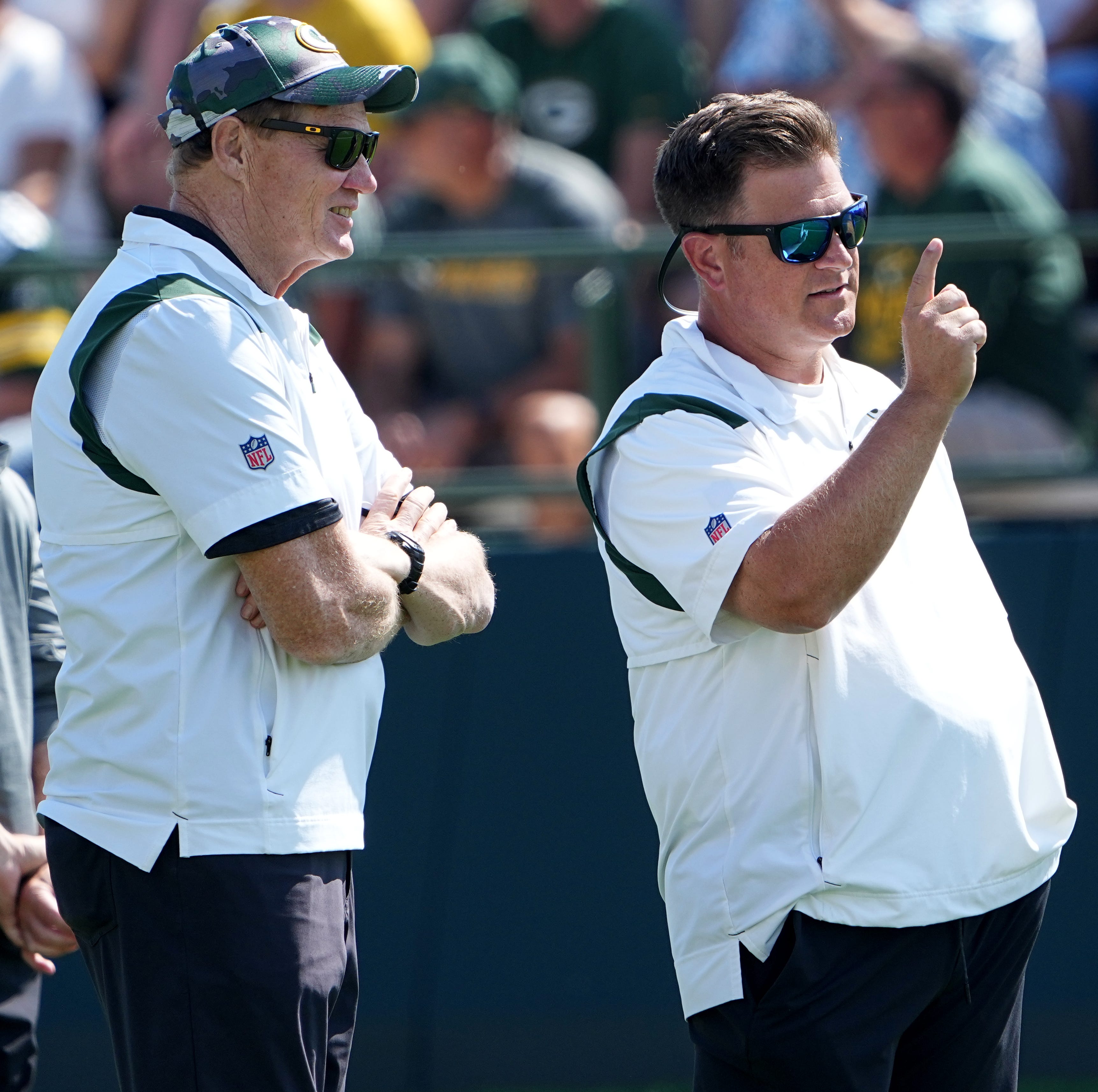
It's rare for an NFL franchise to keep a similar roster-building model through several decades. Since Ron Wolf took over as the general manager in 1992, and except for some years with Mike Sherman calling the shots as a head coach, the Green Bay Packers have operated in an established, process-driven model.
It's the Packer Way.
The strategic model encompasses every aspect of an organization, prioritizing the creation of a winning culture, hiring the right people, prioritizing character and work ethic, and some other basic rules.
In terms of the roster-building process, the model incentivizes the draft and development as a central way of acquiring and retaining talent. Wolf had a scouting background, so the Packers have a well-established model and thresholds to select players, especially in the early rounds of the draft.
But this is not to say the model is immutable or perfect. One of Wolf's stressing points was to embrace continuous improvement, making honest self-evaluations. And over the past three decades, the NFL has severely changed—free agency, salary cap, and the rookie-scale contracts make building a roster a completely different challenge than it was in the early 1990s.
And the Packers have gone through modernizations, especially after Ted Thompson retired. Brian Gutekunst is much more willing to explore other avenues of talent acquisition and more open to aggressiveness—even though it's still probably below-average in this aspect compared to the rest of the league.
On Draft Day, let's evaluate what the Packers have done well under general manager Brian Gutekunst, and what can still improve.
The good
Volume of picks
Nobody has had more draft picks than the Packers over the past three years. Eleven, thirteen, eleven. They have eight this year and everyone around Green Bay is concerned about how few it feels like. Guys, the Minnesota Vikings have four.
And this is ultimately what has allowed Brian Gutekunst to find so many good players on Days 2 and 3. The extra picks give them breathing room and margin for error. It's the best part of their roster-building process over the last half decade.
Quarterback prioritization
Full disclosure, I didn't think drafting Jordan Love was the correct move back in 2020. But let's not allow our pre-draft priors to affect the analysis, because it was 100% the correct move.
Tom Silverstein wrote a fantastic piece going through the Packers' process five years ago, and Gutekunst's strategy was proved to be right.
"One thing from my training is you only get so many shots at these guys," Gutekunst said. "And if we're going to be a good team, and you're going to be picking in the 20s, hopefully most of the time, you may never get a shot at these guys."
And that was really the last opportunity the Packers would have had to take a high-end quarterback. Since 2021, these are the quarterbacks that Green Bay was in a realistic position to target: Kyle Trask, Kellen Mond, Davis Mills, Desmond Ridder, Malik Willis, Matt Corral, Will Levis, and Hendon Hooker. The best of them is, well, Malik Willis whom they acquired two years after his draft by a seventh-round pick to be Love's backup.
Hadn't the Packers drafted Love, they would probably still be trying to maximize an older and older Aaron Rodgers.
Prime position approach
Outside of the wide receiver discussion that we will have later on, the Packers have been efficient targeting prime positions in the first round. The exceptions are safety and off-ball linebacker. But other than those two, most of Gutekunst's first-round picks are true prime spots: Quarterback, edge defender, cornerback, defensive tackle, offensive tackle. This is a smart way to generate surplus and to have more upside with your selections.
Positive and negative aspects at the same time
Space for development and mid-level free agency
This is a tough one, because there are both benefits and drawbacks. The Packers give a lot of space for young players to grow. And that's awesome, because some players do take advantage of that opportunity that they wouldn't have in most NFL teams.
But at the same time, the margin for error during the season is smaller. Because Green Bay doesn't tend to add many external veterans, outside of big-time additions, that stresses the young players' roles. If nobody develops as expected, there's little room to fill the needs after training camp and get real impact from whatever addition will be made so late in the process.
The bad
Early impact mentality
This is a tough one because 1) it makes sense to follow Ron Wolf's model of looking beyond what a player is right now and 2) it's truly hard to have immediate impact from rookies. But that's not exactly the point here.
"The transition to the National Football League is tough, it's not always easy. A lot of time it's determined by opportunity," Gutekunst said in his pre-draft press conference. "If you take a guy in a particular area that is gonna have a lot more opportunity than somebody else. We try to stay away from that drafting for need. We try to take the best player available if that's possible. But most of the time, a guy's impact in his rookie year comes down to the opportunities that he had more than anything."
This is where things get murkier. Theoretically, it's fine to draft the best player available, but the reality of today's NFL demands the creation of surplus value. If a player doesn't start until Year 3 or 4, he can still be a valuable piece (especially if he's from a premium position), but you are inevitably behind the teams taking advantage of rookie Windows more frequently.
Rashan Gary is a good example. He wasn't a preferred starter until Year 4, and the Packers knew that when they took him, because they had just signed Za'Darius and Preston Smith. Gary turned out to be a good player, but probably not elite. So the Packers have basically never gained surplus from him. The rookie-scale contract wasn't a consideration when Ron Wolf was around, nor in the early parts of Ted Thompson's tenure—and Thompson also failed to adapt in his area, which is why he had much more success before 2011 than after.
Draft reaches
There is some bad luck involved, but the biggest process problem with the Packers in the first round is the disregard for the consensus on players.
Of Gutekunst's nine first-round picks as a general manager, only Jordan Love and Devonte Wyatt were steals compared to the consensus big board. There are some slight reaches, a normal fluctuation of the process, like Jaire Alexander, Rashan Gary, and Lukas Van Ness. But there are some big reaches—Darnell Savage was 44th, Eric Stokes was also 44th, Quay Walker was 39th, and Jordan Morgan was 35th.
Eventually you might be right in these types of cases, but the NFL has a proven track record that reaches tend to go bad. First, because you're simply losing value. But also because the consensus tends to be smarter than one team, and results follow. With the benefit of hindsight, it's easy to see that the consensus was more right than the Packers about Savage, Stokes, and Walker—it's still early to have a definitive answer on Morgan.
Devaluation of the WR position
It's not about first-round picks, because the Packers have spent significant draft capital on the position. It's more about a general philosophy. Gutekunst has said he would probably not have been so urgent to add Christian Watson and Romeo Doubs in 2022 had they not traded Davante Adams. So it will always be a top target or a big group of role players. Ideally, a team should look for both, because wide receiver is (whether you like it or not) one of the premium positions in terms of individual impact and market valuation.
