
Roger Goodell hints at a potential NFL rule change that would significantly benefit the Patriots more than anyone else
Sometimes, a reasonable cap management approach can truly reward a football team. And this is exactly what can happen to the New England Patriots if NFL commissioner Roger Goodell pulls the trigger on something that he clearly wants: Create a more effective, hard salary cap.During Goodell's press conference during last week's ownership meetings, the commissioner […]


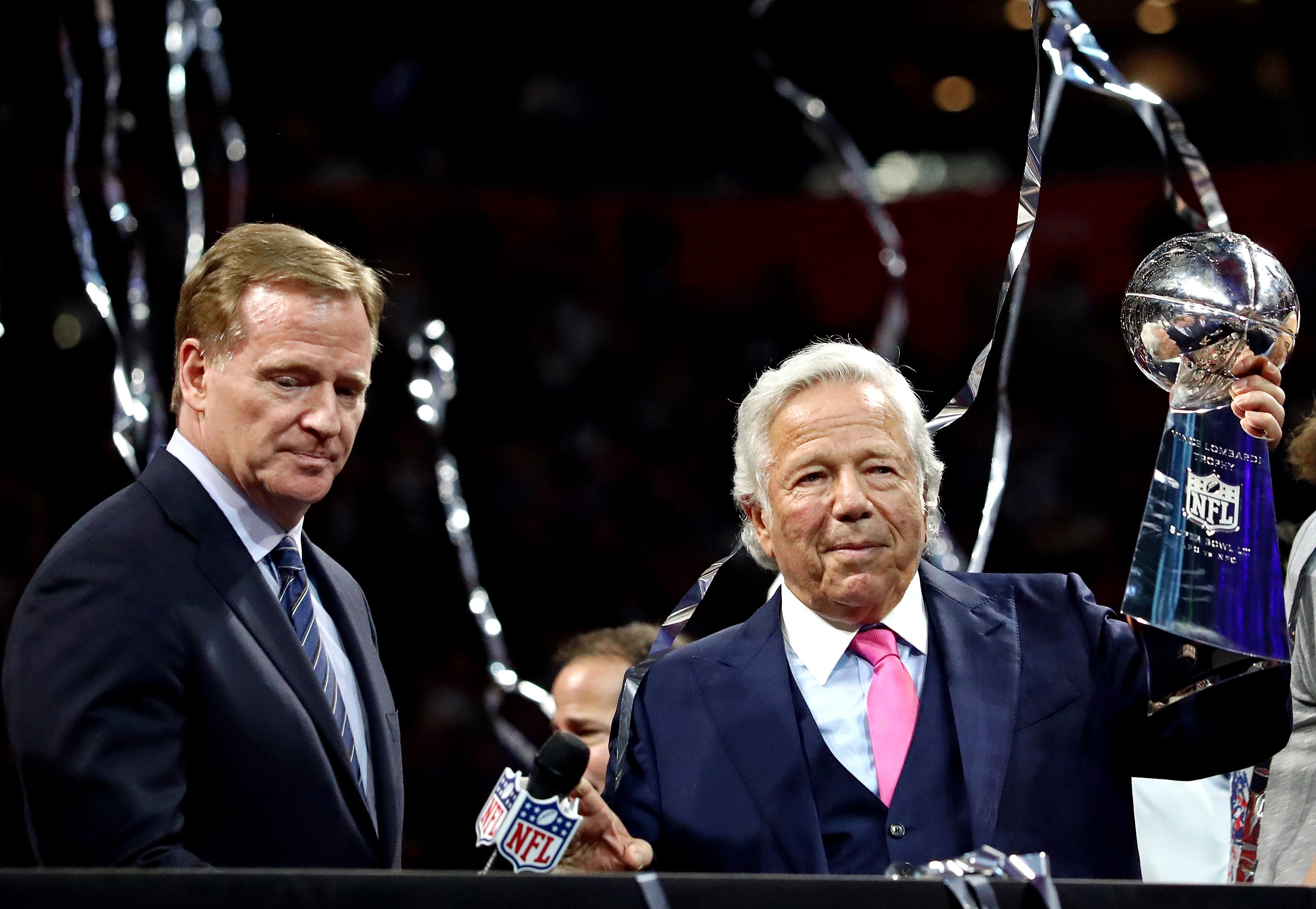
Sometimes, a reasonable cap management approach can truly reward a football team. And this is exactly what can happen to the New England Patriots if NFL commissioner Roger Goodell pulls the trigger on something that he clearly wants: Create a more effective, hard salary cap.
During Goodell's press conference during last week's ownership meetings, the commissioner pointed out that the NFL will consider adjusting the salary cap in the next CBA.
"There are no formal plans on any discussions," Goodell said. "We obviously continue to be in close communication with the union on a variety of matters, but no start of negotiations have been set or are under consideration really at this point. We did spend time today talking, at length, about areas of our Collective Bargaining Agreement that we want to focus on. The two areas that we spent time on were really the cap system itself, the integrity of that system, how's it working, where do we need to address that in the context of collective bargaining, when that does happen. That was a very lengthy discussion."
Void years could be a major point of emphasis
When covid hit the NFL salary cap four years ago, basically the entire league was forced to find unusual ways to keep things afloat. Even teams that were historically conservative with their cap approach had, for example, to add void years in contracts to be compliant.
In the 1990s, the Denver Broncos created a mechanism called "void years." Those are fake years at the end of a deal, allowing the team to spread the cap hit via signing bonus beyond the real life of the contract. During covid years, everyone took advantage of that, but teams like the Philadelphia Eagles and New Orleans Saints are the most frequent franchises to use that as a method. The thinking is that a dollar now is worth more than a dollar next year, when the cap will be higher.
There are two problems for the league, though. First, it benefits teams with rich owners who are more willing to spend big right away with signing bonuses and guarantees to make or keep their teams competitive.
The second problem is that, over time, there will be a tendency to keep pushing money, and maybe teams will spend more than the salary cap. Ultimately, Goodell's job is to maximize the owners' revenue, and this management style is bad for business.
How it benefits the Patriots
With conservative spending over the past few years, the Patriots have had the most cap space in the league. And well, if that's the case, there's no reason to add void years on players' contracts. New England is one of six teams with zero dollars in void years.
That's pretty good if the NFL will ban it, especially compared to teams like the Philadelphia Eagles ($452 million), Cleveland Browns ($248 million), New Orleans Saints ($164 million), and San Francisco 49ers ($138 million).
Last year, 19 teams spent more cash than a hard salary cap would allow. If everyone in the NFL is forced to truly respect the salary cap, the Patriots would already be in a comfortable position to keep their current style.
Nevertheless, changes won't happen overnight. The current version of the CBA expires just after the 2030 season, and there isn't opt out for owners or players. Therefore, unless there's a deal for a new CBA beforehand, the current system will stay around for at least six more seasons.
