
NFL replay review rules for Super Bowl LIX between Chiefs-Eagles and why some plays can't be challenged
Super Bowl 59 will bring some nail-biting moments for the Philadelphia Eagles and Kansas City Chiefs. With a game projected to be so close, the referees will be closely scrutinized to get every call right the first time. However, that's not always possible, so the NFL allows for replay to review rules. We're taking a […]


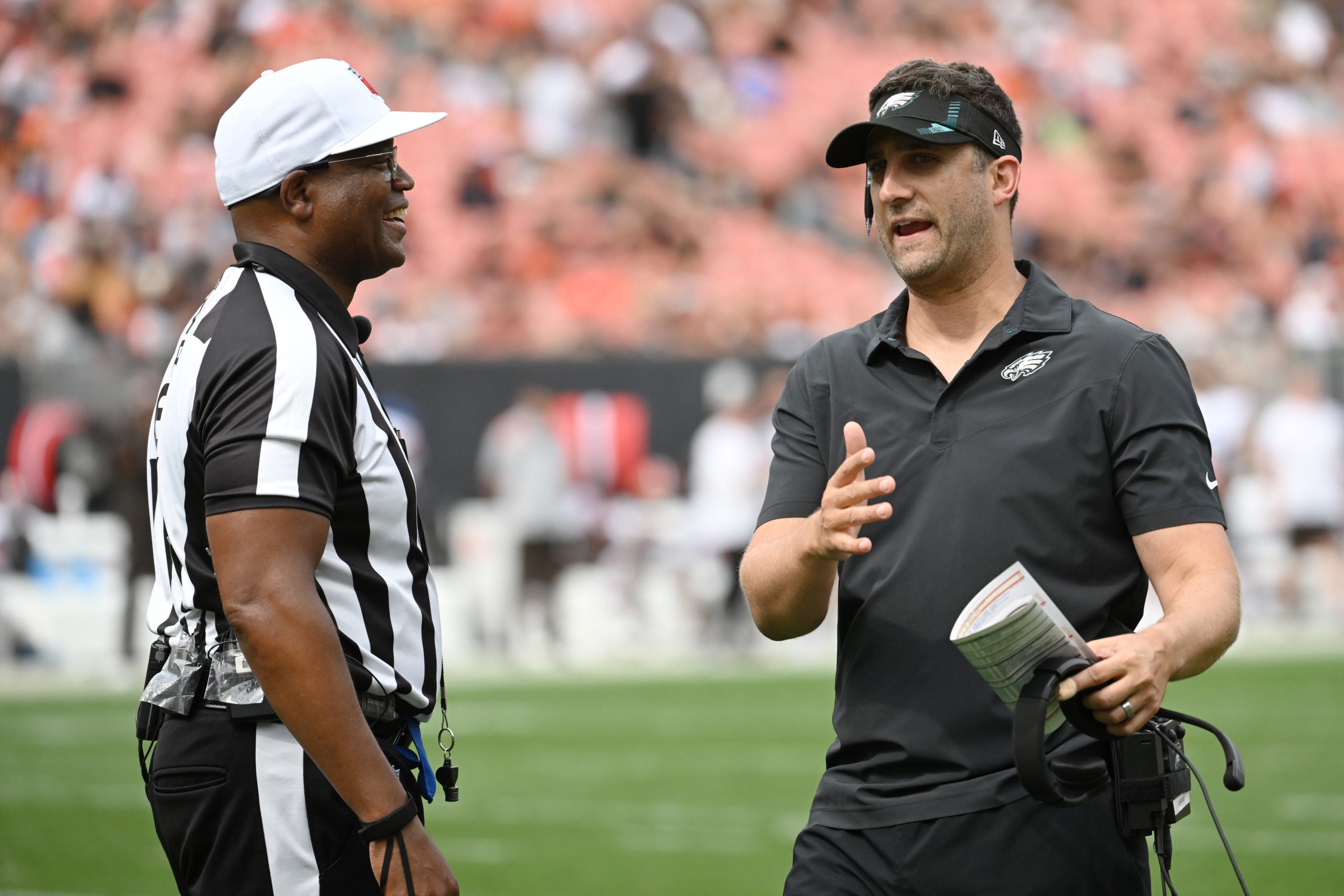
Super Bowl 59 will bring some nail-biting moments for the Philadelphia Eagles and Kansas City Chiefs. With a game projected to be so close, the referees will be closely scrutinized to get every call right the first time. However, that's not always possible, so the NFL allows for replay to review rules.
We're taking a look at the updated NFL replay review rules and why some plays can't be challenged, even in the Super Bowl.
NFL Replay Review Purpose
The main aim of instant replay in the NFL is to correct errors that may have gone unnoticed during the game. This system enables officials to examine key plays such as touchdowns, turnovers, and boundary decisions to ensure the correct results. Over the years, the scope of replay has broadened, and in 2019, even pass interference was added to the list of reviewable calls, although this change was short-lived due to the controversies it sparked.
The ultimate objective is clear: achieving accuracy. However, in practice, the use of this system during the 2024-25 season has caused frustration, especially in tightly contested games where the outcome can rely heavily on prolonged reviews or unclear rulings.
There’s no doubt that instant replay has enhanced fairness in various aspects of the game. Obvious mistakes—such as a fumble that wasn’t initially flagged on the field or a receiver clearly stepping out of bounds—can be easily rectified with a second review.
Coaches are empowered to challenge plays they believe were misjudged, allowing teams to have a say in ensuring fairness.
For instance, during the 2024 season, several pivotal plays were overturned after instant replay revealed a different outcome than what was originally announced.
One significant case involved a last-minute touchdown call in a match between the Green Bay Packers and the Detroit Lions, which was reversed when replay confirmed that the player had stepped out of bounds.
Had there been no replay system, the Lions would have faced an unjust defeat. In such instances, replay undeniably fulfills its intended role.
NFL Replay Rules: What can be Challenged?
Previously, replay officials could only offer input on certain administrative matters and during review situations. Now, they have the authority to proactively aid on-field officials in cases where clear and obvious video evidence is readily available for making objective decisions.
This updated assistance rule is applicable in instances where unmistakable video evidence can be used to promptly clarify specific objective rulings, such as determining the spot of the ball, evaluating a foul, deciding on a complete or incomplete pass, and assessing contact with the ball or boundaries.
Here's a complete list of what can be challenged.
- Penalty enforcement
- Confirmation of the proper down
- Spot of a foul
- Game clock administration
- Possession of a loose ball
- Complete or incomplete pass
- Loose ball touching a boundary line, goal line, or end line
- Location of the football or a player in relation to a boundary line, line of scrimmage, line to gain, or goal line
- Player down by contact (when not ruled down on the field)
- Roughing the passer
- Late hits out of bounds
- Intentional grounding
Do Review Replays Affect Coaches' Challenges?
No.
Coaches retain the responsibility for disputing rulings that replay officials don’t automatically review. However, some rulings that could have been challenged in the past can now be looked at through the new replay assistance rule.
Typically, replay officials or specific members of the officiating team in New York can offer assistance until there are 20 seconds left on the play clock.
If a coach remains unsatisfied — even after this replay assistance — they are still able to challenge a reviewable ruling. If the coach throws their challenge flag before the replay official or the New York team decides, it will count as a coach’s challenge, and the team risks losing that challenge. In these cases, it is usually advisable for coaches to wait until the opportunity for replay assistance has ended before throwing their challenge flag.
