
Intriguing changes in the RB market reshape how teams approach top talent
Over the last decade, there has been an obvious trend to devalue running back in the NFL. Usually, their contributions to the offense are fairly limited, and they depend on their surroundings to be successful. If the quarterback, the offensive line, and the offensive scheme matter more than the back for a prolific rushing attack, […]


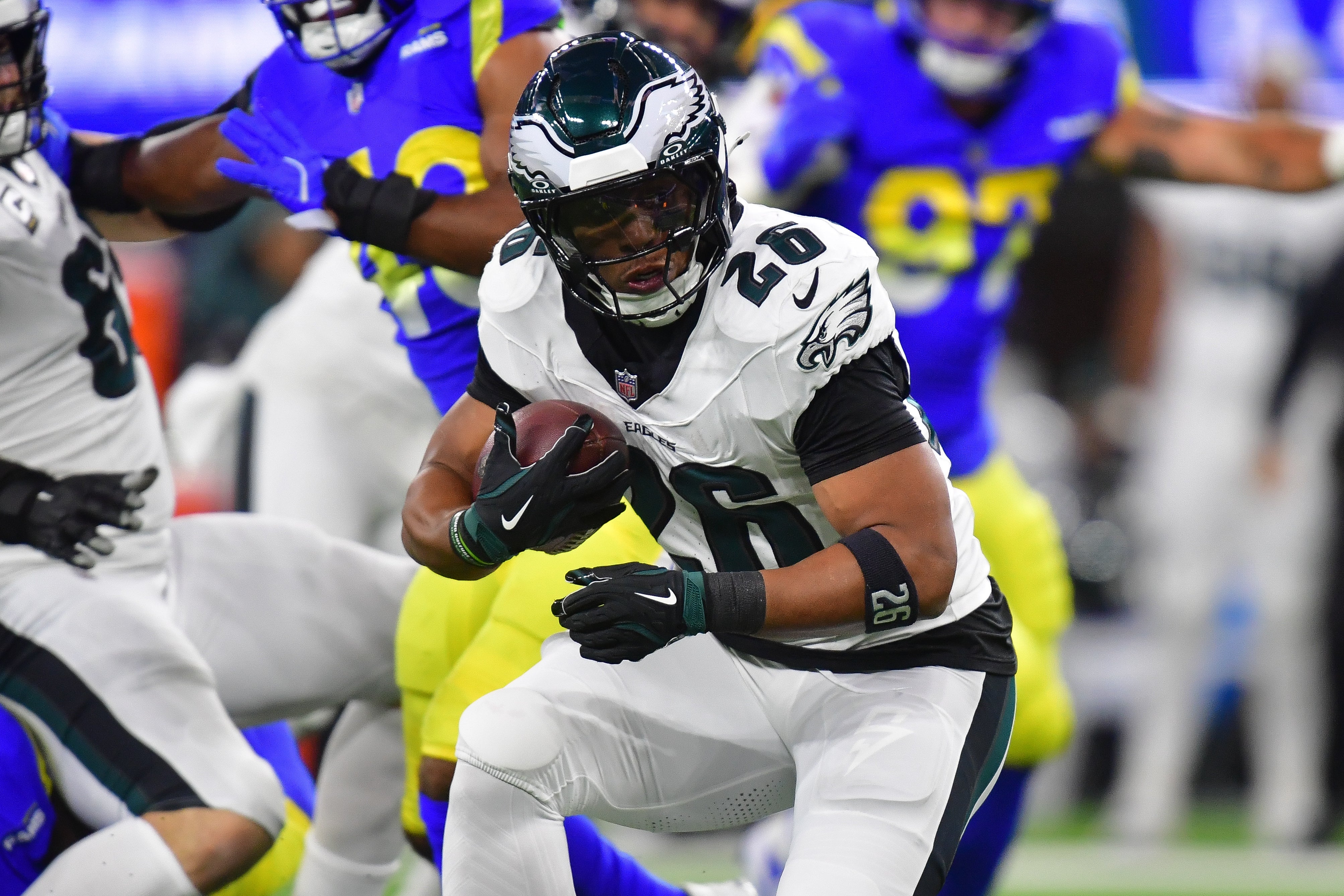
Over the last decade, there has been an obvious trend to devalue running back in the NFL. Usually, their contributions to the offense are fairly limited, and they depend on their surroundings to be successful.
If the quarterback, the offensive line, and the offensive scheme matter more than the back for a prolific rushing attack, there's little reason to pay a premium to get a top running back — be it in the draft or in free agency.
Progressively, though, the devaluation process went too far.
In 2011, the highest-paid running back in the NFL was Minnesota Vikings' star Adrian Peterson. At that point, he was making 11.95% of the salary cap.
In the same year, quarterback Peyton Manning was making 14.95% of the cap, and wide receiver Larry Fitzgerald got 13.41% of the cap. The top of the market for running backs was higher than it was for tackles, as Jason Peters led the NFL getting 10.46% of the cap.
Overall, it was pretty even throughout the big offensive positions.
With a bigger influence of analytics and a better understanding of positional value, it's a different game right now.
The number for wide receivers and tackles didn't change much — it's 13.7% for wide receiver Justin Jefferson and 11.12% of the cap for left tackle Laremy Tunsil. Remember, these numbers are the percentage of the cap occupied by the yearly average when the contract was originally signed.
On the other hand, the quarterback market went nuts, with Joe Burrow making 24.47% of the cap when he signed. And the running back market imploded.
Christian McCaffrey is the highest-paid player at the position, making 7.44% of the cap. Only him and Jonathan Taylor make more than 5% of the cap.
Overcorrection
The idea of not paying a second contract for running backs has its merits. After all, the NFL has seen cases in which these deals looked pretty bad for the teams — Todd Gurley and Ezekiel Elliott are two obvious examples.
But at some point, there has been an overcorrection. And well-managed franchises have taken advantage of that this season.
Both the Philadelphia Eagles (Saquon Barkley), Green Bay Packers (Josh Jacobs), and Baltimore Ravens (Derrick Henry) signed running backs to contracts close to the top of the market. They are all making less than McCaffrey, but all are in the top 10 of the position.
Saquon Barkley signed a three-year, $13 million contract with the Eagles ($26 million guaranteed). Josh Jacobs agreed to a four-year, $48 million deal with the Packers ($12.5 million guaranteed). Meanwhile, the Ravens gave Derrick Henry a two-year, $16 million contract ($9 million guaranteed).
Twenty-nine wide receivers are making more than Barkley in yearly average, including players like Jerry Jeudy, Christian Kirk, and Diontae Johnson. The wide receivers making $13 million a year are Gabe Davis, Darnell Mooney, and DeAndre Hopkins. Mike Williams and Allen Lazard make more than Henry per season.
Running backs are not as valuable as wide receivers. But at some point, you just sign great players and find receivers in the draft to exploit a market inefficiency — that's what the Packers did, signing Josh Jacobs because their entire WR room is in a rookie deal.
When to pay
If the Eagles, Packers, and Ravens are doing a similar thing, you can suspect that it's a smart trend. But it doesn't mean a team like the Carolina Panthers or the Jacksonville Jaguars should go in the market to sign an elite running back.
More than money, it's a matter of timing.
"Of course elite running backs matter," Pat Thorman, NFL analyst for Establish the Run, wrote on X. "They just matter a lot more in making good offenses great."
When the team is bad or is starting a new phase of the roster-building process, paying a running back is simply not smart.
The New York Giants offense is 26th in EPA/play in 2024, 16th in rush EPA. The unit was 30th in EPA/play and 31st in rush EPA last year, with Saquon Barkley on the roster. The optics are bad because Saquon went to a divisional rival that put him in position to succeed, but the Giants' original decision to move on was fine. They have a productive back in Tyrone Tracy, and he costs a fraction of what Barkley would.
The Raiders wouldn't be good because of Jacobs, and the Titans wouldn't have a prolific offense because of Henry right now.
It's ok to say that the original teams made a good call allowing these really good players to leave, while at the same time admitting that they are really good players who will produce much more in better circumstances.
Running backs matter, and they can put good offenses over the top. It's just a matter of when to pay them, not if.
