
Tennessee Titans: 3 Changes Todd Downing Needs to Make Moving Forward
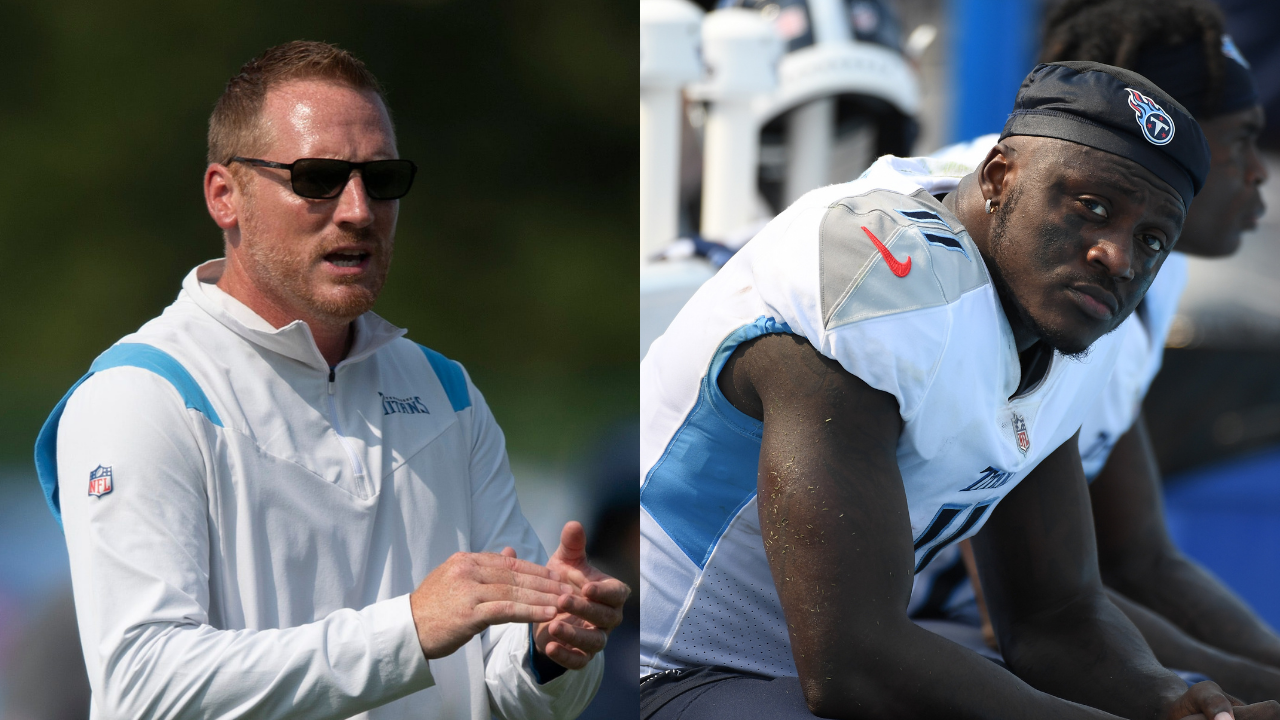
They say you always remember your first. When Tennessee Titans offensive coordinator Todd Downing looks back on his first outing in his new role, a 38-13 blowout loss to Arizona on Sunday, it probably won't be with much fondness. "It was well shy of our standard in just about every area," Downing said Thursday. "We've […]

They say you always remember your first.
When Tennessee Titans offensive coordinator Todd Downing looks back on his first outing in his new role, a 38-13 blowout loss to Arizona on Sunday, it probably won't be with much fondness.
"It was well shy of our standard in just about every area," Downing said Thursday. "We've got to be smooth from top to bottom, and that starts with me."
Things certainly weren't smooth for the Titans' offense against the Cardinals; the unit only moved the ball 248 yards. Downing's poor play-calling was a major factor in the poor showing.
To rebound in Week Two and beyond, Downing needs to make three major changes to his approach.
1. GET THE BALL TO NO. 11
A.J. Brown's first target of the day on Sunday didn't come until there were under five minutes left in the first half.
That's a big problem.
The Titans certainly had their struggles with pass protection, but that's no excuse for not getting Brown the ball earlier and more often. He is a special talent, and he needs to be the focal point of the offense.
Downing explained Brown's lack of early involvement on Wednesday, citing that the team did have plays designed for Brown earlier in the game that didn't pan out.
"Just because he wasn't the target on a play doesn't mean he wasn't the first progression," Downing said.
If the Titans were indeed designing plays for Brown that weren't working, they should've made better adjustments more quickly.
Brown is a big play waiting to happen every time he gets the ball in his hands. The Titans can't afford to wait until a defense looks exactly how they like to make sure that happens.
2. MORE PLAY ACTION
Under former offensive coordinator Arthur Smith, downfield shots off of play-action were the hallmark of the Titans' offense.
On Sunday, play-action shots were almost non-existent for Tennessee. They used play-action on just 5% of their plays, per Warren Sharp.
That's compared to an average of 59% in each 2020 game.
In Downing's defense, the Titans' offense didn't exactly find itself in many situations that lend to effective play action. Negative plays constantly put them behind the chains heading into second- and third-down plays.
"It's pretty hard to run your offense, your base gameplan when you're behind the sticks that much," Downing said.
But for the Titans' offense to be successful, there needs to be plenty of play-action⏤no excuses.
It makes life easier for QB Ryan Tannehill, RB Derrick Henry and the team's offensive line.
3. SPREAD THINGS OUT
Tennessee's offense lined up in condensed, heavy formations way too frequently against Arizona.
The team was too reliant on fullbacks and extra tight ends, and it failed to give those players any breathing room when they lined up.
Tight formations with too many tight ends were a problem for the Titans during their haunted days of having Terry Robiskie as offensive coordinator in 2016 and 2017.
The issue reared its head again on Sunday, four years later.
Downing needs to be more willing to spread formations out, especially when the Titans are struggling against a particular defensive line.
It allows everyone to have a little more breathing room, especially the o-line and wide receivers.
- Downing image: George Walker IV/The Tennessean
- Brown image: Christopher Hanewinckel/USA Today
