
Tennessee Football was almost dealt a major blow and Lane Kiffin would've been semi-responsible
The Tennessee Vols football program was nearly dealt a major blow this offseason and Ole Miss Rebels head coach Lane Kiffin would've been semi-responsible. "Fake injuries" have been a big topic of discussion this offseason. And that's mainly because of the game between Tennessee and Ole Miss last season. The Vols' up-tempo offense creates a […]


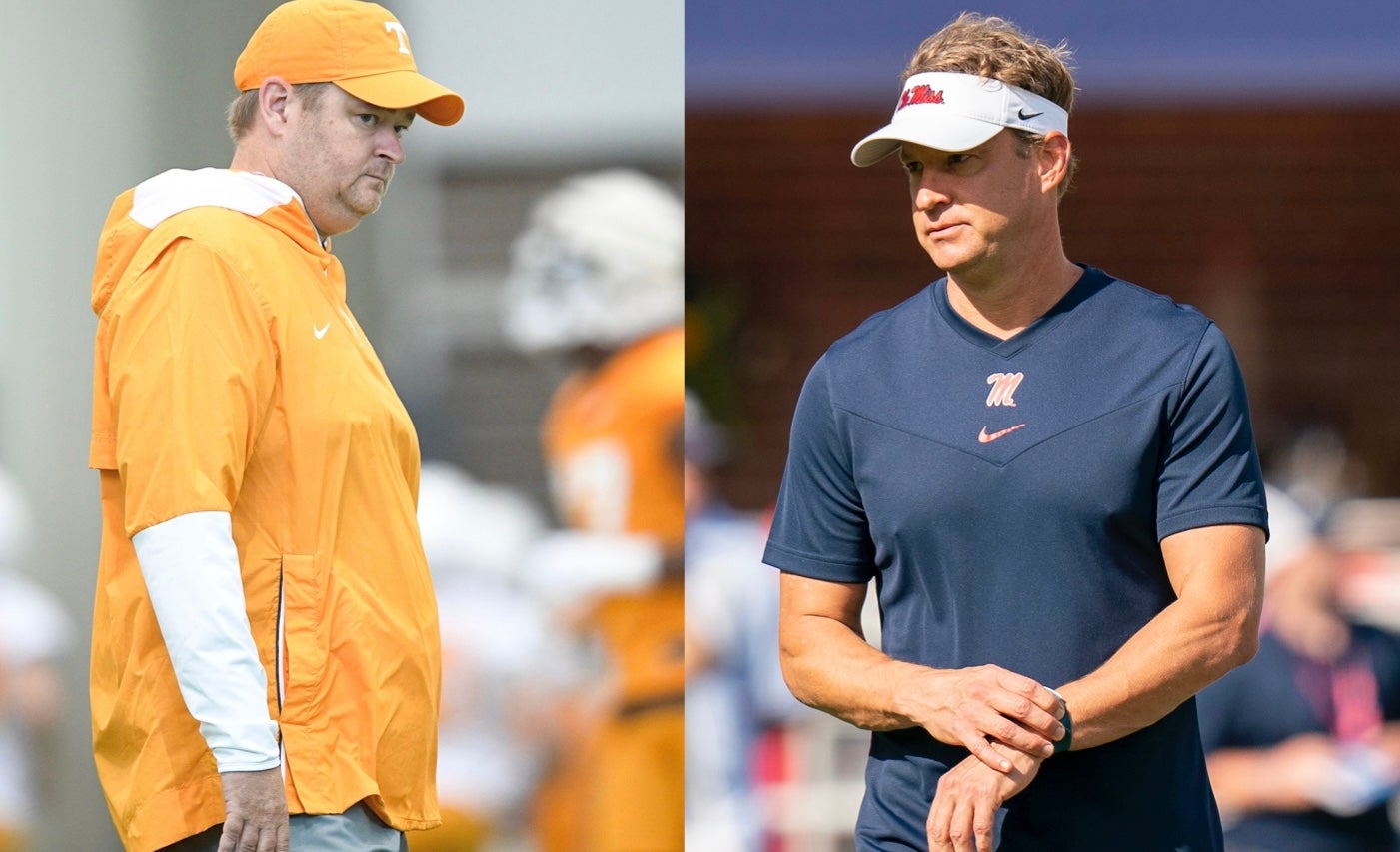
The Tennessee Vols football program was nearly dealt a major blow this offseason and Ole Miss Rebels head coach Lane Kiffin would've been semi-responsible.
"Fake injuries" have been a big topic of discussion this offseason. And that's mainly because of the game between Tennessee and Ole Miss last season.
The Vols' up-tempo offense creates a lot of issues for opposing defenses. One way to combat the high tempo is to fake an injury. Ole Miss appeared to fake a lot of injuries against Tennessee last fall, but that's a touchy subject — there's no way to know whether or not a player is really injured. And the last thing anyone wants to do is accuse a college athlete of faking an injury when he/she is actually injured.
Still, the fake injuries are an issue that needed to be addressed this offseason.
One solution that's been suggested is to have an injured player sit out the rest of the drive (if the injury requires a stoppage). That solution was considered, but the NCAA rules committee was "concerned with the additional issues that could be created and did not want to encourage players to continue to participate when injured" (via the National Football Foundation).
So instead, their solution is for programs to submit a complaint to the national coordinator of officials. They'll then review the situation and give feedback to the conferences. Penalties would be handed out by the conference.
This obviously doesn't solve anything. It doesn't stop a team from faking injuries during the course of a game. So the outcome of the game can still be impacted. I don't think anyone cares what happens after the game or if another program is fined (it's doubtful any penalties will be handed out because, again, there's no way to prove if a player was or wasn't dealing with an injury/cramp).
While this outcome isn't ideal for Tennessee, it's actually better than the alternative.
According to a release from the National Football Foundation, one rule change the NCAA considered was to allow the defense to substitute after every first down.
Committee members discussed how the pace of play appears to be contributing to this concern. "We considered all options to address this issue, including allowing both teams an opportunity to substitute after a first down," said David Shaw, chair of the Football Rules Committee and coach at Stanford. "This is another step to consider in the future."
That rule change would've been disastrous for Josh Heupel's offense.
It would've given the defense a breather and a chance to change their personnel on every first down. For a team that moves as fast as the Vols, that would've significantly impacted their offensive approach.
Would Heupel have been able to adapt? Probably — he's been adapting his offense his entire coaching career. But this offense clearly works and the last thing Tennessee needed to do this offseason was drastically change the way their offense operates.
Fortunately for the Vols, that rule has been tabled for now. But if Kiffin continues his shenanigans this season, I wouldn't be surprised to see it discussed again next offseason. And who knows, it might be agreed to next time.
Featured image via USA TODAY Sports