
Lane Kiffin points out major NIL issue that hasn't been talked about enough
There are a lot of thoughts and feelings floating around right now when it comes to college football and NIL deals (name, image, and likeness). The general consensus seems to be that players should absolutely get paid for their name, image, and likeness. But something needs to be done to regulate NIL deals and the […]
There are a lot of thoughts and feelings floating around right now when it comes to college football and NIL deals (name, image, and likeness).
The general consensus seems to be that players should absolutely get paid for their name, image, and likeness. But something needs to be done to regulate NIL deals and the NCAA transfer portal.
It's been said ad nauseam at this point, but it remains the best descriptor of what we're currently seeing — this new world of college football is the wild, wild west. There are seemingly no rules. Anything goes.
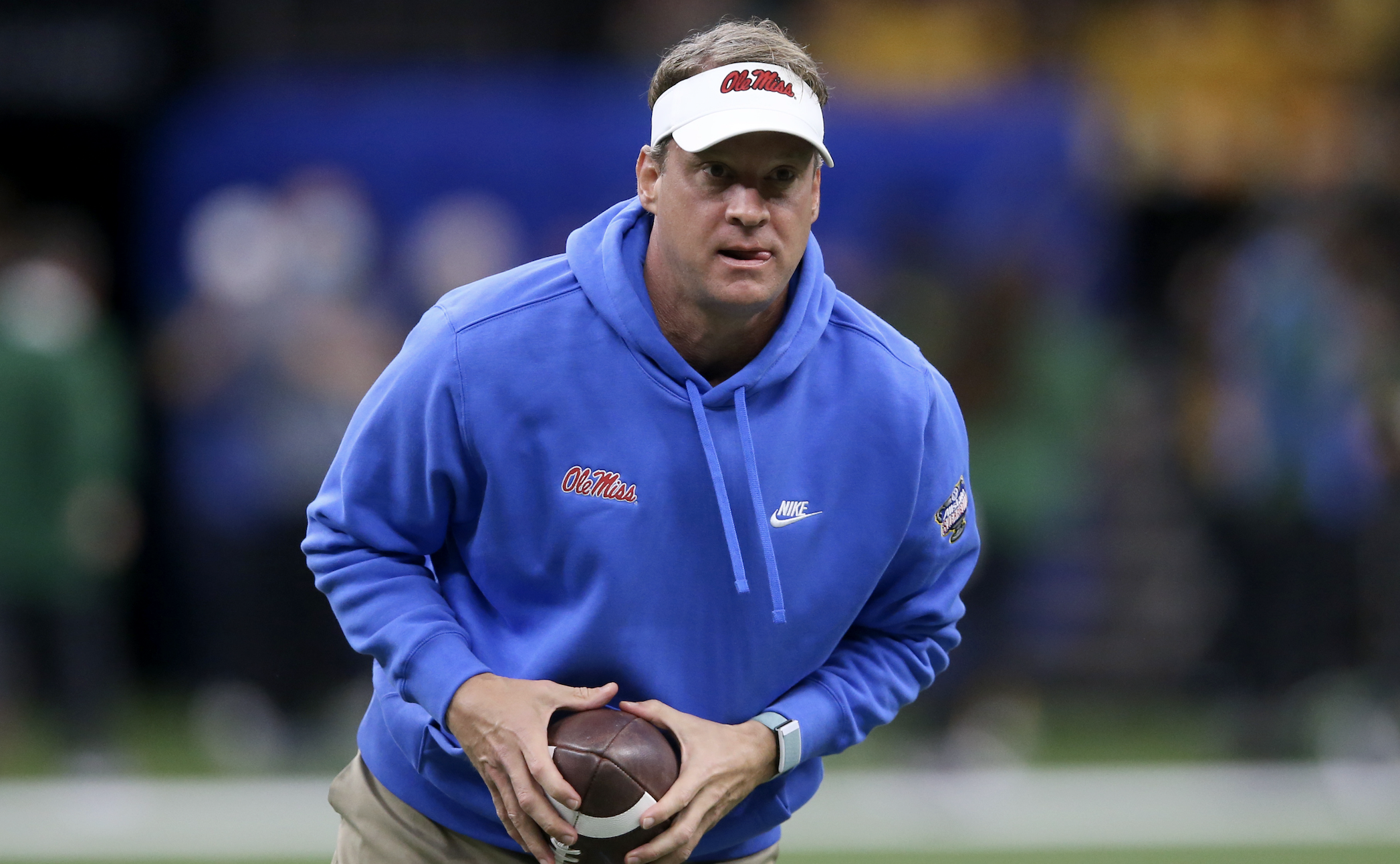
We all know that it's not sustainable — for a myriad of reasons. One of those reasons is something that Ole Miss head coach Lane Kiffin pointed out this week during an interview with Sports Illustrated.
A major issue with boosters/donors paying payers to sign with a school is that it gives those boosters/owners more power over the head coach than they should have.
Kiffin suggested that boosters/donors will act like professional sports owners and demand that a player who was paid handsomely to sign should be on the field sooner. Kiffin dealt with those types of situations during his time as the Oakland Raiders head coach (under the late Al Davis) in 2007 and 2008.
"How is that not going to be an issue–that the donor pays the money for the player,
and you're not playing them and that same donor gets you hired and fired," said Kiffin. "That donor is now what? The owner."
"I've been there, where the owner calls and says, We need to play this guy!' And I say,
'No, we need to play this other guy. I'll tell you what happens — you get fired. You get
fired on an overhead projector. What's going to happen when the lead donor calls and
says to play this guy, and you don't-do you not get fired?"
When those donors are also helping pay a coach's salary, it puts the coach in a tough spot. Do you play the best players or do you listen to the donors?
We really don't know how this will all play out. The 2022 season is going to be a fascinating case study in how NIL deals impact a team — from the locker room to the coaching decisions that are made during the course of the season.
Kiffin made it clear in the interview with SI that he's all for players being able to profit from these NIL deals. But he knows that college football can't continue down this path. Wanting regulations doesn't equate to being against NIL. It just means that Kiffin and other coaches care deeply about the sport and don't want to see the whole thing crash and burn. Because right now, that appears to be where this road ends.
Featured image via Chuck Cook-USA TODAY Sports
