
Why history suggests Chris Godwin won't sign a long-term deal with the Buccaneers in 2022
The Buccaneers used the franchise tag on Chris Godwin Tuesday, marking the fourth straight offseason in which've they've tagged a player. It's also the second straight offseason they've tagged Godwin. This marks the first time the Buccaneers have used the tag on the same player in back-to-back offseasons. Just because Godwin has been tagged doesn't […]


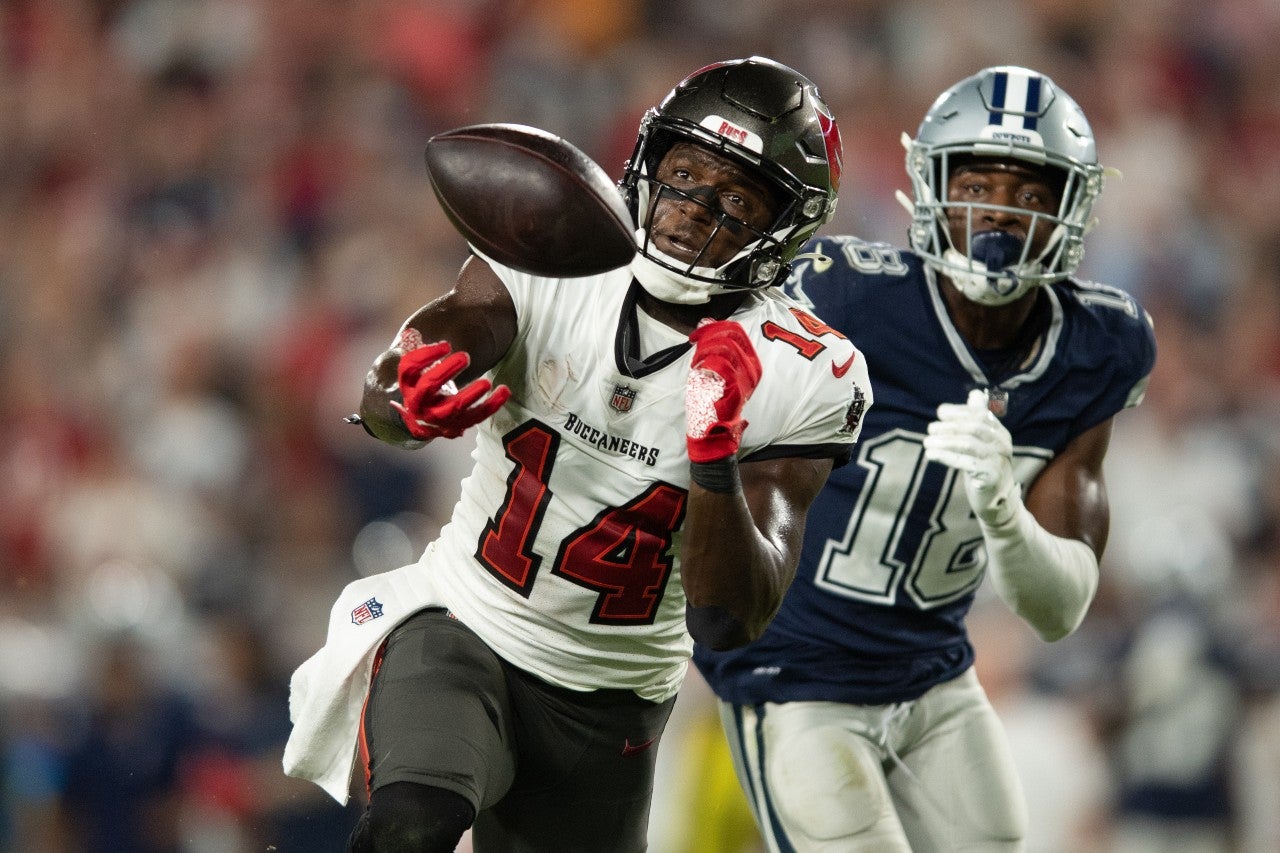
The Buccaneers used the franchise tag on Chris Godwin Tuesday, marking the fourth straight offseason in which've they've tagged a player. It's also the second straight offseason they've tagged Godwin. This marks the first time the Buccaneers have used the tag on the same player in back-to-back offseasons.
Just because Godwin has been tagged doesn't mean the chance at inking a long-term deal is out the window. Tampa Bay has until July 15 to get a deal done. However, Jason Licht and Co. had a chance to get a deal done before last year's deadline and they couldn't. They've also had an entire year to work something out since then, but couldn't.
But the past has no bearing on the future. What matter is the now and later, right?
I'm not entirely sure. Historic trends always lend a good degree of insight into present/future scenarios. Therefore, I decided to take a look at the history of players who have been tagged in back-to-back seasons. How many received a new deal after the second tag and how many didn't?
Granted, there's a lot more that goes into this than what shows on the surface. For starters, teams weren't allowed to use the franchise tag for five years after tagging a player when it first came out. That's obviously changed over the years, but it was a major detractor back then and is a big reason why teams didn't use the tag often. Players also had until Week 10 to work out a new deal, as opposed to the July 15 deadline that's now in place.
Different franchises have different spending philosophies and teams also approach the salary cap much differently these days. And, of course, there is exponential amounts of money for teams to spend/utilize now then there was even 20 years ago.
Regardless, it's still useful to see what percentage/how many players actually received new deals after a consecutive tag. Using Spotrac.com's franchise tag tracker, I was able to go all the way back to 1999 in order to get a good idea of how everything came to be over the years.
A total of 19 players have been tagged in back-to-back seasons since 1999. Which ones received new deals and which ones didn't?
A total of 13 players did not receive a new deal after a second tag. The list is as follows:
- OL Richmond Webb (1999-2000)
- OL Walter Jones (2002-2003-2004)
- OL Orlando Pace (2003-2004)
- S Donovin Darius (2003-2004)
- DB Charles Woodson (2004-2005)
- DL Darren Howard (2004-2005)
- LB Julian Peterson (2004-2005)
- LB Karlos Dansby (2008-2009)
- K Phil Dawson (2011-2012)
- LB Anthony Spencer (2012-2013)
- QB Kirk Cousins (2016-2017)
- CB Trumaine Johnson (2016-2017)
- OL Brandon Scherff (2020-2021)
So, 68% of players who were double-tagged did not received a second deal. It's interesting to note this list is comprised mostly of offensive linemen and just one quarterback. Darius was tagged three years in a row, just like Jones, but eventually landed deals. They still make the list, however, due to not receiving a new deal after his second tag.
Below are the players who did receive new deals after their respective teams double-tagged them:
- CB Chris McAlister (2003-2004) seven-years, $54,999,906
- OLB Terrell Suggs (2008-2009) six-years, $62.5 million
- DL Demarcus Lawrence (2018-2019) five-years, $105 million
- QB Dak Prescott (2020-2021) four-years, $160 million
- S Justin Simmons (2020-2021) four-years, $61 million
- DL Leonard Williams three-years, $63 million
Only six players received deals after a second tag. Or, 31%. To put that number into context: all 32 NFL teams converted at least 34% of their third downs in 2021. Double-tagged players went 10 seasons without receiving a new deal after a second tag.
That's not good.
There is one silver lining, however: Four of the six players to receive new deals were players who were double-tagged in 2018 or later. As I mentioned earlier, teams approach the salary cap differently these days and there is a crapload more money to throw around, which is likely the catalyst behind the spike.
So, while overall history doesn't bode well for Godwin's long-term chances, recent history does.
Which side of history will the Buccaneers fall on when it's all said and done?
You can check out Spotrac's full list of franchised players, here.
Featured image via Jeremy Reper-USA TODAY Sports
