
Cover 3: Quick takeaways after Packers loss to the Giants
After every Green Bay Packers game, we will talk about three points that defined the matchup. Young teams will win games they aren’t supposed to, and that feels great. But they will lose games they shouldn’t as well, as that’s part of the growing process for a group that’s still learning how to operate in […]


After every Green Bay Packers game, we will talk about three points that defined the matchup.
Young teams will win games they aren’t supposed to, and that feels great. But they will lose games they shouldn’t as well, as that’s part of the growing process for a group that’s still learning how to operate in the NFL.
The Packers have been able to overcome failures, but they couldn’t sustain success against what was expected to be a lesser opponent. They lost 24-22 to the New York Giants on Monday night, killing the positive streak the Packers had.
The playoffs are still a very realistic scenario, but there’s no margin for error left.
Complementary (bad) football
The Packers will live and die by their offense. Because if they depend on their defense or special teams, there’s no answer. Against the Giants, the offense wasn’t able to produce as effectively and regularly as they did in the previous games, so everything fell apart.
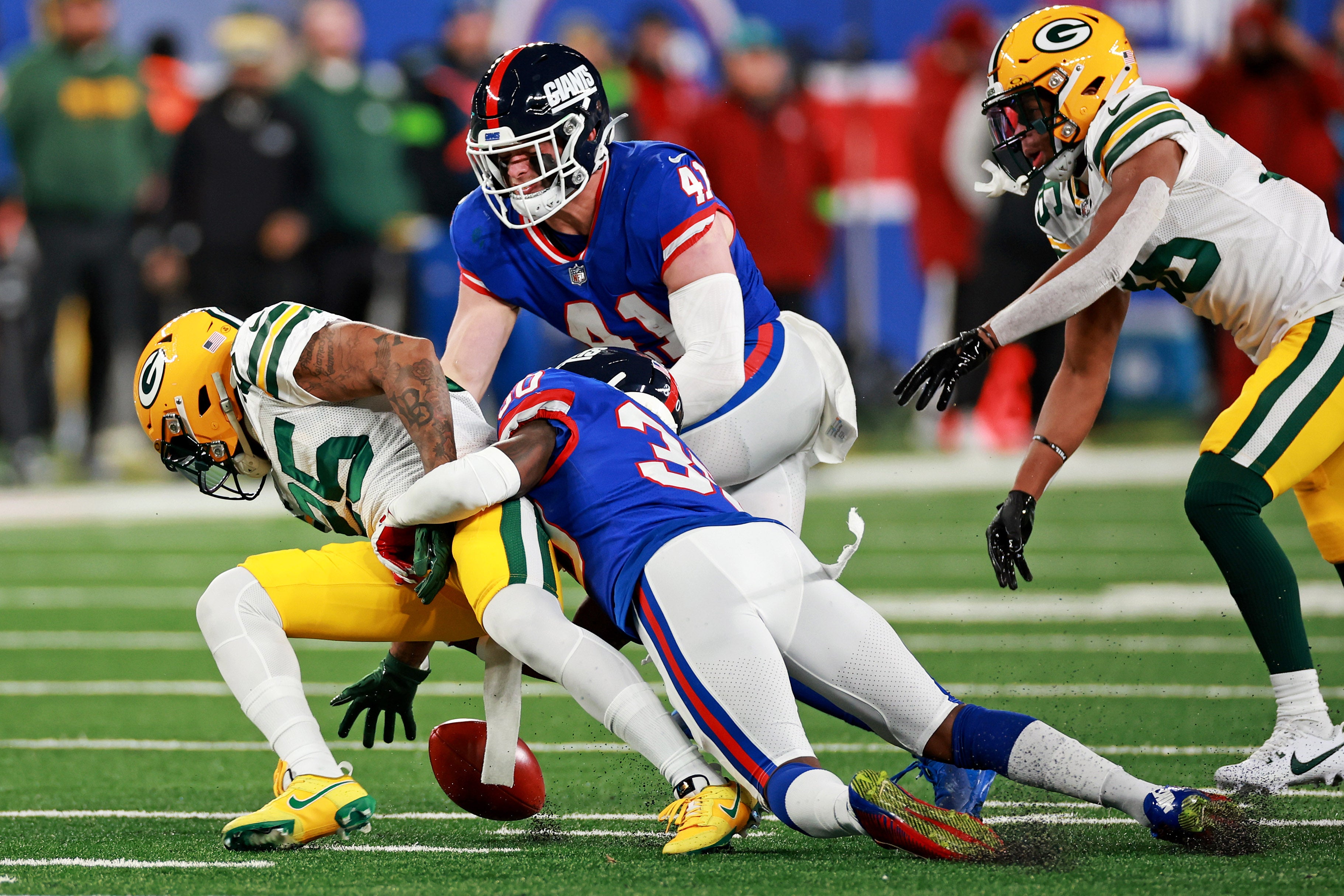
The defense was not exactly bad, but they were situationally bad (as always), and the last Giants offensive drive to win the game was a great example. Moreover, the special teams were awful once again, with several penalties, Keisean Nixon’s fumble, and one missed field goal by Anders Carlson that cost them the game.
If the Packers want to be a more reliable football team, they need to be able to win games with more than one phase leading the way.
Christian Watson’s absence
Watson might not be your ideal, bona fide WR1, but he is an extremely important piece of the offense. Without him, it’s much more difficult to stretch the field and make the defense respect them. Everything feels (and is) much more condensed, and no other Packers offensive weapon is able to replicate his skill set.
Obviously, there were more missing pieces. Aaron Jones, Luke Musgrave, David Bakhtiari. At some point, without so many pieces it’s difficult for Jordan Love to orchestrate an explosive unit.
Defense has no situation awareness
When the Packers scored the final touchdown with a little more than one minute left, the script was obvious for fans. Joe Barry would call a prevent defense, and the Giants offense with Tommy DeVito at quarterback would march down the field. Well, that’s exactly what happened.
During the week, defensive coordinator Joe Barry said their main goal was to allow one point fewer than the offense scored, but that’s not a sustainable path to success in the NFL. It’s a model based on results, and not process. The process by the Packers defense is simply not good enough.
The defense only allows a relatively low number of points per game when the offense is able to sustain long drives and to limit overall possessions. When the defense needs to, well, play defense, it’s below average at best. And this is not what they expect and need considering how much capital and effort the Packers have put into the unit.
