
Salary cap shows the Packers are rebuilding
The Green Bay Packers are spending $72.6 million on the offensive side of the ball this year. No other team in football spends less than $80 million. The defense is not that expensive, either: 19th in the league, at $105.5 million. It's always important to see what the team management does, and not what it […]


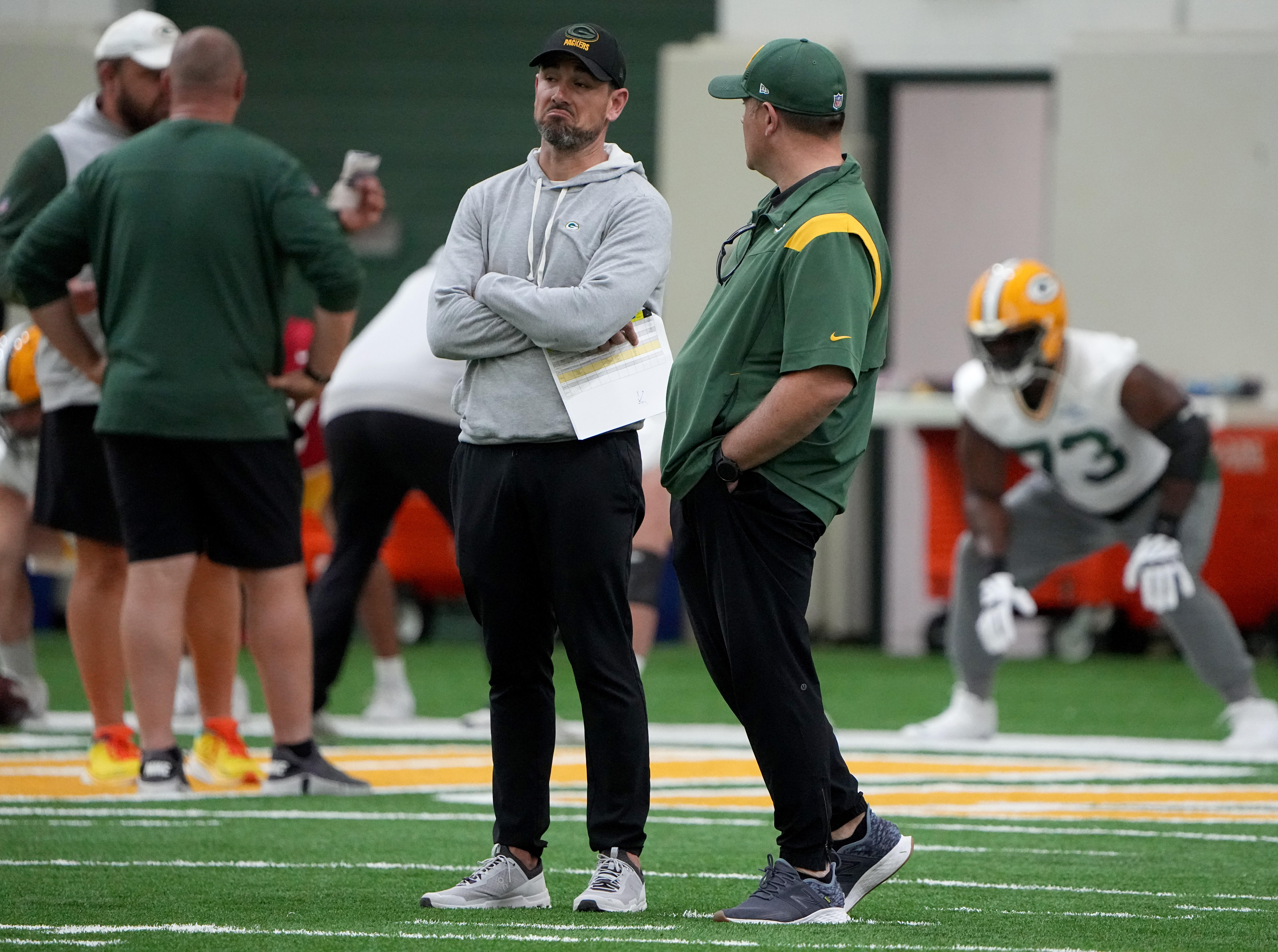
The Green Bay Packers are spending $72.6 million on the offensive side of the ball this year. No other team in football spends less than $80 million. The defense is not that expensive, either: 19th in the league, at $105.5 million.
It's always important to see what the team management does, and not what it says. The Packers are the second-cheapest team in the league, and in the middle of what can and should be called a rebuild. You could also call it a youth movement or retooling, but it is what it is. They are transitioning to a new phase, and their cap structure makes it clear. But if the Packers are not spending and are in a bad financial situation, where did the cap go?
To understand that, you have to go back to 2020. The Packers drafted Jordan Love, but every other move was made trying to compete for championships in the twilight of Aaron Rodgers' career. The Packers were in the top half of the league in cash spending in five of the last six years. They spent $181.06 million just on quarterbacks between 2018 and 2022, by far the most in the NFL — over that period, and the second highest spender on QBs was the San Francisco 49ers, at $152.1 million.
There was never a perception of an all-in because they didn't acquire veterans in trades, or sign big-ticket free agents after the 2019 spending spree. But they were as all-in as the franchise would ever be. And, as always, the bill comes due at some point.
This year's situation
In total, the Packers are spending $182.4 million. That's way less than the $224.8 million NFL salary cap. Moreover, the team has restructured every possible veteran contract to be able to operate this year: David Bakhtiari, Kenny Clark, Jaire Alexander, Elgton Jenkins, De'Vondre Campbell, Rasul Douglas, Darnell Savage, Yosh Nijman. Running back Aaron Jones accepted a real pay cut in order to be in Green Bay, and Jordan Love signed a one-year extension to replace the upcoming fifth-year option.
After all these moves, the Packers have just three players with a cap hit above $10 million this season on the active 53-man roster: Kenny Clark ($12.9 million), Rashan Gary ($10.9 million), and Jaire Alexander ($10.76 million). They also have David Bakhtiari ($21.3 million) on injured reserve and out for the season, and Eric Stokes ($3.25 million) on the physically unable to perform list.
Additionally, there's a lot of money paid in previous years and hitting the cap now, because the Packers utilized restructures to afford those expensive rosters. The situation got particularly dangerous when the 2020 and 2021 salary caps were affected by the pandemic, and that sum of events forced the Packers to start using mechanisms they hadn't before, like adding void years to contracts.
Elgton Jenkins, for example, is making $2.2 million this year, but his cap hit is $6.97 million because of the money previously paid. This doesn't count as dead money because Jenkins is still on the roster, but practically, it is.
Dead money
And well, there is the so-called dead money itself. This is money already paid that hadn't hit the cap yet, or guaranteed money left to be paid for players who aren't on the roster anymore. The elephant in the room is Aaron Rodgers, as expected.
After touching his deal multiple times over the last couple of years to have salary cap viable contracts, the Packers absorbed a $40.3 million hit in dead money from their former quarterback.
Other players like Adrian Amos ($7.95 million), Dean Lowry ($3 million), Jarran Reed ($1.49 million), Randall Cobb ($1.39 million), Marcedes Lewis ($1.05 million), and Mason Crosby ($1 million) count against the cap, as well as many others under $1 million. It's a normal cost of doing business, and everyone in the NFL has to handle it, but the Packers have been a more extreme example.
The Packers decided to clean their cap as soon as possible. After four seasons of extra spending, they need at least two years to have real flexibility once again. And that's why, whether they admit it or not, they are going through some sort of rebuilding season. It's time to evaluate the young roster and see who can be part of the future. A future when, finally, the Packers will be able to be competitive on the market again.
