
How the 49ers can realistically adjust Trent Williams’ contract to get him back on the field
Left tackle Trent Williams is another piece of the San Francisco 49ers unhappy with his contract. Pundits and fans talked about wide receiver Brandon Aiyuk all offseason, but it’s Williams who is really holding out of training camp — Aiyuk is holding in. And the left tackle’s situation might be even more complicated, because he […]


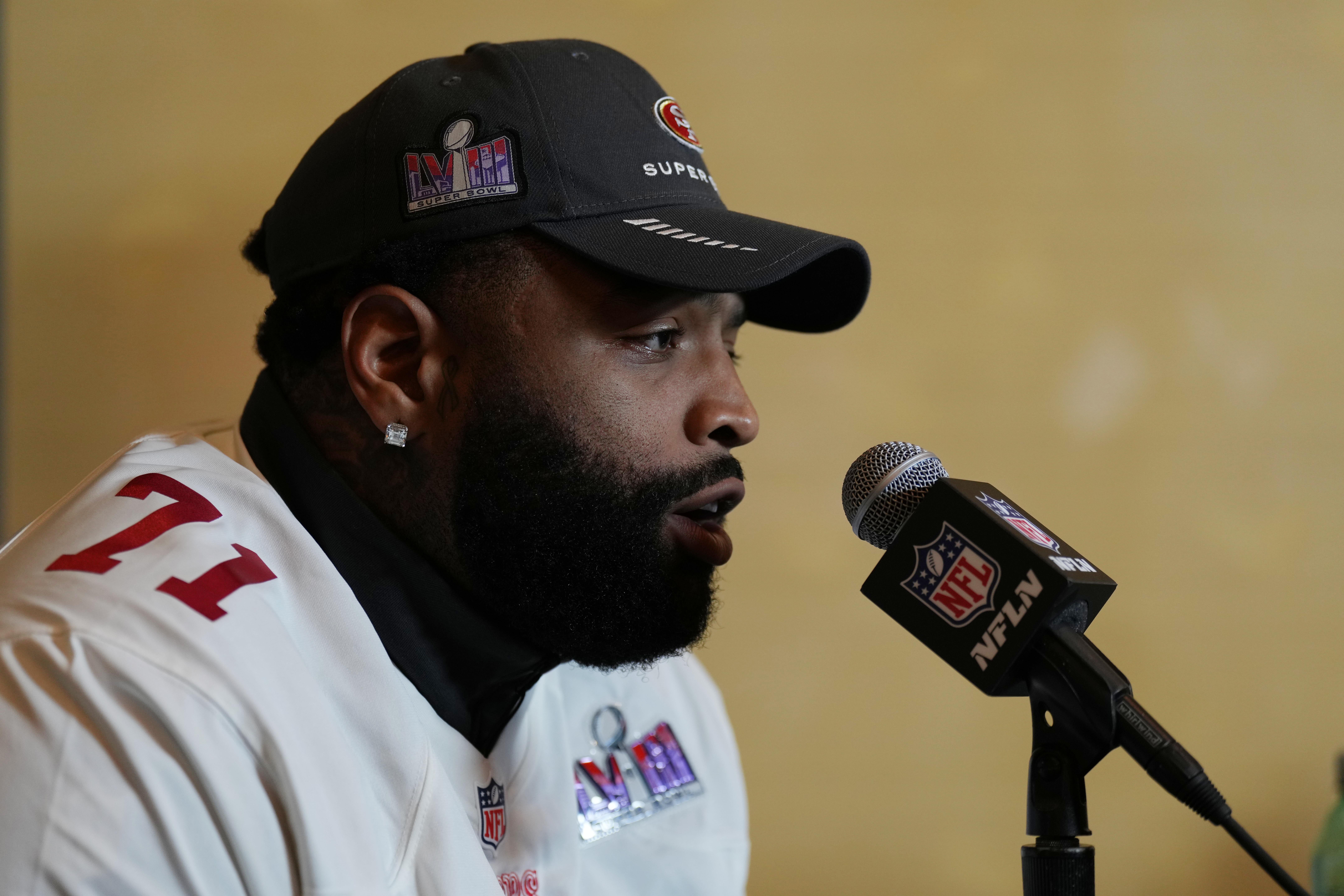
Left tackle Trent Williams is another piece of the San Francisco 49ers unhappy with his contract. Pundits and fans talked about wide receiver Brandon Aiyuk all offseason, but it’s Williams who is really holding out of training camp — Aiyuk is holding in.
And the left tackle’s situation might be even more complicated, because he is older and arguably more important to the structure of the offense. There is no replacement for him on the roster, it’s impossible to compensate for what he does, and the entire offensive line would suffer.
Where his contract stands
Trent Williams reached a six-year extension with the 49ers back in 2021. At the time, it was a 3+3, meaning that Williams had three pretty much safe years, and then what essentially are three team options in 2024, 2025, and 2026. That’s the biggest issue right now.
The left tackle is slated to make $20.05 million this year, $23.35 million next season, and $33.06 million two years from now, but nothing left is guaranteed. He also has $100,000 per season available in workout bonuses.
If the 49ers were to cut Trent Williams at any point, he wouldn’t receive any extra dollar — the dead money San Francisco would handle is money already paid that hasn’t hit the cap yet. Great for the team, bad for the player. And that’s why he is trying to use the leverage he has. It’s hard for a player to negotiate with three years left on a deal, but Williams is 36 years old, so retirement ultimately can be used to make sure he gets fair compensation.
Market and options
When Trent Williams signed his extension three years ago, he slightly surpassed David Bakhtiari as the highest-paid offensive lineman in football. Now, the position place belongs to Detroit Lions’ right tackle Penei Sewell, making $28 million per season — Minnesota Vikings’ left tackle Christian Darrisaw makes $26 million in base value, but he can reach $28 million per year playing 90% of the snaps and making the First-Team All-Pro every year, according to NFL Network’s insider Mike Garafolo.
Brad Spielberger, formerly a cap analyst for PFF and currently the director of football administration at Grand Central Sports Management, brought an interesting idea of what could happen to adjust Williams' deal.
Williams has a balloon year in 2026, projected to inflate his yearly average and to create a tension point for an extension or release. But now that he wants more money and guarantee, a smart way for the 49ers to solve the issue would be to move up, let’s say, $8 million of the 2026 salary to 2024. Plus, the team could guarantee this year’s money and $10 million of the 2025 salary.
In this case, the 49ers would pay $28.05 million this year, which is aligned with the top of the tackle market, and $23.35 million next year with nearly half of that money guaranteed, giving the player more financial stability. The 2026 base value would go down to a non-guaranteed $25.06 million, but he will be 38 by then, so it would most likely be time for a renegotiation anyway.
Moving money from 2026 to 2024 wouldn't affect the 49ers salary cap outlook either. Right now, Williams is counting $31.568 million against the cap.
With the adjustment, the 49ers would have the option to convert most of his current base salary plus the extra $8 million into a signing bonus. That would make his cap hit go down to $18.096 million in 2024, clearing up $13.472 million in cap space.
The San Francisco 49ers need Trent Williams, and for the player it’s also important to find a middle ground with the team. Moving money from the future and securing more guarantees is a smart way of doing business for both sides, even though it would create another tension point two years from now. After all, that’s basically the window the 49ers have to win with a cheap quarterback in Brock Purdy.
