
Patriots head coach discusses the evolution of the short passing game
In an exclusive interview with the 33rd Team's Mike Tannenbaum, Bill Belichick discussed how the game has evolved over the past decades. Belichick began by addressing the evolution of NFL passing offenses, stating, "The rules have shown a favoritism to the forward pass". He further explained, "If you look at the guys back in the 60s, great quarterbacks […]

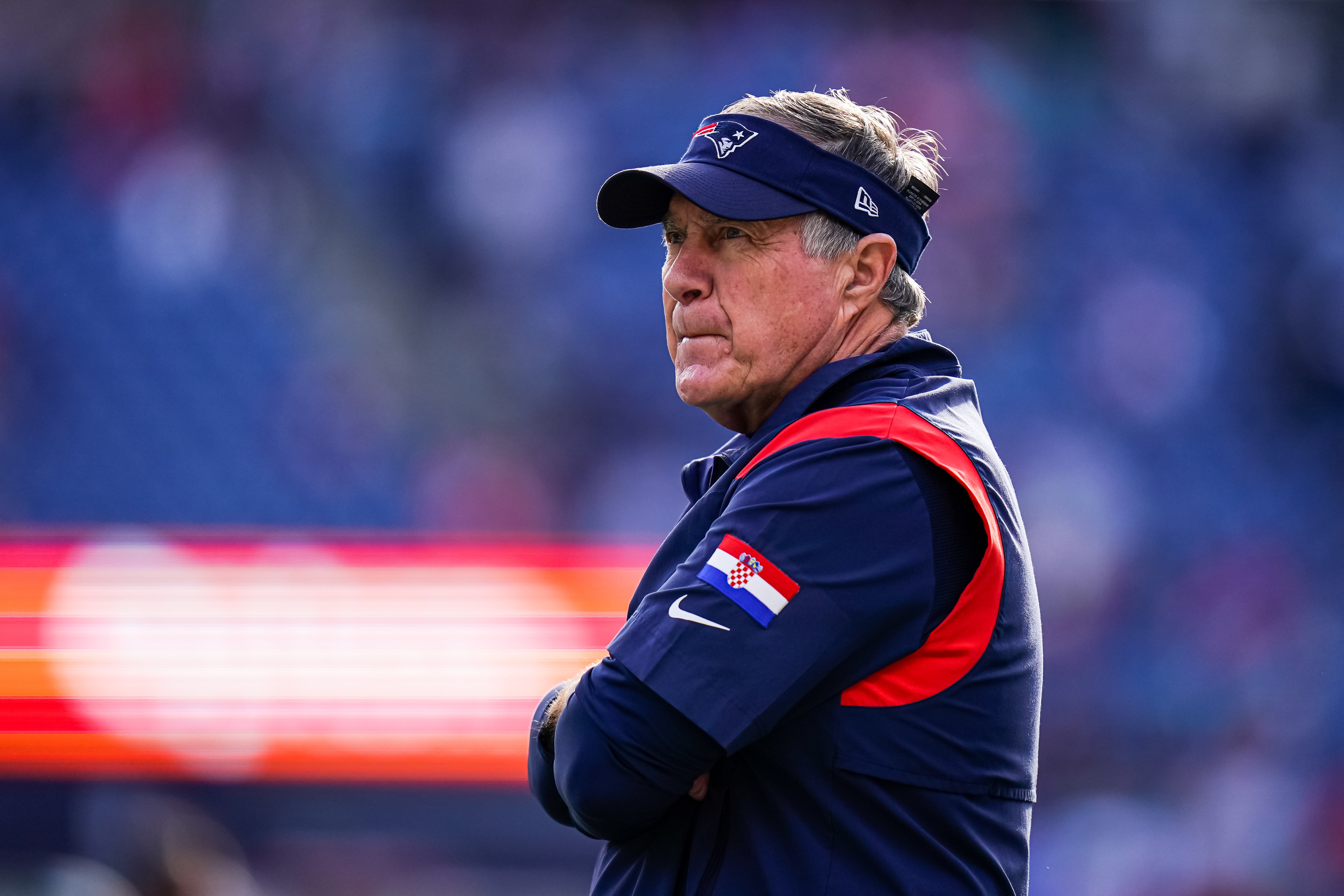
In an exclusive interview with the 33rd Team's Mike Tannenbaum, Bill Belichick discussed how the game has evolved over the past decades.
Belichick began by addressing the evolution of NFL passing offenses, stating, "The rules have shown a favoritism to the forward pass". He further explained, "If you look at the guys back in the 60s, great quarterbacks like Bart Starr, Johnny Unitas, and those guys. They only threw the ball 20-25 times a game. Nowadays, that would be modest in the first half."
The passing game has undergone significant changes over the years. From 1960 to 1969, there was an average of 27.7 passing attempts per game. In contrast, since 2010, the average number of passing attempts per game has increased to 34.7, illustrating a notable shift in offensive strategies.
Belichick further commented, "The game has changed quite a bit. In terms of the rules, they are beneficial to the passing game and obviously, coaches and players have been able to take advantage of that." Belichick isn't lying either, the data supports his claims.
As mentioned earlier, there has been an increase of approximately seven to eight pass attempts per game in the modern NFL compared to sixty years ago. Although it may not appear significant at first glance, the NFL has significantly improved at utilizing the passing game and maximizing the potential of each attempt.
For starters, the average completion percentage since 2010 is 62.7%. Comparatively, the average completion percentage was 51.7% from 1960-1969. Not only has the volume in which teams throw the ball increased, but the effectiveness has increased too.
For starters, since 2010, the average completion percentage is 62.7%. In contrast, from 1960 to 1969, the average completion percentage was only 51.7%. Not only has the volume in which teams pass the ball increased, but the effectiveness of passing plays has increased too.
In fact, every passing metric has improved since the 1960s. In 1960,
| 1960-1969 | 2010-2023 |
|---|---|
179.2 yards per game | 232.6 yards per game |
69.7 passer rating | 88.6 passer rating |
Belichick, however, does not believe that teams are necessarily throwing the ball downfield more often. In fact, he offered an explanation for the increase in offensive efficiency, stating, "So many passes don't cross the line of scrimmage," Bill Belichick said. "Not just screen passes, but RPOs, and the sweeps out of the shotgun where the QB pitches the ball forward. It is really a hand off play, but it counts as a pass. When you look at all those plays that come from behind the line of scrimmage, when you add those into the running game, you see a much more balanced offense, but it statistically looks like more of a passing game."
Belichick elaborated on this by saying "I think what you are seeing is less intermediate type passing plays that the west coast teams like Coach Walsh and Coach Gibbs used in favor of more of the quicker throws. "
Interestingly, there appears to be some truth to the evolution of the quick passing game. Dating back to 1934, the four highest average yards per passing attempt(YPA) were all in the 1960s. That would likely explain the statistical increase in completion percentage and passer rating as teams are giving their quarterbacks easier throws nowadays by asking them to not throw the ball as far, as often. It is worth noting that it fluctuates on a year-to-year basis. Some years, NFL teams throw the ball further down the field than other years but the average yards per pass attempt seemed to have peaked in the 1960s.
Interestingly, there seems to be evidence supporting the evolution of the quick passing game. Since 1934, the four highest average yards per passing attempt (YPA) occurred during the 1960s. This likely explains the statistical increase in completion percentage and passer rating that we see today when compared to passing in previous decades. Modern teams often rely on shorter, more manageable throws for their quarterbacks instead of consistently attempting deep passes. However, it's important to acknowledge that these trends can vary from year to year. Some seasons witness NFL teams throwing the ball downfield more frequently than others, but the average yards per pass attempt appeared to have reached its peak in the 1960s.
Featured image via David Butler II-USA TODAY Sports
