
Unveiling the Patriots' Promising Interim Fix at Right Tackle
The Patriots chose a controversial strategy for fixing their offensive line this off-season. Rather than using a high draft pick or enticing a top-tier free agent with a large contract, they decided to sign stop-gap players. Among these signings were Calvin Anderson and Reilly Reiff, who were considered the team's notable acquisitions. I have covered […]

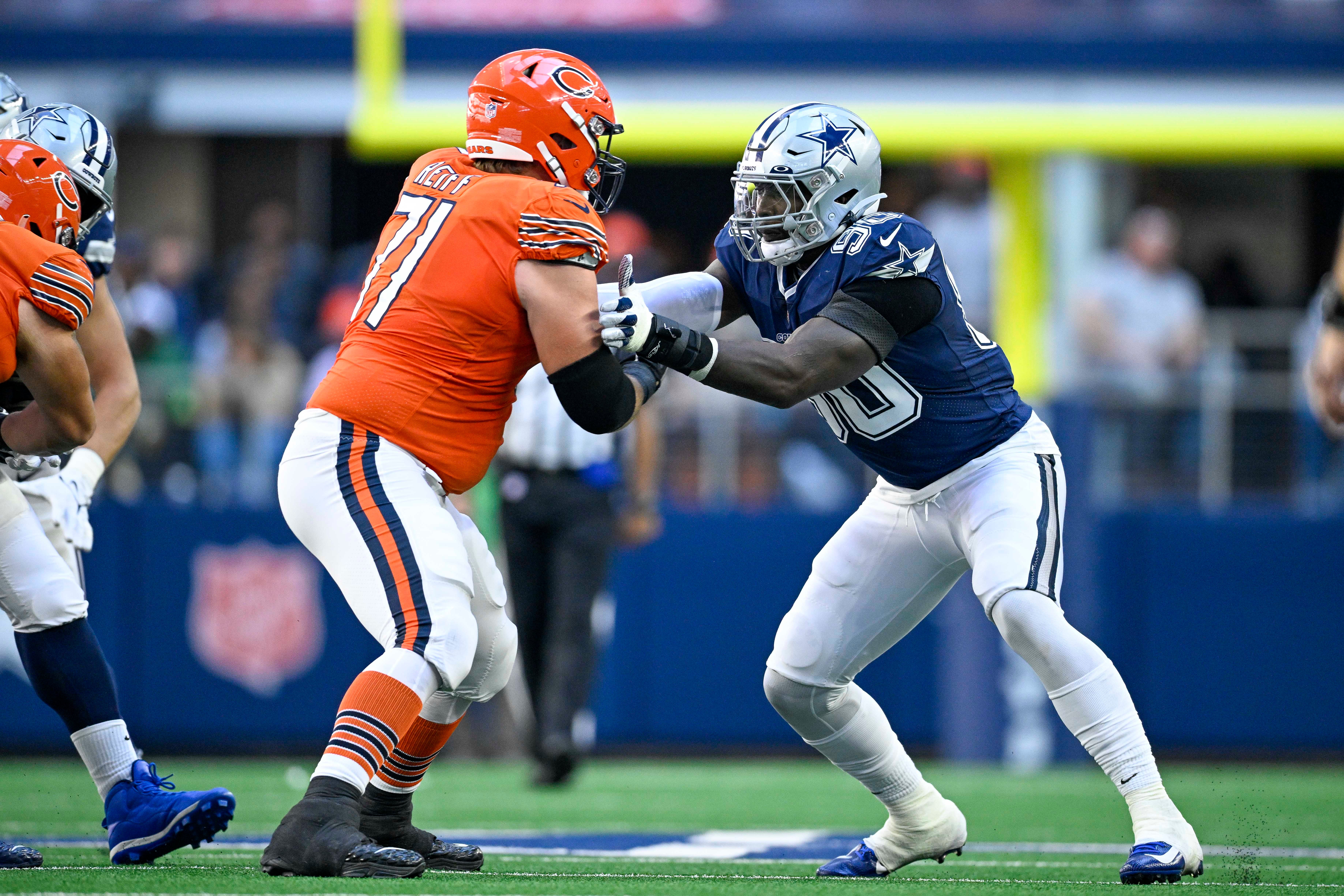
The Patriots chose a controversial strategy for fixing their offensive line this off-season. Rather than using a high draft pick or enticing a top-tier free agent with a large contract, they decided to sign stop-gap players. Among these signings were Calvin Anderson and Reilly Reiff, who were considered the team's notable acquisitions. I have covered Anderson in another article that was published a few days, which you can read by clicking here.
Reiff is coming off a unique season where he only appeared in ten games, and played 542 total snaps. The Chicago Bears brought Reiff in to contend for a starting position, but the team ultimately opted for Larry Borom to start the season. Reiff seized his opportunity to play after Borom suffered an injury, and he never looked back.
In terms of pass protection, Reiff was reliable. While he did experience occasional losses, they were not excessively significant. There are different degrees of "losses" in pass protection. It can range from being completely beaten by a defender to maintaining a block long enough to be effective. Reiff didn't encounter many significant losses in this regard.
It should be noted that Reiff is not an exceptional athlete, which can leave him susceptible to being exploited by longer and quicker opponents at times. It is not egregious though, as he still held his own against some of the twitchier pass rushers like Hasson Reddick. Reiff demonstrated a solid ability to hold his ground and prevent being forcefully pushed back toward the quarterback, unlike Calvin Anderson. Moreover, Reiff exhibits a strong technical understanding of the game and rarely surrenders leverage.
Reiff adds a heightened level of toughness to the offensive line, consistently displaying his dedication by going the extra mile even after the play is over. He maintains a relentless approach, giving his all on every single down.
Despite being an older player, as he approaches the age of 35 this season, Reiff exhibits surprisingly impressive mobility. Reiff was never the best athlete, and that still holds true today, but he demonstrates the ability to effectively navigate to the second levels of the defense and displays agility in getting out wide on running plays. It is evident that he has maintained his athleticism and remains a capable athlete on the field.
When examining the statistics, Reiff's performance does not stand out. I created a pressure rate chart to assess the amount of pressure allowed by players in pass protection on a percentage of snaps basis. A higher pressure rate indicates more pressure allowed, while a lower rate indicates better performance as a pass blocker. It should be noted that Reiff did not meet the minimum requirement of 600 pass-blocking snaps for inclusion in this chart. However, if we include Reiff's data, he recorded a pressure percentage of 6.13%, which places his season performance slightly ahead of Trent Brown in terms of pass-blocking effectiveness.
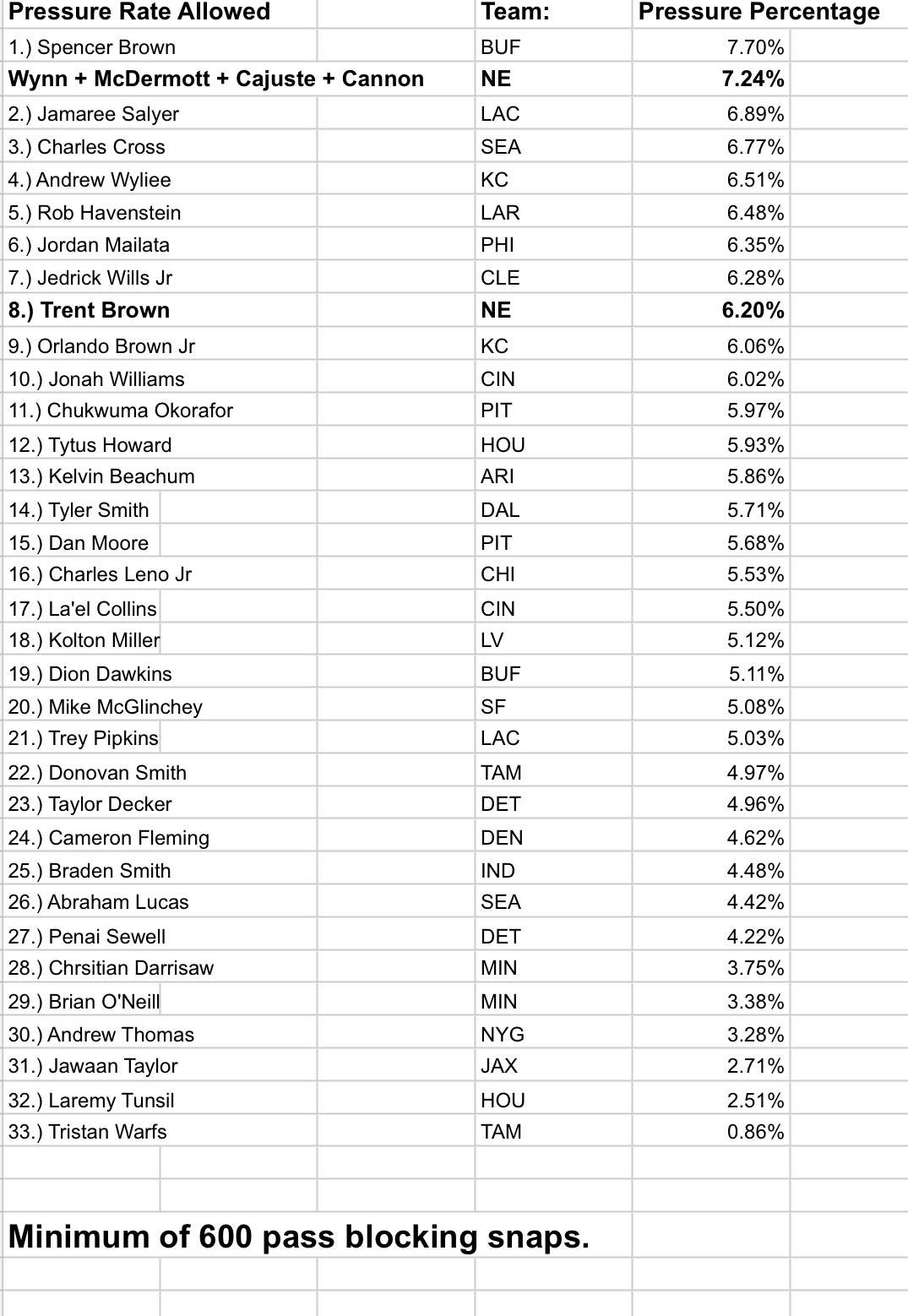
It is crucial to consider the context behind the raw numbers when evaluating Reiff's performance. Pressures on the quarterback are not always solely the responsibility of the offensive line and can be influenced by various factors, including the quarterback's decision-making and execution. In the case of Reiff, his job may have been made more challenging by the playing style or specific circumstances with Justin Fields as the quarterback. Consequently, his actual performance exceeded what the raw numbers indicate. Taking everything into account, it appears that Reiff performed at an average starter level during his limited playing time.
Reiff, while not considered an elite offensive lineman, has shown resilience in facing formidable pass rushers. Despite facing injury setbacks, his ability to hold his own against top-tier opponents deserves recognition. While Reiff may not be a long-term solution at right tackle, his potential to establish continuity within the New England Patriots' system and replicate his previous performances could earn him the starting role for the upcoming season. With an improved coaching staff and the return of a healthy Trent Brown, there is optimism that the offensive line can find stability, even if it is only temporary.
Featured image via Jerome Miron-USA TODAY Sports
