
James Cook learns a fast and hard lesson about the ugly side of the NFL that proves the Bills always had the leverage
The Bills running back was fighting a losing war from the start.


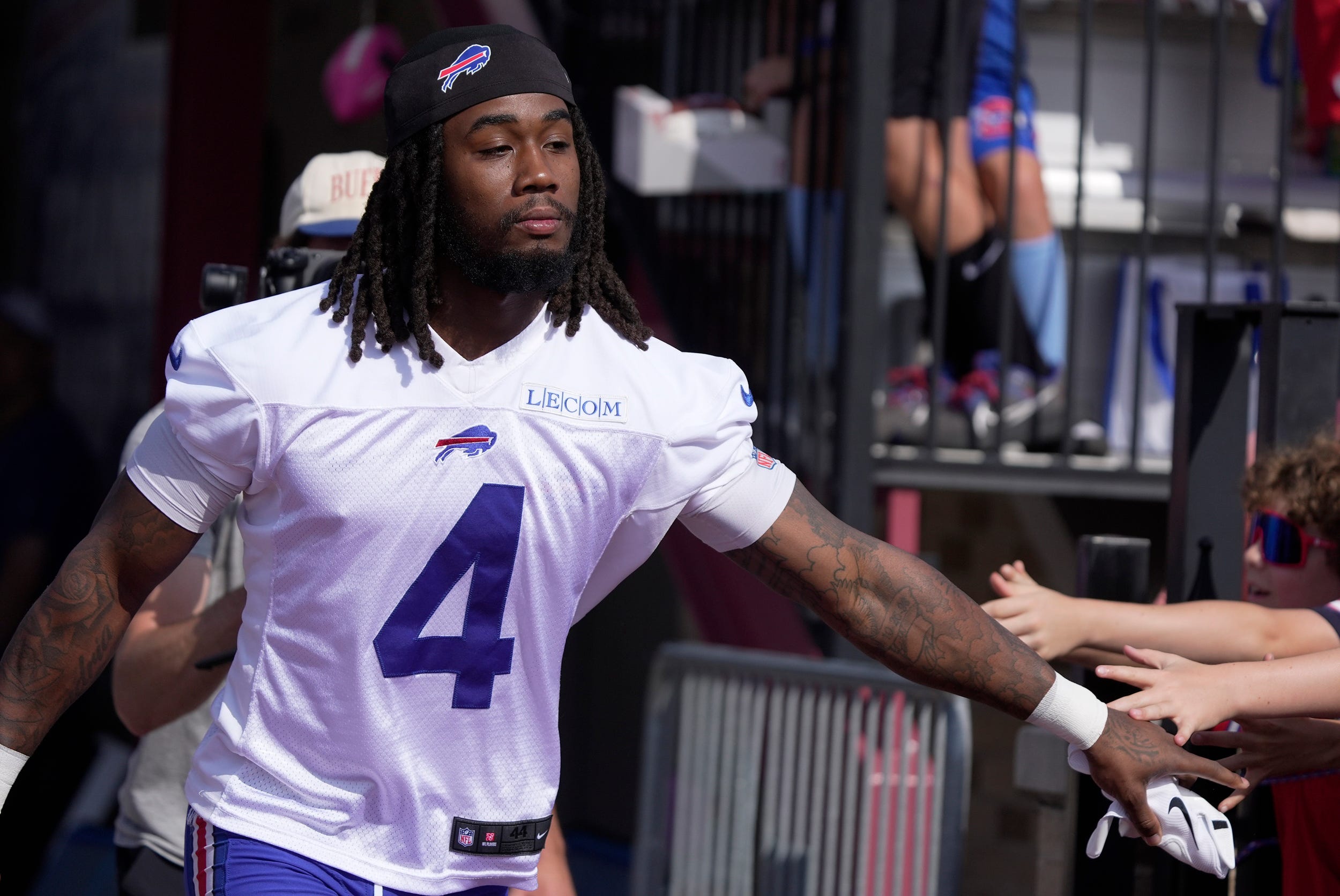
Buffalo Bills running back James Cook had only one word for why he decided to miss training practice on Aug. 3: business.
Since then, the NFL’s 2024 leader in rushing touchdowns has been holding-in for a new contract, but that ended Tuesday when he fully participated in practice.
Just nine days after attempting to stand on business, Cook has learned a hard lesson, and it’s the fact that the business side of the NFL is set up in every single team’s favor. Unless a player is an established, accomplished veteran like Cam Heyward (who’s also made more than $131 million during his career), the odds are largely stacked against someone trying to holdout, or hold-in.
Especially a player like Cook, who is still on his rookie deal and hasn’t even become a vested veteran yet. That’s the biggest key in all of this: If Cook actually sat out the year to the point where it voided his 2025 salary, he would’ve been in the exact same spot next year. The Bills would still control his rights, and he wouldn’t receive the sought-after fourth accrued season that allows him to become an unrestricted free agent.
And, even if he did play the year out, the Bills could simply place the franchise tag on him if they wanted to. They’d likely go the exclusive franchise tag route, as well, which would prohibit him and his camp from negotiating with other teams.
The system is set up against him — he was fighting a war that was lost from the start. Especially considering he’s had one year of borderline-elite production. Sure, he led the NFL with 16 rushing touchdowns, but he barely eclipsed 1,000 yards on the ground, and his 258 receiving yards were 25th among running backs. Cook’s backfield running mate, Ty Johnson, finished with more receiving yards.
His best option was always to put his head down and grind to make 2025 an even better year and set himself up with some actual leverage in 2026. Instead, he decided to waste time by sitting out multiple practices that could’ve helped him take a step forward in 2025. I mean, even the hold-in shows it’s unserious because he simply hasn’t made enough money at this point in his career to risk the $50k fine for each missed practice, much less the aforementioned fourth accrued season.
And don’t get me wrong — I’m all for players getting paid. We all know the NFL stands for “not for long,” but players must understand the game they’ve been placed in. While it’s true that no one likes to be controlled, players can find ways to win these battles if they play smart.
Cook didn’t do that and learned a tough lesson about one of the uglier sides of the NFL. Business is business, and this league has certainly made that clear, pretty much ever since it has existed.
He’ll eventually get his payday, it just won’t be what he was initially seeking in terms of top RB money if he wants to get paid in 2025.
