
Alabama’s win over Georgia came at an immediate cost after a controversial call on a key Crimson Tide defender
What a bad call on James Smith.

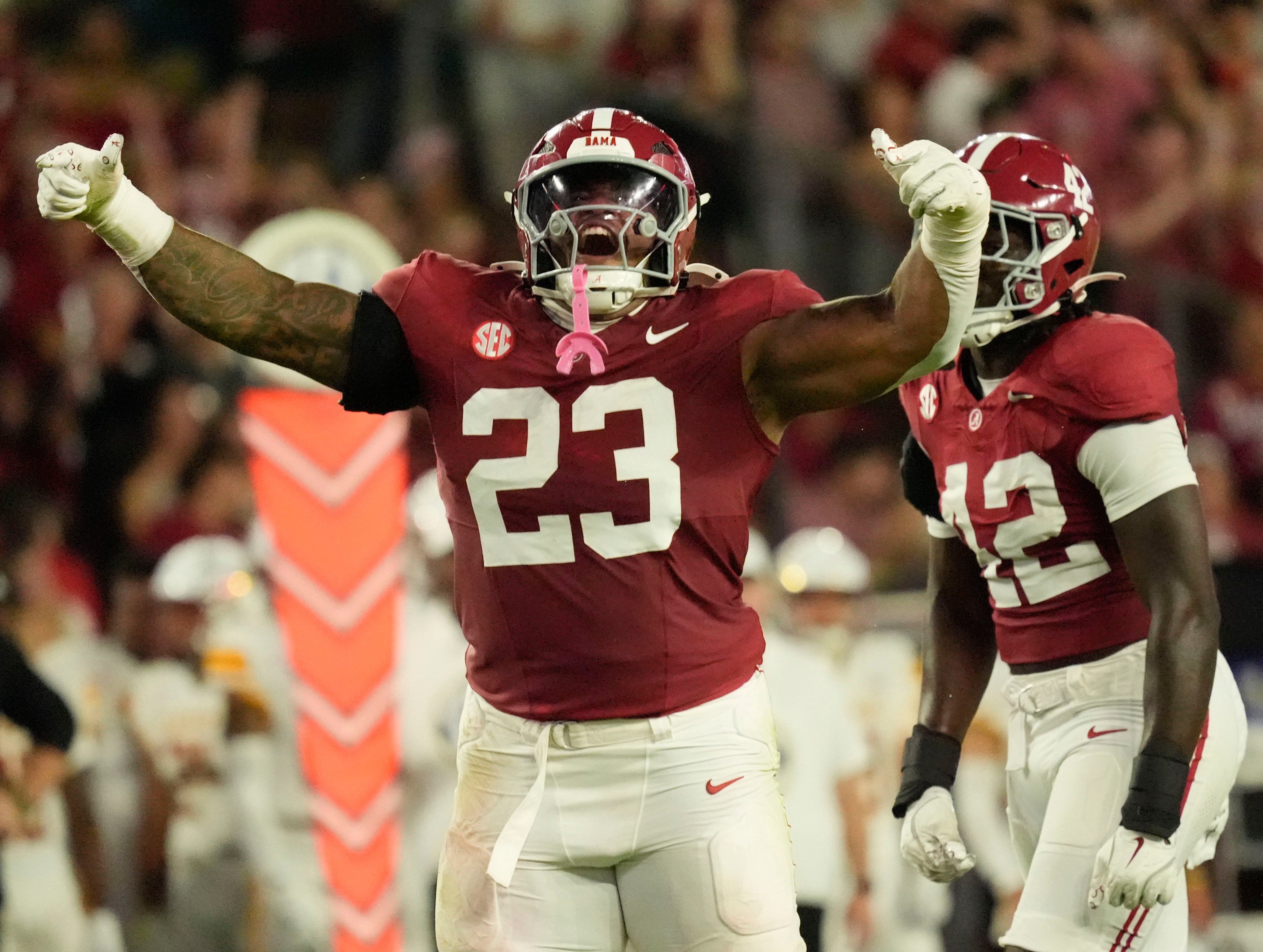
The Alabama Crimson Tide entered the game against the Georgia Bulldogs shorthanded along the defensive line, and the situation only worsened as the game progressed. Tim Keenan III returned for the first time all year, but Jah-Marien Latham was ruled out early in the week after a serious practice injury, and then the team lost Qua Russaw to a lower-body injury for the rest of the game.
So the last thing Alabama could afford would be the loss of a defensive tackle. A defensive tackle named James Smith. Yet, that’s exactly what happened. Smith was called for targeting, and it sent any objective viewer into a tizzy when seeing how ticky-tacky of a call that was.
James Smith out for first half of Alabama vs. Vanderbilt
Don’t look now, but the Vanderbilt Commodores, led by Diego Pavia, are headed to Tuscaloosa next Saturday undefeated and hungry for another win over the Tide. The city of Nashville damn near burned to the ground when Vandy beat Alabama for the first time in over four decades in 2024.
If they were to do it again, in Tuscaloosa, heads will roll. So the loss of Smith for the first half hurts. And it feels like the conversational equivalent of beating a dead horse, but at some point, college football needs to realize that targeting penalties and calls are a mistake.
Are there blatant uses of the crown of the helmet that deserve considerable punishment? Sure, but you can’t tell me for one second that the hit Smith laid out was intentional, violent, or worthy of a flag, much less a call with the impact of targeting.
So I don’t blame the officials, the players, or the coaches; I blame the higher-ups in college football for thinking this rule should still exist in 2025.
