
Matt Campbell vs. James Franklin: Same job, different blueprint at Penn State
Penn State replaces James Franklin’s CEO-style coaching with Matt Campbell’s development-first approach. Here’s how the program’s identity, culture, and on-field philosophy are about to change.


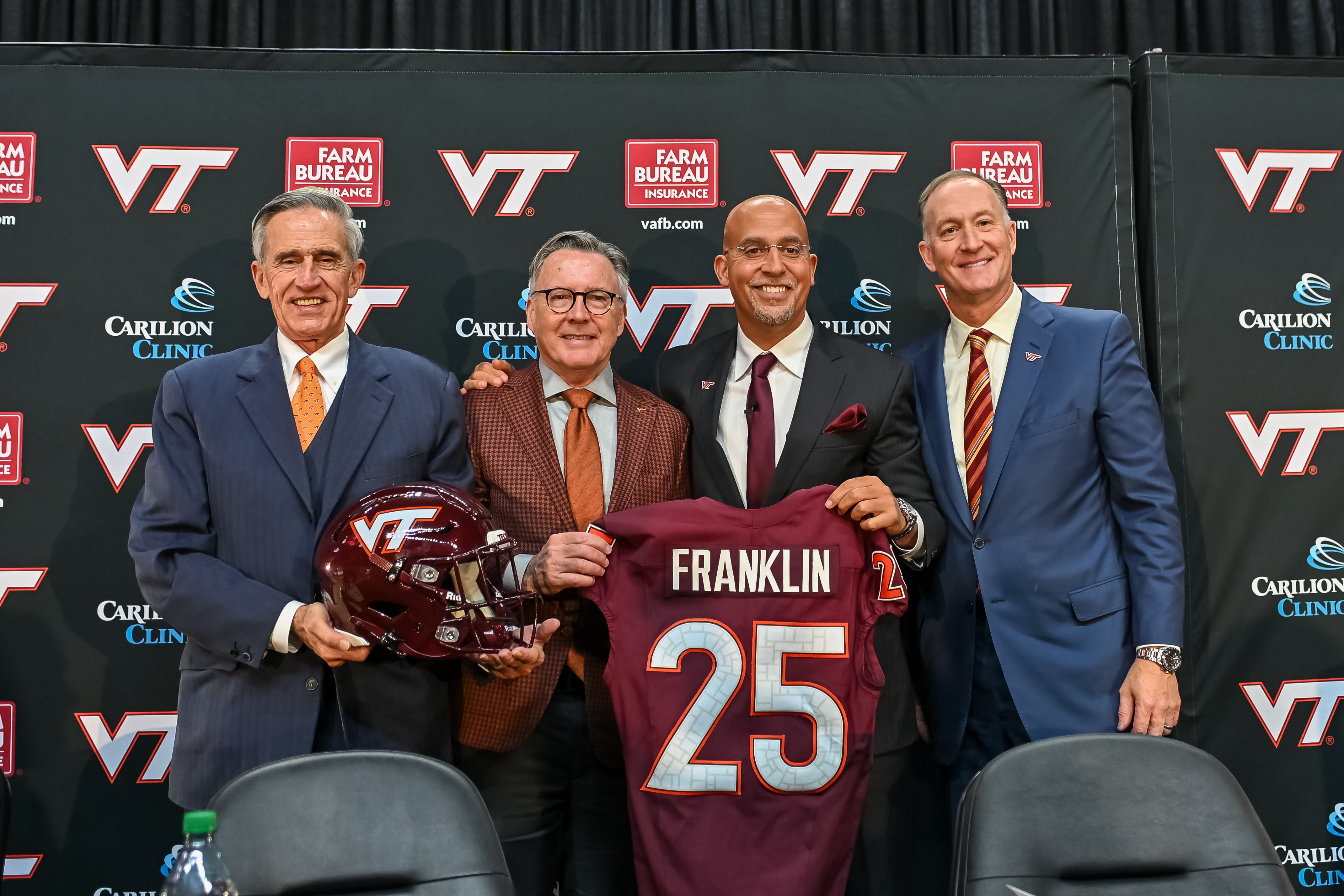
Penn State didn’t just change head coaches this December—it changed operating systems. James Franklin delivered an era built on branding, recruiting splash, and high-variance Saturdays, while Matt Campbell walks in with a different promise: less sizzle, more scaffolding; less talk about “closing the gap,” more emphasis on toughness and discipline, and togetherness—the three words he keeps returning to when describing his teams. As the Campbell era begins after a 6-6 season and Franklin’s October firing, the biggest question in State College isn’t whether Penn State upgraded the résumé but how much the entire feel of Penn State football is about to change.
Franklin’s Penn State era
Franklin’s legacy is complicated. He inherited sanctions, rebuilt the roster and delivered a Big Ten title in 2016, multiple New Year’s Six wins and three 11-win seasons. Penn State finished in the AP top 10 four times under his watch and won the Rose and Cotton Bowls, firmly reestablishing itself as a national brand.
But the pattern never changed. Penn State could beat almost anyone, yet it could not consistently handle the games that defined its seasons. Ohio State remained a wall. Michigan took control of the rivalry. And the 2025 season sharpened every criticism that had lived on the message boards for years.
Penn State opened at No. 2 in the preseason AP poll, then crashed from 3–0 to 3–6 after losses to Oregon, UCLA and a disastrous home collapse against Northwestern. Franklin’s in-game decision making, offensive stagnation and inability to steady the locker room under championship pressure finally caught up to him. The school fired him on October 12, and Terry Smith had to drag the team back to 6–6 with three straight wins just to reach the Pinstripe Bowl.
Franklin’s strength was always as a CEO recruiter and salesman. He stocked the roster with blue-chip talent, sold the brand and built facilities. The weak spot was structural. Penn State’s identity shifted year to year. The offense never settled into a coherent personality. When adversity hit in 2025, there was no deeply rooted system to fall back on.
Campbell’s Iowa State: development and continuity
Campbell arrives from the opposite side of the sport. At Iowa State he won with fewer resources, smaller recruiting classes and zero historical safety net. He turned one of the hardest jobs in the Power Five into a consistent winner, going 72–55 across ten seasons with five eight-plus-win years, three Big 12 Coach of the Year awards and the program’s first double-digit win season in 2024.
He did it by building an identity and refusing to flinch. His teams played a physical, methodical brand of football. On defense, with Jon Heacock, Iowa State popularized the three-safety “flyover” structure that became the blueprint for slowing spread offenses across the country. On offense, Campbell’s groups leaned into complementary football, field position and situational toughness rather than chasing tempo headlines.
The 2025 season at Iowa State was a snapshot of who Campbell is. The Cyclones started hot, got “pillaged” by injuries, tumbled into a losing streak, then ripped off a late run to salvage the year and get back into the Big 12 conversation. In his interview with Josh Pate, Campbell described it simply: block out the noise, zoom in on the locker room, and keep stacking the right habits.
That is the core difference. Franklin often felt like he was coaching the conversation around Penn State. Campbell coaches the room in front of him.
The shift Penn State has been waiting for
Campbell and Franklin represent two fundamentally different coaching archetypes. Franklin is a recruiter-driven CEO-style coach who built Penn State around star power, branding and energy, thriving when momentum was on his side but struggling to create a steady, repeatable identity. Campbell is a development architect who builds from the inside out, prioritizing structure, culture and week-to-week toughness over recruiting optics. Where Franklin chased explosive plays and skill talent, Campbell leans into complementary football, physical fronts and the kind of schematic cohesion that holds up when injuries hit or games get messy. Franklin coached for ceiling. Campbell coaches for foundation.
How Penn State will look different under Campbell
Start with priorities. Campbell’s first major move was not a flashy playcaller. It was personnel. He brought Derek Hoodjer from Iowa State to serve as a true general manager, the architect of a modern front office built around roster alignment, NIL strategy, and portal discipline. That is a direct response to the instability that helped sink the Franklin era.
On the field, expect a shift from scheme-of-the-week to identity football. Campbell is adamant about collecting a team, not just talent. His offenses will be built to protect the quarterback and lean on a physical run game, even if the box score is not pretty. His defenses with Heacock will trade some explosiveness for consistency, forcing long drives and limiting big plays. For a Penn State roster that too often rode emotional and schematic roller coasters under Franklin, that style alone is a culture shock.
Maybe the biggest change comes in how Campbell wants to live in the margins. He has beaten brands bigger than Iowa State because his teams were more connected, more disciplined, and better in fourth quarters. At Penn State he finally has the resources Franklin enjoyed, but he is arriving from the rough side of the mountain, where development was not optional.
Franklin made Penn State loud again. Campbell’s job is to make it durable. At its heart, this isn’t just a stylistic difference. It’s philosophical. Franklin built teams built to win when the stars lined up. Campbell builds teams built to withstand turbulence. That’s the shift Penn State is betting on.
