
Why Matt Campbell’s quietest Penn State decision might be one of his most important
Here’s what Matt Campbell’s decision to retain Alan Zemaitis as Penn State recruiting coordinator reveals about his blueprint for building the Nittany Lions.


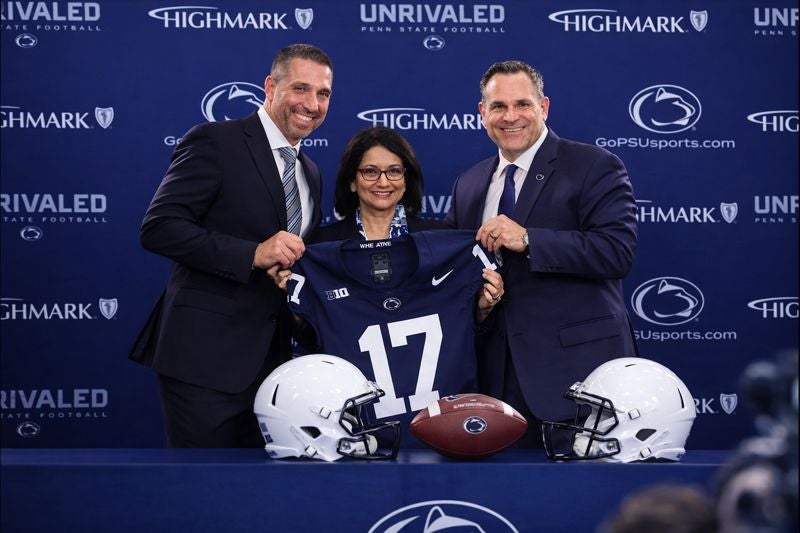
New head coach Matt Campbell made an essential personnel decision this week, opting to kept a vital connective thread that links State College’s past success to its future ambitions. As Campbell continues building his coaching operation in Happy Valley, one understated decision could carry outsized importance for Penn State recruiting: retaining Alan Zemaitis as recruiting coordinator for personnel. In a college football landscape defined by constant turnover, transfer portal chaos, and wholesale philosophical resets, Penn State appears to be choosing continuity in one of the areas where institutional knowledge matters most.
Understanding Alan Zemaitis’ value
Zemaitis represents more than just another off-field coaching hire. He’s Penn State through and through. His playing credentials speak for themselves: All-Big Ten cornerback, team tri-captain, Thorpe Award semifinalist, fourth-round NFL draft pick. He anchored the 2005 Big Ten championship defense and delivered one of that season’s signature moments with three interceptions against Michigan State to seal the title. That résumé creates instant credibility with recruits and their families.
But his value right now runs deeper than what he accomplished on the field. What makes Zemaitis essential to Penn State recruiting during this transition is his understanding of what this program actually is. He played here when Penn State was at its most disciplined and unified, when the program operated with ruthless clarity about its principles. He lived those values himself. After a serious car accident in 2003 threatened to end his career, Zemaitis didn’t fold. He played every single game of his Penn State career and started 34 of his final 35. That’s not just a feel-good story. It’s a mindset. And that mindset matters when you’re trying to coordinate personnel through a major rebuild.
Building the bridge between Penn State’s past and future
Matt Campbell isn’t coming to Happy Valley to blow everything up. His approach is about stabilizing the program, creating alignment, and then building upward from there. Retaining Zemaitis checks all those boxes at once while preserving continuity.
Zemaitis knows the Penn State recruiting ecosystem cold. He understands the high school pipelines in Pennsylvania, New Jersey, Ohio, and the DMV that have always fed this program. He knows which messages land in State College and which ones don’t. Most importantly, he grasps the difference between chasing recruiting rankings and building a roster that actually fits Penn State’s environment, academic expectations, and competitive reality.
That institutional knowledge becomes critical as Penn State stares down major roster turnover heading into 2026. The transfer portal keeps churning. NFL decisions are coming for upperclassmen. Scholarship math gets complicated fast. Personnel decisions stop being theoretical and start requiring surgical precision. Keeping Zemaitis means those decisions get filtered through someone who knows the building, understands what the fanbase expects, and has a clear sense of what Penn State football should actually be.
How Zemaitis fits Matt Campbell’s formula
Campbell’s best teams at Iowa State weren’t built on recruiting headlines. They were built on evaluation and development. He consistently outperformed his recruiting rankings because his staff knew what to look for and trusted projection over polish. Zemaitis fits that approach perfectly.
He’s not a hype merchant chasing social media noise. He’s a translator. He can take Campbell’s long-term roster vision and align it with Penn State’s regional recruiting realities. He can balance transfer portal urgency with the patience high school recruiting demands. And critically, he can help Campbell avoid the most common Year One mistake new staffs make: overcorrecting and torching what actually worked.
That matters especially now given where Penn State sits in the college football landscape. The resources are real. The NIL infrastructure is legitimate and competitive. The temptation to chase instant fixes through the portal will be strong during this transition. Zemaitis provides institutional memory at a moment when restraint matters as much as aggression.
Why this decision matters beyond PR
Keeping Zemaitis isn’t just about having a familiar face around for comfort. This move delivers real credibility across the board. For high school recruits and their families, he’s proof that Penn State isn’t abandoning what it is under new leadership. For current players dealing with transition uncertainty, he’s a reminder that the program still values the people who’ve bled for it. For Campbell, he’s a trusted lieutenant who can spot blind spots during a high-speed rebuild while keeping recruiting momentum intact.
This decision won’t trend on social media. It won’t dominate message boards in a sport that lives for splashy coordinator hires and headline announcements. But five years from now, when people assess how Campbell’s tenure unfolded and whether his recruiting strategy worked, retaining Zemaitis as recruiting coordinator might register as one of the first moves that truly mattered. Campbell gets it. Sometimes the smartest decisions aren’t the loudest ones. They’re just the right ones that set a program up for long-term success.
