
Dani Dennis-Sutton dominates in Pinstripe Bowl — why his choice to play mattered in college football’s opt-out era
Dani Dennis-Sutton’s Pinstripe Bowl decision shows what real leadership looks like.


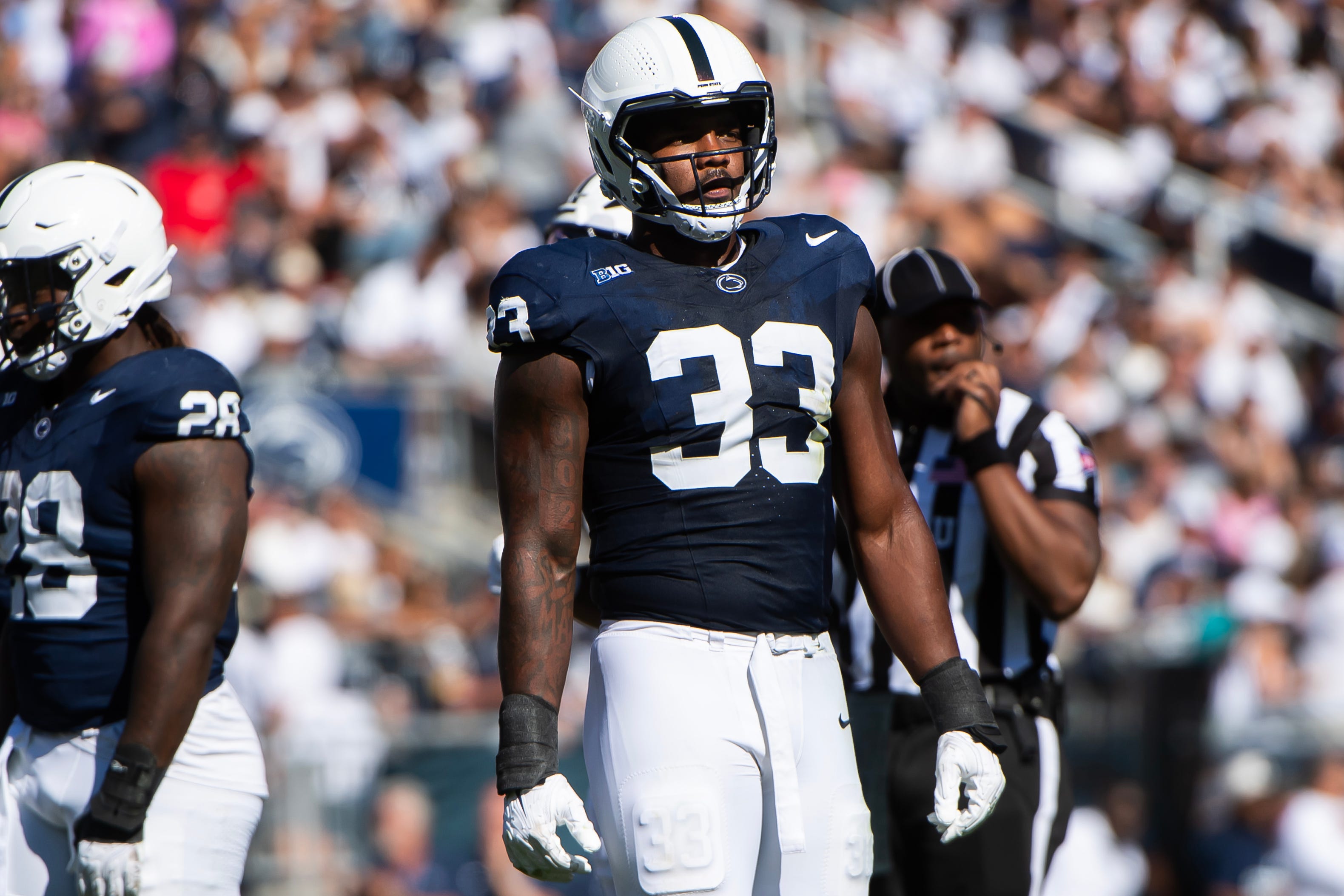
Thirty-four Penn State players didn’t suit up for the Pinstripe Bowl. Let that sink in. Thirty-four players who could have been on the field chose to sit out, opt out, or transfer before the final whistle of their season even blew. That’s not an anomaly anymore—that’s modern college football. Some saw greener pastures through the transfer portal. Others made “business decisions” about their draft stock or injury risk. Players like Zuriah Fisher, A.J. Harris, and Elliot Washington II decided their futures were elsewhere, and honestly, you can’t blame them. The game has changed. Bowl games that used to be celebrations now feel like afterthoughts.
But there was never any doubt about Dani Dennis-Sutton.
Dennis-Sutton’s Pinstripe Bowl decision shows real leadership
The Penn State defensive end told defensive line coach Terry Smith his intentions immediately after the Rutgers game. No hesitation. No negotiations. Just a simple declaration of intent.
“He told me, ‘coach, I’m going to play in this game, and I’m going to be the MVP,’” Smith said after Penn State’s 31-7 dismantling of Clemson. “And I know Trebor Peña got the MVP, but Dani is my MVP. This guy didn’t have to play today. Guys of his caliber walk away all the time. That’s okay. But he chose to come back and give us everything.”
Dennis-Sutton didn’t just show up—he dominated. Two sacks on Clemson quarterback Cade Klubnik. Twenty-two yards lost. Four total tackles. Constant, relentless pressure that had Klubnik checking his blind side on every drop back. By the time the final whistle blew, Dennis-Sutton had passed both Matt Millen and Abdul Carter on Penn State’s all-time sack list, pushing his career total to 23.5. More importantly, he set a physical tone that carried through the entire defense and fueled Penn State’s first win as an underdog in 13 games.
The performance was vintage Dennis-Sutton. But the decision to play? That’s what made it legendary.
“People asked me, and I told them before the last game, ‘yeah, I’m playing,’” Dennis-Sutton said. “I love football. I love this program. I have fun out there. I don’t really understand not playing the game.”
That mindset seems almost quaint in 2024. We’re living in an era where players are one injury away from losing millions. Where the transfer portal opens twice a year like Amazon Prime Day. Where sitting out a bowl game is considered the smart play if you’re draft-eligible or looking to preserve your body for the next chapter. Dennis-Sutton understood all of that. He just didn’t care.
The ripple effect of his decision was immediate. Penn State entered the Pinstripe Bowl with a completely reworked offensive line after Nick Dawkins, Nolan Rucci, Drew Shelton, and Khalil Dinkins were all ruled out. Anthony Donkoh was the lone returning starter. Freshmen like Dominic Rulli were thrown into the fire against a Clemson defensive front that was supposed to eat them alive.
“He is the standard,” Rulli said of Dennis-Sutton. “Having an old guy who wants to keep playing with us, it’s juice all around.”
That confidence traveled across position groups. Quarterback Ethan Grunkemeyer has been navigating chaos since October, stepping into a starting role mid-season while the program reshaped itself in real time. Dennis-Sutton’s choice to play gave the offense something steady to anchor to.
“Dani is a high-character guy,” Grunkemeyer said. “Everyone loves him. He’s been a glue guy for us. A leader. It’s easy to follow someone like that.”
On defense, freshman cornerback Daryus Dixson emerged on the back end, nearly intercepting Klubnik twice in the first half and finishing with a game-high three pass breakups. Dixson admitted he was surprised Dennis-Sutton chose to play but immediately understood what it meant once bowl practices began.
“He was locked in right after Rutgers,” Dixson said. “That’s just who he is.”
Here’s the thing about opt-outs: they make sense. They’re logical. If you’re a projected first-round pick, why risk a knee injury in a bowl game that doesn’t affect your draft stock? If you’re entering the transfer portal, why spend another month with a program you’re leaving? The incentive structure of college football has fundamentally changed, and players are responding rationally to those changes.
But Dennis-Sutton’s decision wasn’t about logic or incentives. It was about legacy. About how you want to be remembered when the season—and maybe your career—comes to an end. Penn State will look different next season. New voices. New leaders. New faces stepping into roles vacated by transfers and graduates. Dennis-Sutton made sure the standard didn’t disappear on the way out.
College football has entered a strange new era where commitment is conditional and loyalty is negotiable. That’s not a criticism—it’s just reality. But every once in a while, a player like Dani Dennis-Sutton reminds you what it looks like when someone chooses to stay when no one would blame them for walking away. Two sacks. A spot in the record books. One final stamp of authority on a program he helped build.
