
Five Nittany Lions head to the NFL Draft, and Penn State’s reset under Matt Campbell accelerates
Nick Dawkins becomes the fifth Penn State player to declare for the 2026 NFL Draft, joining Vega Ioane, Zakee Wheatley, Zane Durant, and Drew Shelton.


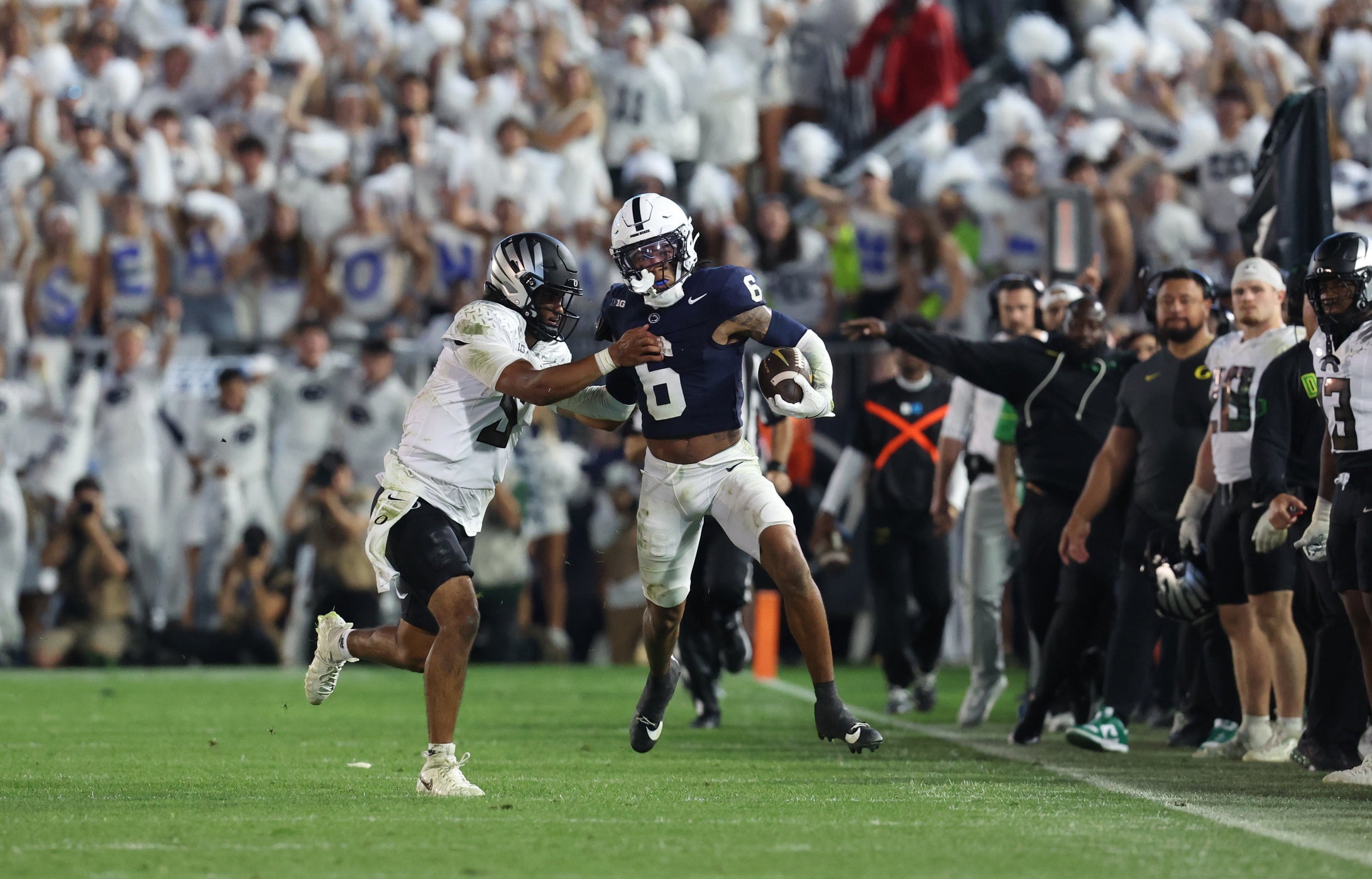
Penn State’s roster is changing fast. By the time the Pinstripe Bowl ended, the program’s 2026 NFL Draft class had grown into something bigger than anyone expected—a mix of opportunity, transformation, and mass exodus.
Center Nick Dawkins became the fifth Nittany Lion to officially declare for the 2026 NFL Draft, joining Vega Ioane, Zakee Wheatley, Zane Durant, and Drew Shelton as players bidding farewell to college football and turning their focus to the next level.
This isn’t just a list of names. It’s a glimpse at what Penn State was, what it is now, and what Matt Campbell has to work with as he tries to rebuild a roster that’s been gutted by departures.
Dawkins joins a growing exodus
Nick Dawkins’ journey from Parkland High School recruit to Penn State’s every-down center mirrors the gritty path that this team has taken over the last two seasons. A stalwart in the middle of the line and award-winning leader, Dawkins’ decision to declare adds veteran presence to a draft class already notable for its diversity of positions.
He’s started every game for the last two seasons, anchoring an offense that cycled through coordinators and schemes. That’s a testament to his durability and adaptability. Dawkins will leave Penn State with a resume built on three things: reliability, performance, and leadership.
The veterans heading out
Before Dawkins, Penn State saw other cornerstone contributors make the leap:
- Vega Ioane — A two-time All-Big Ten guard and AP All-American performer who did not allow a sack in 2025, Ioane declared early and opted out of the Pinstripe Bowl, with many projecting him as a Day 2 pick or better.
- Zakee Wheatley — The safety played in 58 games and was a consistent voice in the secondary before deciding to focus on draft preparation.
- Zane Durant — A three-year starter on the defensive line whose physical style made him a mid-round draft target; he also chose to skip the bowl game and pursue his pro dreams.
- Drew Shelton — The veteran offensive tackle’s departure adds to an already depleted line as Campbell inherits a unit in need of foundational pieces.
These declarations show Penn State’s depth across the roster—offensive line strength, secondary talent, and defensive firepower. It’s why the Nittany Lions keep showing up on draft boards.
More names on the brink
Beyond these five, there’s Nicholas Singleton. Penn State’s all-time touchdowns leader has reportedly opted out of the bowl game, and while he hasn’t officially filed paperwork yet, all signs point to a draft declaration. That’s another dynamic playmaker stripped from Happy Valley.
Then there’s Kaytron Allen, the recent AP All-American who racked up 1,303 yards and 15 touchdowns this season, making him one of the Big Ten’s most feared backs. He hasn’t announced his intentions yet, but he’s almost certainly draft-eligible. If both Singleton and Allen declare, that’s two high-impact skill players gone—and another sign that Penn State’s roster is in full transition mode.
What it means for Matt Campbell
Matt Campbell didn’t inherit a clean slate. He inherited a roster midway through a full-blown exodus—one shaped by opt-outs, draft decisions, and departures that started before he even stepped on campus. The coaching change didn’t pause the calendar. It accelerated it. Players had to make choices about their careers, their health, and their timing, and most of them chose to leave.
That complicates everything. Losing leaders up front and in the secondary forces Campbell to lean on younger, less proven players immediately, even as he’s still building his own staff and installing his own system. There’s no grace period here. No time to ease into the job.
But here’s the thing—it also clears the slate.
Draft declarations are signals of individual readiness and market value, but they also reset expectations for everyone who stays. Instead of trying to restore what James Franklin’s Penn State once was, Campbell now gets to define what it will become. The departures open opportunity—for guys like Ethan Grunkemeyer to develop as a quarterback, for young defensive backs to step into starting roles, for underclassmen on the offensive line to claim spots. It’s rare that a head coach gets this level of clarity about who’s leaving and why. That’s the silver lining in what everyone’s calling Penn State’s draft exodus. Campbell knows exactly what he’s working with, and he can build accordingly.
The bigger picture
Penn State used to aim for Big Ten titles and New Year’s Six bowls. Now the narrative is draft readiness and roster reconstruction. That shift isn’t failure—it’s just evolution, accelerated by NIL money, portal fluidity, and the reality that college football is now a professional sport in everything but name. For Matt Campbell, the challenge isn’t just scheme and scouting. It’s culture and continuity. He has to build something cohesive out of the pieces that are left.
What remains after the draft announcements, the opt-outs, and the roster shakeups will define Campbell’s version of Penn State football. And that version doesn’t begin with who left. It begins with who steps forward.
