
Packers lean on a four-step evaluation process as they navigate life after Jeff Hafley
Hafley left after two seasons to become the Miami Dolphins’ head coach.


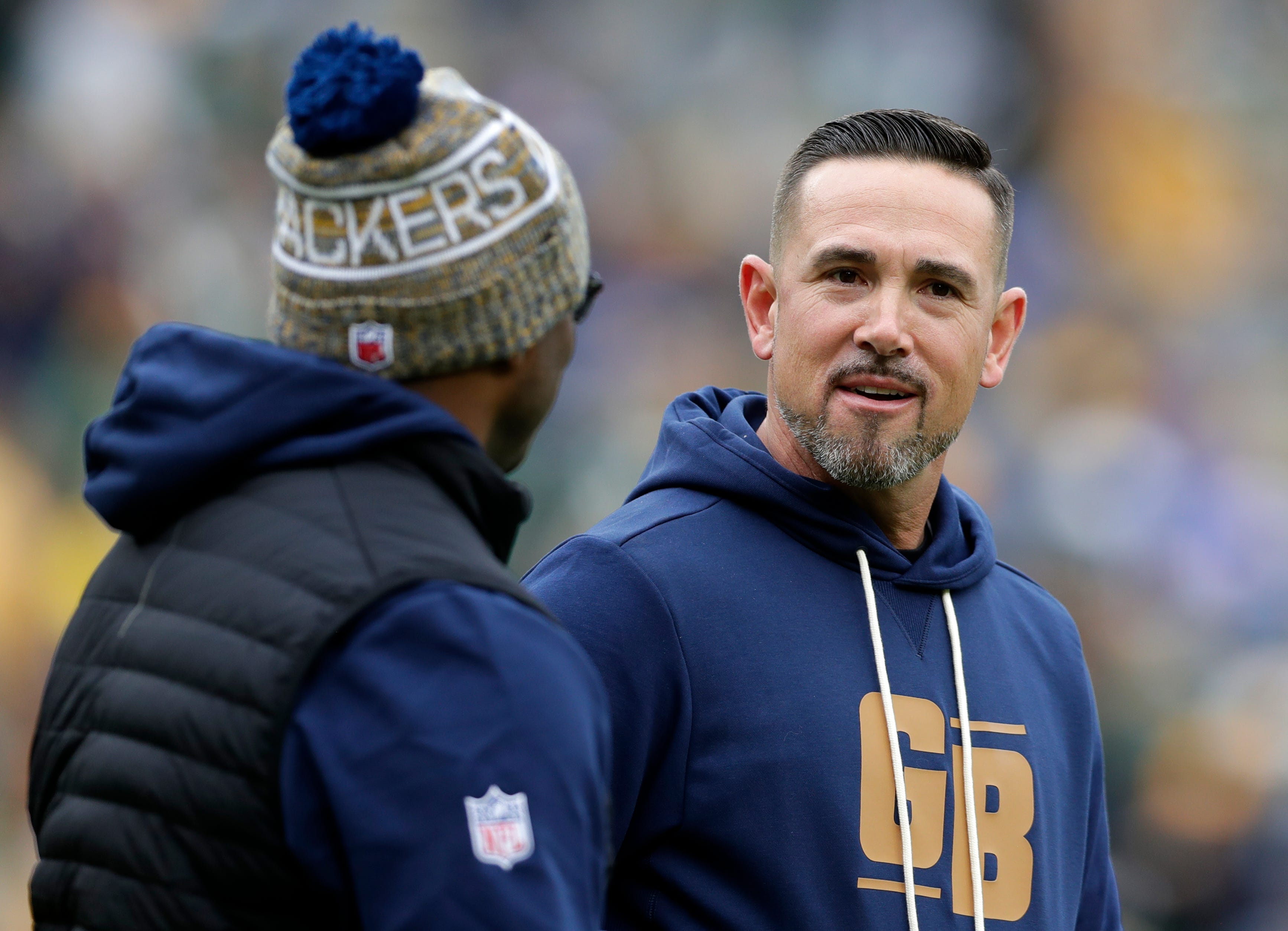
Matt LaFleur is going through a hiring process once again. The Green Bay Packers finally got it right with Jeff Hafley after missing on Mike Pettine and Joe Barry. But it was so right that Hafley is leaving after two seasons to become the Miami Dolphins’ head coach.
Since LaFleur took over as the Packers head coach in 2018, he’s made multiple coordinator hirings. Nathaniel Hackett and Adam Stenavich on offense; retaining Mike Pettine, plus hiring Joe Barry and Hafley on defense; Shawn Mennenga, Maurice Drayton, and Rich Bissacia on special teams.
But how does that happen? What’s the first step? To help us understand how an NFL team organizes its process to select a top assistant coach, we talked back in 2024 to former New Orleans Saints and Miami Dolphins general manager Randy Mueller. That happened before the Packers’ decision to hire Hafley — so we’re updating the content to provide you the excellent insight again.
Step 1: Vision
The team should be above whoever the coordinator will be. So, it’s important for the franchise to establish a vision of the identity the unit has to have. That includes the system, the attitude, how the ideal circumstances would look like.
“As a franchise,” Mueller stressed, “it should be sustainable regardless of who the coordinator is.”
That might have been a problem in 2021. Reportedly, the Packers wanted to hire former Wisconsin defensive coordinator Jim Leonhard, and he ran a system more similar to what Mike Pettine used to run in Green Bay. When he rejected the offer, LaFleur’s two other options were Rams position coaches, who would presumably run a version of the Vic Fangio/Brandon Staley scheme: Joe Barry and Ejiro Evero.
When the Packers hired Hafley, it was more about the person than about the system — and it worked to some extent.
Step 2: Personnel
Now, the Packers have Micah Parsons, Lukas Van Ness, and excellent safeties. Edgerrin Cooper is a great blitzing linebacker. But the team lacks cornerbacks and defensive backs. Evaluating what each player does well and what the unit as a whole is capable of doing is a key to deciding who comes next to put everything together.
“We must match what we currently have”, Mueller adds.
If that applies to the Packers’ defense, does it make sense to change coordinators, but to keep the same philosophy? Does it make sense to get a guy like Christian Parker and go back to a more Vic Fangio-esque style? Ultimately, whoever comes has to understand what his players do well.
Step 3: The list
With steps 1 and 2 out of the way, the third one is to make a list of coaches who fit the plan. If the Packers want to keep running a similar system, promoting someone from the current staff or getting some assistant from the San Francisco 49ers would make sense. If they want to go back to the 3-4 base with a lot of two-high deep, Raheem Morris is the ideal name.
“It’s not how much a coach knows,” Mueller said. “It’s what he can get his players to know”.
It’s about making the unit play better than the sum of its parts. Potentially, LaFleur could build a list with candidates with varied backgrounds, and that would help clarify the first two steps.
Step 4: Interview
The last step before hiring is the interview. The chosen one has to show he can be aligned to the vision and adapt his scheme to what the players do best.
“Teams must be disciplined to follow the process,” Mueller mentioned.
Hiring NFL coaches is not an exact science, and Matt LaFleur has had problems doing so. But a strong operation is the first and most important step to make a wise decision, and the Packers is in the middle of another process to make it happen.
