
Packers Mock Offseason: Restructures, free agent signing predictions, mock draft, and extensions
It’s time to build a new version of the team.


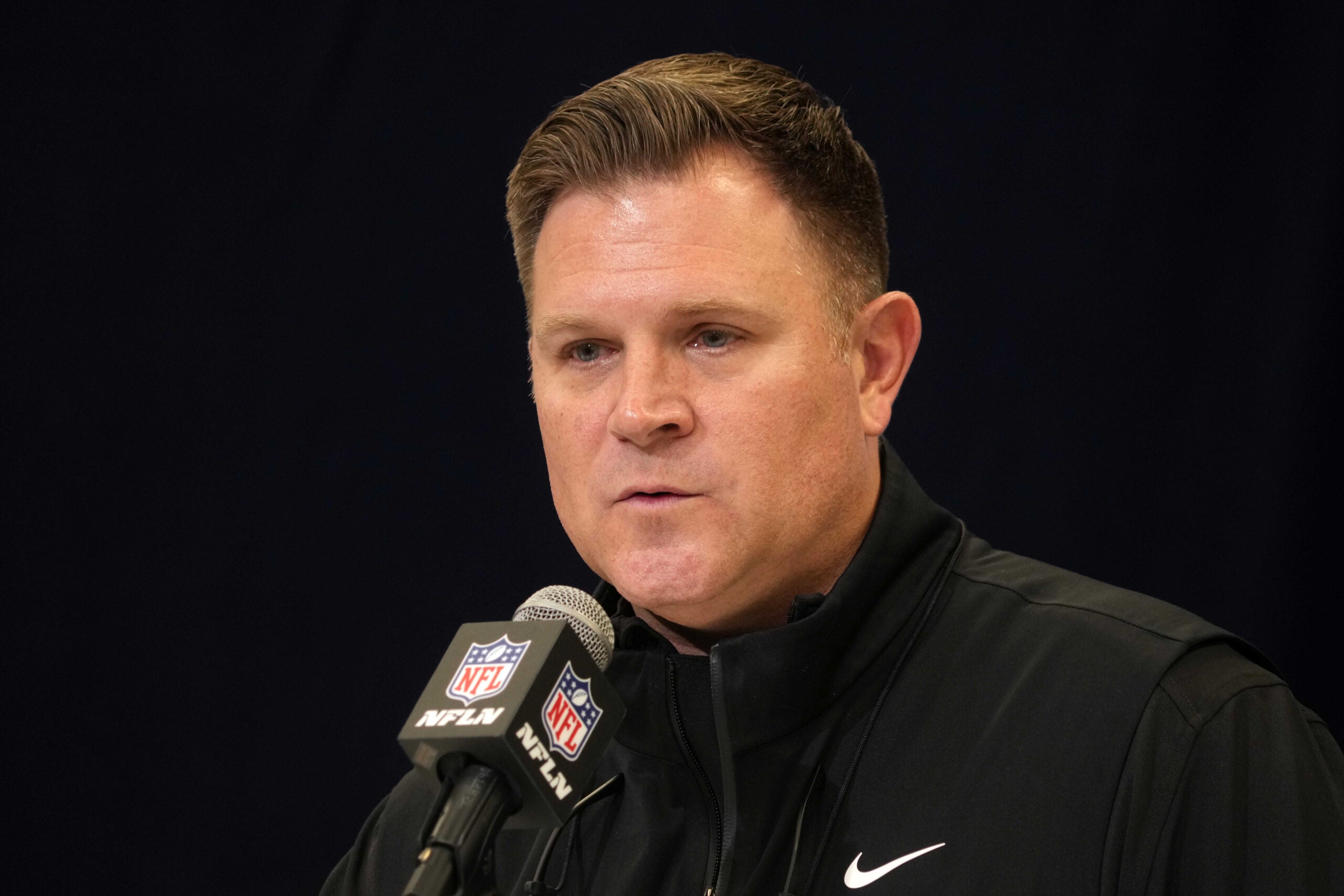
The Green Bay Packers enter the offseason around $1.4 million over the projected salary cap. The team doesn’t have a first-round pick after trading for Micah Parsons last year. So, with limited resources, how is it possible for general manager Brian Gutekunst to give the roster a chance to go from good to great?
It’s not an easy proposition, besides players like Parsons and Tucker Kraft returning from injury. But it’s viable to make material improvements over the next few months.
So, using tools from Over the Cap, PFF, Spotrac, and Stick to the Model, we created a mock offseason — this is what we think the Packers should do, not necessarily a projection of what will happen.
Cuts
- EDGE Rashan Gary ($17 million in dead money/$10.3 million in cap savings)
- G Aaron Banks ($20 million in dead money/$4.2 million in cap savings)
- C Elgton Jenkins ($5 million in dead money/$19.5 million in cap savings)
Those decisions to cut Gary and Banks are not necessarily about 2026. The team would probably be better with than without them, and the cap savings are not that significant.
However, both are set to make much more money than their production would indicate. Banks, in particular, was a mistake from the get-go — it was a bad process to sign him in the first place, and it was a move totally out of the Packers’ usual modus operandi. Jenkins is a different situation, and perhaps it would make sense to keep him under a lower salary. But the cap savings are too significant and allow us to replace him.
Cap space after cuts: $35.436 million
Contract adjustments
- Jordan Love ($6.1 million)
At first, the Packers don’t need to kick the can down the road too much if the plan is to cut those three players above. With Love, a normal restructure without adding void years would create more than $6 million in cap space, and the future hits wouldn’t be prohibitive, so it makes more sense to pull this trigger. Unless a huge opportunity arises, the front office doesn’t need to restructure more contracts.
Cap space after restructure: $41.536 million
Re-signings
Unrestricted free agents
- C Sean Rhyan (three-year, $19.6 million contract; Year 1 cap hit: $5 million)
- TE John FitzPatrick (one-year, $1.215 million contract)
- LB Nick Niemann (one-year, $1.215 million contract)
- LB Kristian Welch (one-year, $1.215 million contract)
Restricted free agents
- EDGE Brenton Cox Jr. (one-year, $3.547 million)
- T Darian Kinnard (one-year, $3.547 million)
From the Packers’ pending free agents, Sean Rhyan is the most interesting one. He’s not expensive based on Spotrac’s projections, and it’s more important to keep him around if Jenkins is released. Outside of him, the Packers only keep some veteran minimum players, letting wide receiver Romeo Doubs, tackle Rasheed Walker, and linebacker Quay Walker leave in free agency.
By tendering Brenton Cox and Darian Kinnard, the team would still have something around $25 million in cap space.
The Packers would also keep all of their exclusive rights free agents: wide receiver/cornerback Bo Melton, cornerback Kamal Hadden, guard Donovan Jennings, and center Lecitus Smith.
Extensions
DT Devonte Wyatt
Stick to the Model projects that Wyatt will make $28 million a year; Spotrac projects $12 million. That’s a huge discrepancy, so we’ll meet in the middle, at $20 million — a four-year, $80 million deal. By doing that, we keep Wyatt through 2030 and open more than $2 million in cap space in 2026.
TE Tucker Kraft
It’s a four-year, $65 million deal for Kraft ($16.25 million per year). Because he’s set to make only $3.712 million in 2026, the real average would drop to $13.74 million. Even without backloading the deal too much, the 2026 cap hit would be around $10 million. The net of both extensions takes around $5 million in cap space, leaving us with around $20 million and $18 million in offseason numbers after the draft picks.
Free agent additions
- CB Cor’Dale Flott (four-year, $38 million)
- DT DJ Reader (two-year, $7.7 million)
- EDGE Haason Reddick (one-year,$4.9 million)
- OL Teven Jenkins (one-year,$2.3 million)
With $18 million left to spend, the Packers wouldn’t have a lot of room to sign external players. However, we went bargain shopping to sign some mid-level players at positions of need. Cor’Dale Flott would be the biggest addition after a decent season for the New York Giants — he’s smaller than the Packers would prefer, but they don’t tend to be as strict with their profile in free agency as they are in the draft.
Reader and Reddick would get short-term deals to supplement the depth up front, while Teven Jenkins could offer similar production to Banks at a fraction of the cost.
Draft
For the draft, we’re sticking with the mock we published last week for this exercise. Not surprisingly, the trenches and cornerbacks were the top priorities on the list.
- Round 2, Pick 52: Lee Hunter, DT, Texas Tech
- Round 3, Pick 84: Blake Miller, T, Clemson
- Round 4, Pick 120: Hezekiah Masses, CB, California
- Round 5, Pick 158: Logan Jones, C, Iowa
- Round 6, Pick 200: Fa’alili Fa’amoe, T, Wake Forest
- Round 7, Pick 236: Treydan Stukes, CB, Arizona
- Round 7, Pick 254: Brandon Cleveland, DT, North Carolina State
- Round 7, Pick 257: Noah Whittington, RB, Oregon
