
Outdated NFL rule could cost Baltimore Ravens dearly as impactful free agent nears open market
Tyler Linderbaum will be a rich man soon.


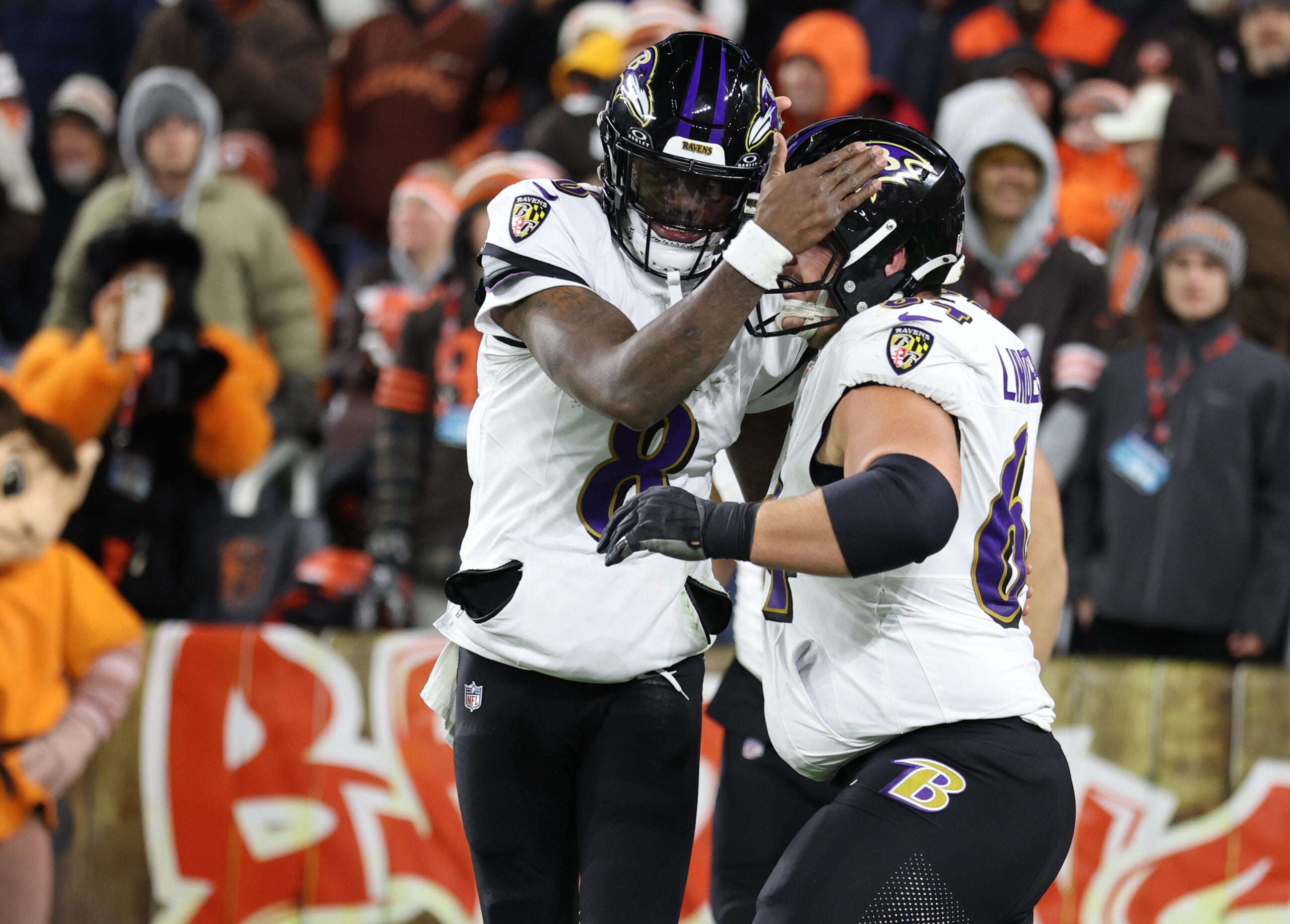
Sometimes, it’s hard to explain why the NFL does things like that. One specific case is pretty evident, and it will cost the Baltimore Ravens a lot of money or a highly-impactful upcoming free agent in center Tyler Linderbaum.
Franchise tag rule needs adjustments
For both the fifth-year option on a first-round pick rookie contract and franchise/transition tag, there is only one number for all offensive linemen — it doesn’t matter if the player is a tackle, guard, or center.
That’s why the Ravens didn’t pick up Linderbaum’s fifth-year option a year ago, and it has cost them greatly. And now, it’s why the decision to franchise tag him is a hard proposition.
The franchise tag is the average of the top five salaries at the position for the past five years in cap percentage. But because it’s only one tag for offensive linemen, the number is projected to be close to $28 million.
Even taking into consideration only the current contracts, the average pay for the top five centers in football is $14.7 million — it’s a massive difference.
Why it’s an outdated rule
When the NFL introduced the franchise tag back in 1993, it was a proposition designed to keep true franchise players around — it was called the “John Elway Rule,” because then Denver Broncos owner Pat Bowlen wanted assurances that his team would be able to keep the quarterback despite the adoption of free agency.
At that point in time, it didn’t make much difference to put tackles, guards, and centers in the same bucket.
But the league is completely different now. First, the franchise tag is used more commonly and frequently, and with basically every position in the game.
Moreover, because the NFL market is such a professional operation at this point, negotiations between teams and agents are much more complex.
If the idea is to protect guards and centers from the tag, you could argue that the NFL should do a similar style for skill position players — protecting running backs and tight ends from low tags putting them together with wide receivers.
You could also argue that offensive linemen tend to be more positionally interchangeable, but that point goes down when you see that cornerbacks and safeties have different numbers for each position.
Now, the Ravens have to live with that reality. The idea of paying a center $28 million for a year and see him hit free agency again next year doesn’t make any sense. So, they either have to pay market price for their former first-round center after three consecutive Pro Bowl seasons, or they will lose him to another team more willing to spend in free agency.
