
Packers most likely trade up window emerges as realistic paths take shape without first-round pick in the draft
Green Bay enters the draft with eight total picks, and general manager Brian Gutekunst could move up, even into the first round, if the right player is available.


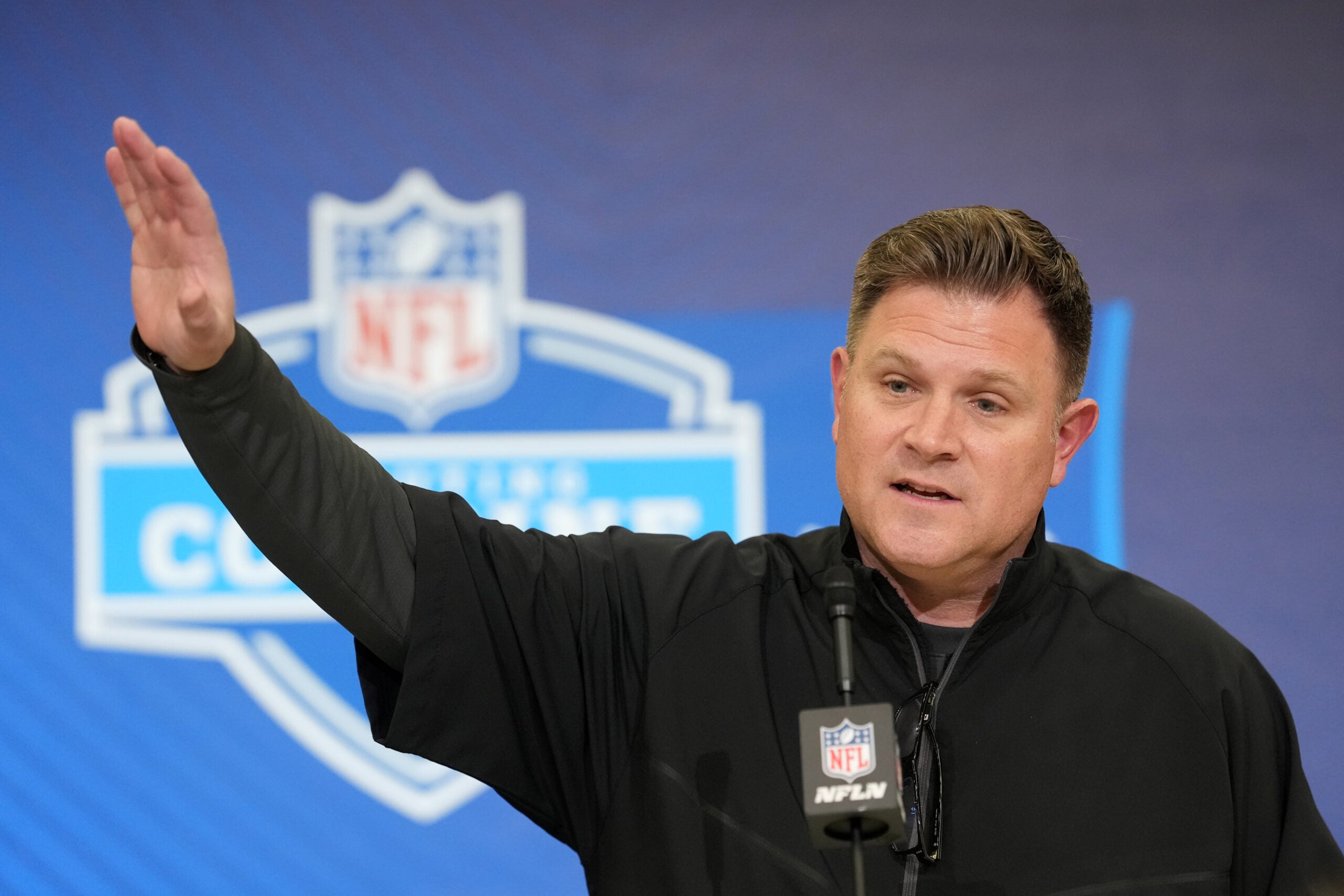
The Green Bay Packers value the volume of draft picks. However, that premise hasn’t precluded general manager Brian Gutekunst from being aggressive at times early in the draft. He traded up in the first round several times throughout his tenure — from 27 to 18 after trading down from 14 to select Jaire Alexander in 2018; from 30 to 21 to take Darnell Savage in 2019; from 30 to 26 to draft Jordan Love in 2020; and from 15 to 13 with the Aaron Rodgers trade in 2023.
He even traded up in the third round back in 2021 for Amari Rodgers. Gutekunst just doesn’t like trading future draft capital to make those moves.
The 2026 draft is a different challenge for the Packers. For the first time in four decades, the team enters Draft Day without a first-round pick, but that doesn’t mean Gutekunst won’t work on Thursday night.
Trade up scenarios for the Packers
If there’s a player the Packers truly like late in the first round, the team does have the capital to make a splashy move.
“More teams want to trade down than up this year, per multiple sources,” ESPN’s Adam Schefter reported. “This means there could be fewer first-round deals than in recent years, as it takes two to make a deal come together.”
The good news about this report is that, because this class is perceived as weaker, the cost to move up shouldn’t be nearly as high as usual.
Still, it would be a massive investment for the Packers — and one they should probably not make. Based on the Jimmy Johnson trade chart, the team would probably have to use their second- (52nd), third- (84th), and fourth-round (120th) picks to have enough capital to trade into the first. Those three picks combined would be close in value to the 31st overall pick, from the New England Patriots.
Combining the second- and third-rounders would allow the Packers to potentially move up to the 35th pick, the third pick in the second round, with the Tennessee Titans.
Another potential trade partner is the Indianapolis Colts, with the 47th pick. The Packers could move there from 52 giving up a fourth-rounder or their two fifths.
Volume over certainty
Despite the aggressiveness early in his tenure, Brian Gutekunst has been more conservative — or analytically-inclined — over the past few drafts. The best example came in 2023, when Gutekunst traded down in the second round twice. He was still able to select Jayden Reed in the second, and with the extra picks, the Packers got Dontayvion Wicks and Karl Brooks.
Generally speaking, maximizing the number of picks is the best approach — and the Packers were already short in numbers after trading two first-rounders for Micah Parsons and a 2027 sixth-rouder for Darian Kinnard.
So, the theme of this offseason has been acquiring more picks. They traded Rashan Gary for a 2027 fourth, Dontayvion Wicks for a 2026 fifth and a 2027 sixth, and are set to receive four compensatory picks next year.
While trade up scenarios may be enticing — and they are realistic with the capital the Packers have — they’re certainly not the most-likely path or optimal process to follow.
