
Bears’ offseason has the team ahead of the curve with a roster built to give the rest of the league headaches every week
The Chicago Bears had a deliberate offseason approach and a clear idea of the kind of players the staff wanted to add to make this roster as flexible as possible going into the 2026 season and beyond.


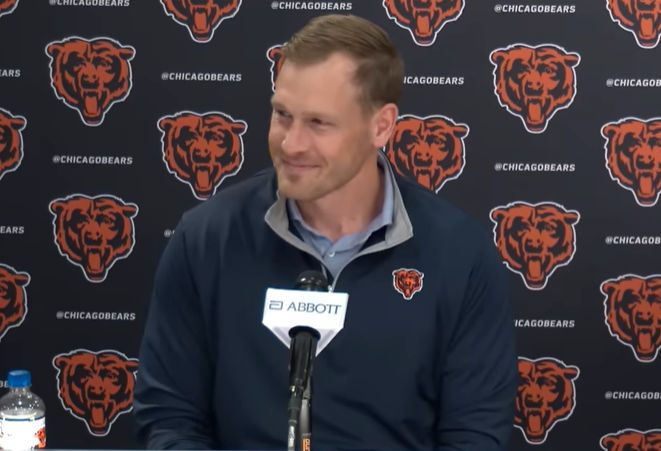
The Chicago Bears did not have the offseason fans were hoping to see coming off an 11-win season that included a division title and a trip to the NFC’s Divisional Round. Fans were expecting some big splashes to get this team into Super Bowl contention.
Instead, the Bears stayed strategic with their offseason plan under the leadership of general manager Ryan Poles and head coach Ben Johnson adding players that fit their culture without risking the future.
While many question whether or not the Bears got “better” looking at the current makeup of the roster, it’s clear to see what the plan actually was and how it changes both sides of the ball going into the 2026 season.
Chicago’s offense is ready to ‘dictate some terms’ of any opponent on any given play
The Bears had a quiet free agency on offense. Chicago quickly pivoted to add a veteran center in Garrett Bradbury after losing Drew Dalman and find a veteran replacement for wide receiver DJ Moore in Kalif Raymond. Really that’s the only offensive moves the team made.
In the draft, Johnson took control of the board on Day 2 adding a long-term center in Logan Jones, a third tight end in Sam Roush, and a burner receiver in Zavion Thomas. Many questioned the decision-making of those Day 2 selections, but Johnson made the intentions clear behind those additions.
“It’s going to give us a lot of flexibility here on offense,” Johnson explained. “We’re going to have the ability to go heavy, go 13 personnel and keep a defense in their base structure. Or, we’re going to be able to get a little bit lighter and we got speed on the outside. I think it gives us a lot of versatility to work with and we can dictate some terms to the defense and make sure that we’re always attacking.”
The Bears leaned into the “heavy” 13 personnel last year and now the rest of the league is starting to follow suit. Last season, Chicago had 37 dropbacks out of 13 personnel (4th in the NFL) and 61 rushing attempts (tied for 5th in the NFL). After losing Durham Smythe in free agency, finding that new TE3 behind Cole Kmet and Colston Loveland was a big priority for this offense. Enter Roush, who adds even more athleticism as a pass catcher to catch defenses by surprise.
When the Bears do go in 11 personnel, Chicago added some exciting vertical and horizontal speed in Thomas to complement the skillsets of Rome Odunze and Luther Burden III.
Dennis Allen’s defense got a complete makeover to fit his scheme
Last year’s defense scraped by with a mismatched group built for Matt Eberflus’ conservative zone scheme. As the season went on, opposing offenses were killing Chicago’s defense using crossing routes to beat the man coverage and preventing the pass rush from getting to the quarterback.
This offseason, adding more speed and giving the unit a complete makeover was a top priority. Linebacker Devin Bush and safety Coby Bryant were top free agent additions, and then the team added safety Dillon Thieneman, cornerback Malik Muhammad, and linebacker Keyshaun Elliott in the draft.
Just like on offense, the new defensive pieces allow the Bears to be flexible with their different packages. In dime packages, the Bears have some versatile pieces to work with in Bryant, Thieneman, Kyler Gordon, and Cam Lewis to mix up coverages and dial up blitzes from the safety position or the slot.
“Depending on who we’re going against, he can do different things,” Poles said of Thieneman. “It probably makes things look the same but do different things out of it. Which, as an offense, is difficult to prepare for.”
Even when the defense is forced to go heavy, the Bears have faster options at the linebacker position with Bush, D’Marco Jackson, T.J. Edwards, Jack Sanborn and Elliott. In base defense (3 LBs), the Bears allowed 17 passing touchdowns in 2026 (3rd most in the NFL).
With the improved back seven, the Bears are hoping the versatility and speed will then force opposing quarterbacks to hold onto the football longer, allowing the pass rush to hit home more consistently. From a fan’s perspective, it was a backwards way to improve the unit, but it’s clear the staff felt the majority of the issues came from their disadvantages in coverage and made the necessary moves to correct it.
