
Brendan Sorsby’s gambling scandal ripple effect could be college football’s biggest blessing in disguise in a decade
What options are on the table for Texas Tech quarterback Brendan Sorsby as he navigates his betting scandal? A ripple effect will certainly follow.

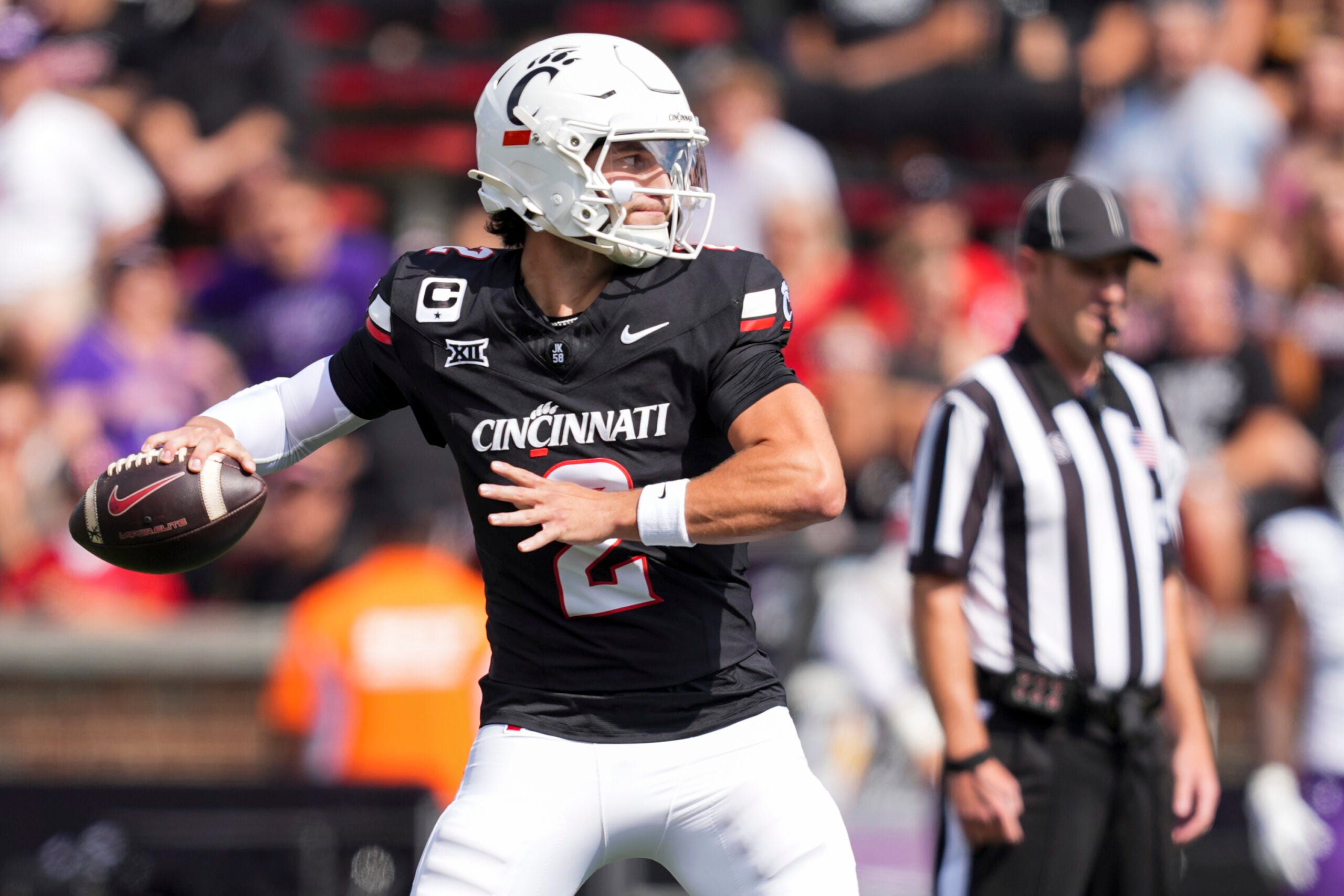
There’s no such thing as a quiet time in the wonderful world of modern college football these days. With spring practices concluded, it feels like the dead period of news should be upon us. Instead, controversy is swirling around Texas Tech quarterback Brendan Sorsby, and it has caught everyone’s attention.
After throwing for 2,800 yards and scoring 36 total touchdowns a season ago for Cincinnati, Sorsby opted to bypass the 2026 NFL Draft and instead became the crown jewel of the most recent transfer portal period. There was heavy demand from across college football, including from programs such as Indiana and LSU, but the 6-3, 235-pound signal caller opted for the Red Raiders.
Blessed with an impressive overall physical skill set, Sorsby was expected to help lead head coach Joey McGuire’s Texas Tech squad to a potential deep playoff run in 2026. As crazy as it sounds, we may never see Sorsby suit up in a game for the Red Raiders, after all.
Several reports surfaced recently about an NCAA investigation involving Sorsby, where he had allegedly placed thousands of online bets during his college career, including wagers on Indiana football games while he was a member of the team during the 2022 season. As a result of those allegations, Sorsby has taken a leave of absence from the team to enter a residential treatment program for his gambling addiction.
With his college football future now uncertain, Sorsby has hired attorney Jeffrey Kessler to fight for his final season of eligibility in 2026. As was reported by ESPN Senior NFL Insider Adam Schefter, “if Sorsby and Kessler are unsuccessful in finding a path to eligibility, declaring for the NFL’s supplemental draft would then become an option. Sorsby would have until June 30 to declare for the supplemental draft.”
That gives the Sorsby side less than two months to fight for a resolution with hopes to play for the Red Raiders in 2026. With how serious an issue gambling has become recently, particularly in games that the players were involved in, there is a ton of skepticism about whether Sorsby will be granted eligibility. It feels unlikely, but you never know what will happen.
We have seen former Iowa State quarterback Hunter Dekkers go through a similar situation recently, having his Cyclone and college career come to an end following his 2022 season. Albeit on the NFL level, Tennessee Titans wide receiver Calvin Ridley and Minnesota Vikings cornerback Isaiah Rodgers have also missed seasons over issues with gambling in recent memory.
It’s an issue that is being taken seriously on both the college and professional levels in recent years, especially with how easy it is to bet in today’s world, and even easier to track them at times.
In the case that Sorsby isn’t given that 2026 season back, there are several options that could be on the table for the talented signal caller, including the aforementioned NFL Supplemental Draft. Some are much more likely than the others if all else fails, but you can bet the Sorsby camp is considering all of those options right now, and the ripple effect that will follow a resolution.
The NFL Supplemental Draft
In the history of the NFL, the NFL Supplemental Draft has had some notable participants. Famous players selected in the draft include Hall of Fame wide receiver Chris Carter, quarterback Bernie Kosar, linebacker Brian Bosworth, and wide receiver Josh Gordon. Between the four, they played in 39 NFL seasons and made 10 Pro Bowls.
The draft has been a rarer occurrence over the years, used in the event of players who did not enter the main draft due to their eligibility changing, whether it be for academic or disciplinary reasons. It has been largely dormant recently, not having a player selected since Washington State safety Jalen Thompson in 2019 by the Arizona Cardinals.
Former Purdue wide receiver Milton Wright was a part of the event in 2023, but was not drafted. There wasn’t a draft held in each of the last two years.
The draft typically takes place in July, prior to training camps beginning. Each draft order is set by a weighted lottery system among three groups based on the previous season’s record. The following year’s NFL Draft supplies the selections for the supplemental version, so if a player is taken in the third round of the supplemental, that team loses its third round pick in the following year’s NFL Draft.
Of the options on the table for Sorsby if he loses the 2026 season of eligibility, this is the most likely route. NFL Network insider Tom Pelissero spoke about the possibility on the Rich Eisen Show last week. That included some potential high demand for Sorsby, potentially to an unprecedented degree.
“If Brendan Sorsby goes into the supplementary draft, we are probably going to have the highest drafted supplemental draft player in decades,” Pelissero said.
Since 1996, the highest a player has been drafted in the Supplemental Draft is in the second round. That occurrence has happened four different times, including offensive lineman Mike Wahle and defensive tackle Jamal Williams in 1996, running back Tony Hollings in 2003, and wide receiver Josh Gordon in 2012.
If Sorsby had entered the 2026 class, there was a lot of Day Two (rounds 2-3) feedback across the league. With him possessing first round talent, it was understandable why he decided to return to college in 2026. It will be interesting to see if Peliserro is correct about the demand for Sorsby if he has to go the supplemental route.
One interesting thing to consider with this option is the dormant nature of the event and the uniqueness of this particular situation. If Sorsby does apply for entrance, this doesn’t mean that the NFL necessarily needs to accommodate. In fact, some around the league have doubts based on the nature of the situation.
“I really doubt it will happen, but I guess you never know,” a current NFL scout told A to Z Sports regarding the Supplemental Draft. “I just don’t think the league wants any part of this situation. They’ve been trying to crack down on betting issues recently. Could be a bad look, especially because he would be in it because he couldn’t win back his eligibility. He’d be a guilty party at that point.”
If Sorsby does choose that route and goes “undrafted”, he would become a free agent, giving him the ability to sign with any NFL team he chooses (assuming interest). This process is going to happen quickly, so it is worth keeping a close eye on, especially for those teams that weren’t able to fill their high quarterback demand in a lackluster 2026 NFL Draft class.
Sit out and enter the 2027 NFL Draft
While unlikely, there is a world where Sorsby chooses to take the suspension and sit out the 2026 college football season. In this scenario, there could be a couple of different options on the table. That includes entering the 2027 NFL Draft class.
This option would, at least in theory, provide Sorsby with the opportunity to get a head start on the draft process now and not have to rush his preparation. That includes working on his craft with specialized coaches, while also preparing for interviews and questions concerning the situation, which will be paramount to answer correctly during the process.
The NFL won’t shy away from asking the hard questions.
There is no question that this would be an atypical route. Sorsby is dealing with controversy, which makes the situation very different.
We saw the likes of wide receiver Ja’Marr Chase, offensive tackle Penei Sewell, pass rusher Micah Parsons, and defensive end Gregory Rousseau all opt out of the COVID year in 2020, and instead, get a jump start on the process for the 2021 NFL Draft.
That was obviously a unique case and not nearly the same situation Sorsby finds himself in. He wouldn’t, however, be the first player to choose to sit out a year and chase the NFL dream.
Attempt the Hunter Dekkers route?
In that aforementioned case surrounding former Iowa State signal caller Hunter Dekkers, he permanently lost his NCAA eligibility for betting, including one on his Cyclones’ team in 2021. Back in August of 2023, Dekkers was charged in a state investigation, which led to the nation’s first major crackdown on college athletes and gambling since the Supreme Court’s decision paved the way for legalized sports betting in 2018.
In that situation, Dekkers had made approximately 366 bets on his mother’s DraftKings account, which totaled around $2,799. That included a $15 wager in 2021 on Iowa State to beat Oklahoma State. Dekkers did not play in that football game.
During that case, Dekkers later pleaded guilty to a reduced charge for underage gambling. The legal age to gamble in Iowa is 21 years old, which Dekkers didn’t turn until July of that year. Due to Dekkers’ bet on Iowa State, the NCAA ruled Dekkers to be permanently ineligible in February of 2024. The severity of that ruling was solely based on that one individual betting on his own squad.
With Dekkers not being considered a top prospect and his NCAA ineligibility, he chose an unconventional route. Dekkers decided to go play JUCO ball after he sat out the 2023 season, dealing with the situation, suiting up for Iowa Western in 2024. During that lone season, Dekkers led the team to the national title game.
Dekkers would then declare for the 2025 NFL Draft. After going undrafted, he was invited to the New Orleans Saints’ rookie minicamp and eventually signed as an undrafted free agent. Dekkers went back and forth to the practice squad during this past season, signing a futures contract with the team this offseason.
With Sorsby being a higher-profile quarterback, it is very unlikely that he would pursue the JUCO route. With the potential NCAA hurdle in place, it would provide a chance to play football in 2026 if his camp decides chasing the NFL dream isn’t the right decision at this time.
Return to college for the 2027 season
The other option, if Sorsby chooses not to pursue the Supplemental Draft, would be for the talented signal caller to wait out the decision on the suspension and react accordingly. If the punishment is a year, in theory, you can’t count out a return to college football in 2027.
Still just 22 years old, Sorsby does have one more year of eligibility remaining. There’s something to be said about taking advantage of a last chance and making up for a past mistake. Without that final year of film, there are going to be some major question marks from NFL evaluators.
Taking this type of option does have some inherent risk. There’s always the chance that the final season doesn’t go his way, whether it be from a development or injury perspective. This would be about betting on yourself, but betting isn’t always the right decision, which feels like an ironic moral to this story.
How NIL is changing the game
The biggest ripple effect that could come from Sorsby’s gambling scandal is how it impacts background checks from universities on big-money transfer portal players. According to an industry source, this is already in motion and accelerating after the Sorsby situation.
NFL organizations spend countless resources on the backgrounds of players to find out what type of human being they are drafting. With how new the transfer portal era still is, the college vetting of the human beings is something that got lost in the rat race of being the highest bidder each portal window for the program-changing, high-dollar players.
NFL teams have contracts with third-party companies to do this heavy lifting for them every draft cycle. These companies have seen their college contractual inquiries receive extra interest in the early wake of the Sorsby scandal. It’s not that this wasn’t happening before the news of the multi-million dollar portal QB is in jeopardy of losing his eligibility came about. But this ‘oh shit’ moment has accelerated this movement.
What’s the true impact across the sport? Who benefits?
College players enter the transfer portal at staggering numbers. According to the NCAA, over 10,500 football players from all levels (DI, DII, DIII) entered the portal during the 15-day window this winter. 1,200+ players from the highest level (FBS) remained without a new home when the window to enter closed (players do not have a deadline to find a new school, but fewer landing spots remain available over time).
Entering the transfer portal always involved risk, but now schools will be able to identify the real red flags better than before.
The NFL benefits, too, by having more background data on draft prospects even earlier than they would for a normal draft cycle.
In a conversation with an additional source several months ago, NFL teams are viewing the NIL era as a blessing in disguise. For a long time, it was purely a guessing game for how prospects would react when they had big money in their pockets. Money can certainly change people at times.
Would the money change practice habits and work ethic for any players? Would the increased sum of cash create a superiority complex and create tension amongst the team? The era provides insight and early answers to those questions for NFL scouts and decision makers.
Hiding any individual character flaws or off-field concerns has gotten nearly impossible. NFL teams will continue getting better and better at collecting that background information, both the good and really, really bad.
