
Tennessee is trending to lose yet another Vol legacy to Dabo Swinney and the Clemson Tigers
The Tennessee Volunteers are no stranger to losing recruits who previously bled Volunteer orange to Dabo Swinney and the Clemson Tigers, and it looks like it could be happening again.


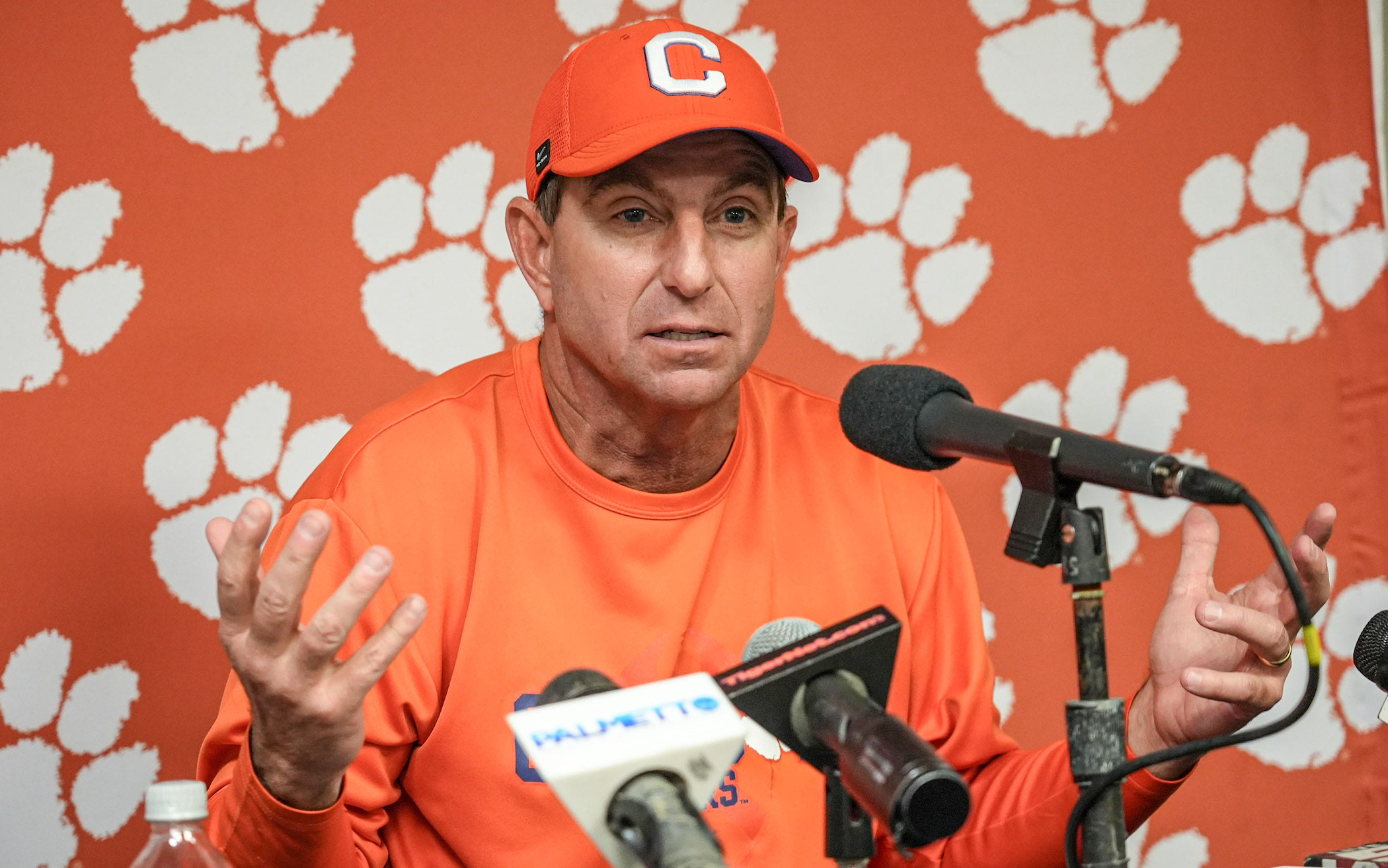
No college football program has been a bigger thorn in the side on the recruiting trail for the Tennessee Vols than the Clemson Tigers.
Over the last decade plus, the Vols have lost a who’s who of recruits with Tennessee connections to the Tigers.
- Amari Rodgers, WR — Grew up in Knoxville, and is the son of former Tennessee quarterback Tee Martin
- Tee Higgins, WR — From Oak Ridge, TN and was committed to UT at one point
- Trevor Lawrence, QB — Grew up rooting for Tennessee, wears No. 16 because of Peyton Manning
- Travis Etienne, RB — Grew up rooting for Tennessee
Earlier this week, 2027 four-star safety Jarrell Chandler, who is from Knoxville, committed to Clemson over Tennessee.
Swinney and the Tigers may not be done swiping recruits from the Vols.
Clemson is trending to land a Vol legacy
Clemson is reportedly trending to land 2027 four-star offensive lineman Carter Jones, 6-foot-5/291 pounds from Poquoson, VA.
Jones, who reportedly canceled his official visit to Tennessee this week, has a connection to the Vols via his mom, a UT graduate who was a member of the rowing team on Rocky Top.
The Vol legacy is set to announce his commitment on Memorial Day, and the feeling is that Clemson will be the pick.
“Earlier in the spring, Clemson held the edge before Penn State gained momentum after multiple visits to Happy Valley,” wrote On3’s Chad Simmons on Saturday. “Now, after several in-home visits and continued communication with Matt Luke and the Tigers’ staff, the momentum is swinging back toward Clemson. Both Steve Wiltfong and I recently moved predictions from Penn State to Clemson on the Rivals Recruiting Prediction Machine.”
One thing that’s important to note in this recruiting battle is that Tennessee has recently changed its high school recruiting approach as they shift the focus to players who will see the field sooner, as opposed to players who require more development (that’s the era of college football we’re in — development has taken a backseat).
This approach means that Tennessee isn’t going to get into bidding wars for high school recruits that may be a couple of years away from helping the program.
As a result, the Vols are going to miss out on some players that likely would’ve otherwise landed with Tennessee (that’s what happened with Chandler and Clemson).
“Tennessee is trying to get to the point where they’re not paying a ton of money — they’re not overspending — for players that aren’t going to play right away,” explained VolQuest’s Austin Price this week on 104.5 The Zone’s Ramon and Will. “Or they’re not sure [if they] are going to play right away. And so that’s kind of where those two recruitments (Jarrell Chandler and Miles Brown) went.
“Tennessee pushed hard for both to a certain point, and then once Clemson and Miami came for Jarrell Chandler, it kind of shifted. There was a moment there where he (Chandler) was still going to stay in state, and then Clemson came hard again. At that point, he went off to Clemson.”
“They’ve (Tennessee) had too much money standing on the sidelines the last several years because they went a certain path with the rev share and NIL stuff,” continued Price. “They’re trying to get to the point where they spend it on players that are going to play and make an instant impact. If you’re going to have a bunch of money tied up, it needs to be tied up in guys who are on the field, and that’s what they’re trying to get to now. Inevitably, you’re going to spend some money on some players that aren’t going to play right away, but they’re trying to eliminate that as best as they can. And so, with both of those kids (Brown and Chandler), they felt like they made them fair offers. The other schools just kind of went above it. And those schools, those families, and those kids made the decision that they felt was best for them.”
Josh Heupel and his staff are having to make some tough decisions on the recruiting trail. Right now, it looks like they’re making the right decisions on paper, but we’ll see in a couple of years how these decisions age.
