
‘They’ve had too much money standing on the sidelines’ – Tennessee is making a necessary change, but it’s already cost them 2 players
Josh Heupel and the Tennessee Volunteers football program are making a much-needed change to their roster building strategy, thanks to the ever-changing landscape of college football.


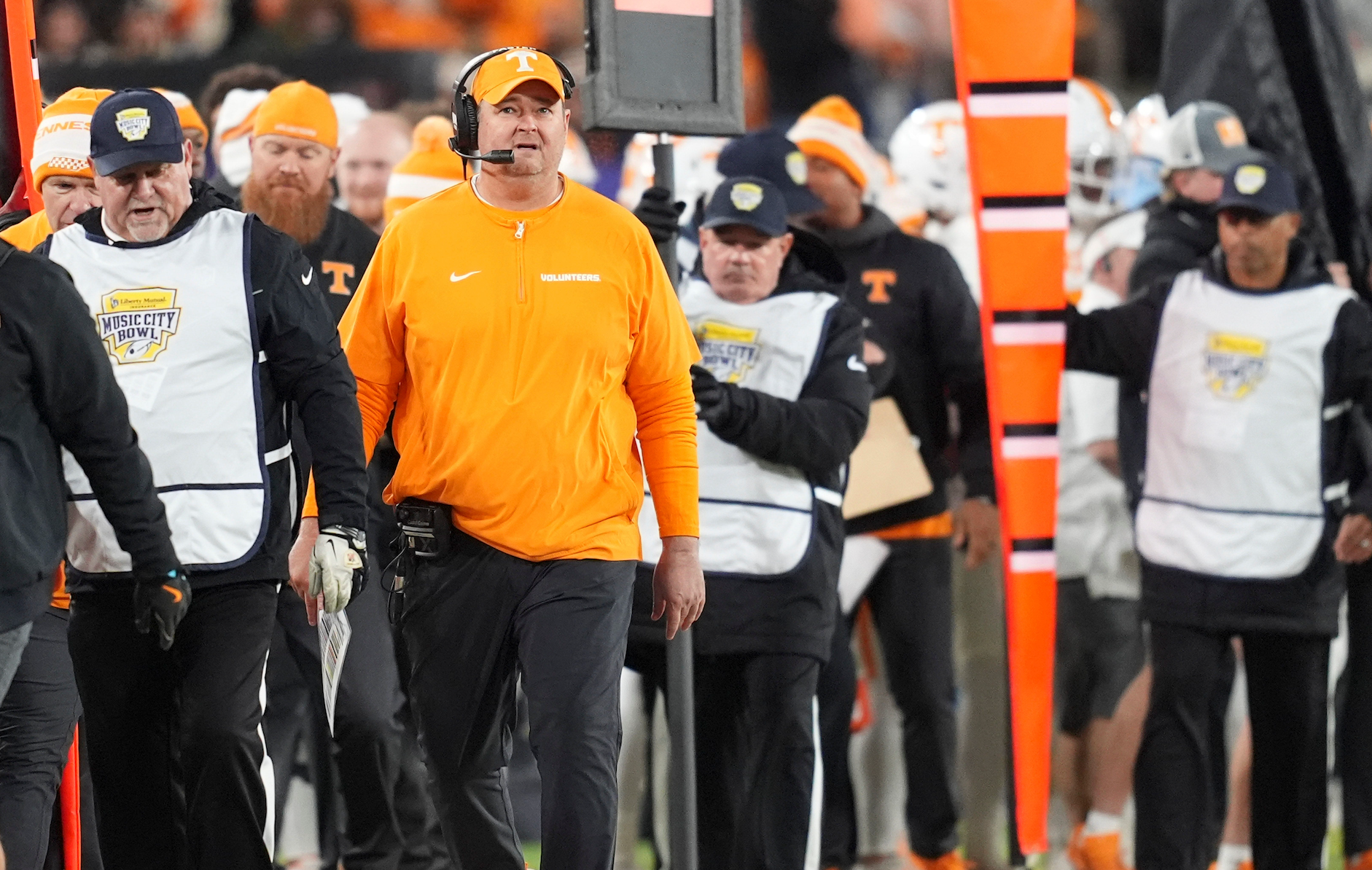
The Tennessee Vols, like most programs, are adapting to dramatic changes in college football on a near-weekly basis.
Thanks to the rise of the transfer portal and lucrative NIL deals — and, as a result, ever-expanding roster budgets — college football programs are constantly changing their roster-building strategies.
What worked in 2023 didn’t work in 2025. And what worked in 2025 probably isn’t going to work in 2027.
And because there are no rules or regulations in college football (it’s an overused phrase, but it really is the wild west), there’s no universal roster-building approach that works for all programs.
Some programs are going heavy on high school recruiting (Clemson), while other programs are going heavy on the transfer portal (Vanderbilt, Indiana, LSU, etc).
It’s a crazy time in the sport.
Anyway, Tennessee has utilized both approaches over the last few years, but it sounds like they’re going to be a little more judicious moving forward when it comes to which high school recruits they sign.
Tennessee wants less money “standing on the sidelines”
Every great college football player starts out as a high school recruit. It stands to reason that the earlier you can land a talented kid, the better it is for your program.
But that’s no longer the case in all situations.
Not every high school recruit is ready to play immediately (most players, in fact, aren’t ready to play as true freshmen). There are some highly touted recruits that need a year or two (or more) to reach their potential. Those recruits, however, are still expensive. Bidding wars often break out among programs, leading to absurd amounts of cash getting thrown at 17 year olds who may be years away from helping a program.
VolQuest’s Austin Price joined 104.5 The Zone’s Ramon and Will on Wednesday and he explained how Tennessee is altering its roster-building approach moving forward to focus more on players who are going to play immediately, as opposed to developmental players who may leave for another program in a year or two (after getting paid but not playing).
It’s a more sustainable strategy than just throwing crazy money at high schoolers, but it’s going to cost the Vols some players (it already has this month with two in-state players — Miles Brown and Jarrell Chandler — who committed to Kentucky and Clemson, respectively).
“Tennessee is trying to get to the point where they’re not paying a ton of money — they’re not overspending — for players that aren’t going to play right away,” explained Price. “Or they’re not sure [if they] are going to play right away. And so that’s kind of where those two recruitments went. Tennessee pushed hard for both to a certain point, and then once Clemson and Miami came for Jarrell Chandler, it kind of shifted.
“There was a moment there where he (Chandler) was still going to stay in state, and then Clemson came hard again. At that point, he went off to Clemson. And then with Miles, it was the same thing. I taped commitment interviews with both players — that tells you where they were at one point in time. But (this is what happens) when you start having the money talk and one school is willing to go way above, and the other is just not going to get into a bidding war for a kid that they really like, but they’re not sure is going to help them right away.”
“They’ve (Tennessee) had too much money standing on the sidelines the last several years because they went a certain path with the rev share and NIL stuff,” continued Price. “They’re trying to get to the point where they spend it on players that are going to play and make an instant impact. If you’re going to have a bunch of money tied up, it needs to be tied up in guys who are on the field, and that’s what they’re trying to get to now. Inevitably, you’re going to spend some money on some players that aren’t going to play right away, but they’re trying to eliminate that as best as they can. And so, with both of those kids (Brown and Chandler), they felt like they made them fair offers. The other schools just kind of went above it. And those schools, those families, and those kids made the decision that they felt was best for them.”
It’s a tough spot for coaches to be in. Most coaches got into this business to develop players, but the current landscape of the sport makes development impossible to prioritize. Rosters are robbed every year. There’s always another school willing to overpay for second-team and third-team players. It’s terrible for the sport, but it’s reality. It’s playoff or bust. Win now or get fired.
I don’t think any coach likes that this is what the sport has become, but there’s no putting the genie back in the bottle at this point.
Fortunately for Vols fans, it sounds like Heupel understands the assignment, and he’s adapting his roster-building strategy to fit the current times.
