
Did the Cowboys get robbed? Why the Micah Parsons and Myles Garrett trade comparisons don’t make sense
With Myles Garrett’s blockbuster trade hitting the news cycle, the NFL world is naturally comparing it to the Micah Parsons trade from last year. But here’s why the conversation lacks important context.


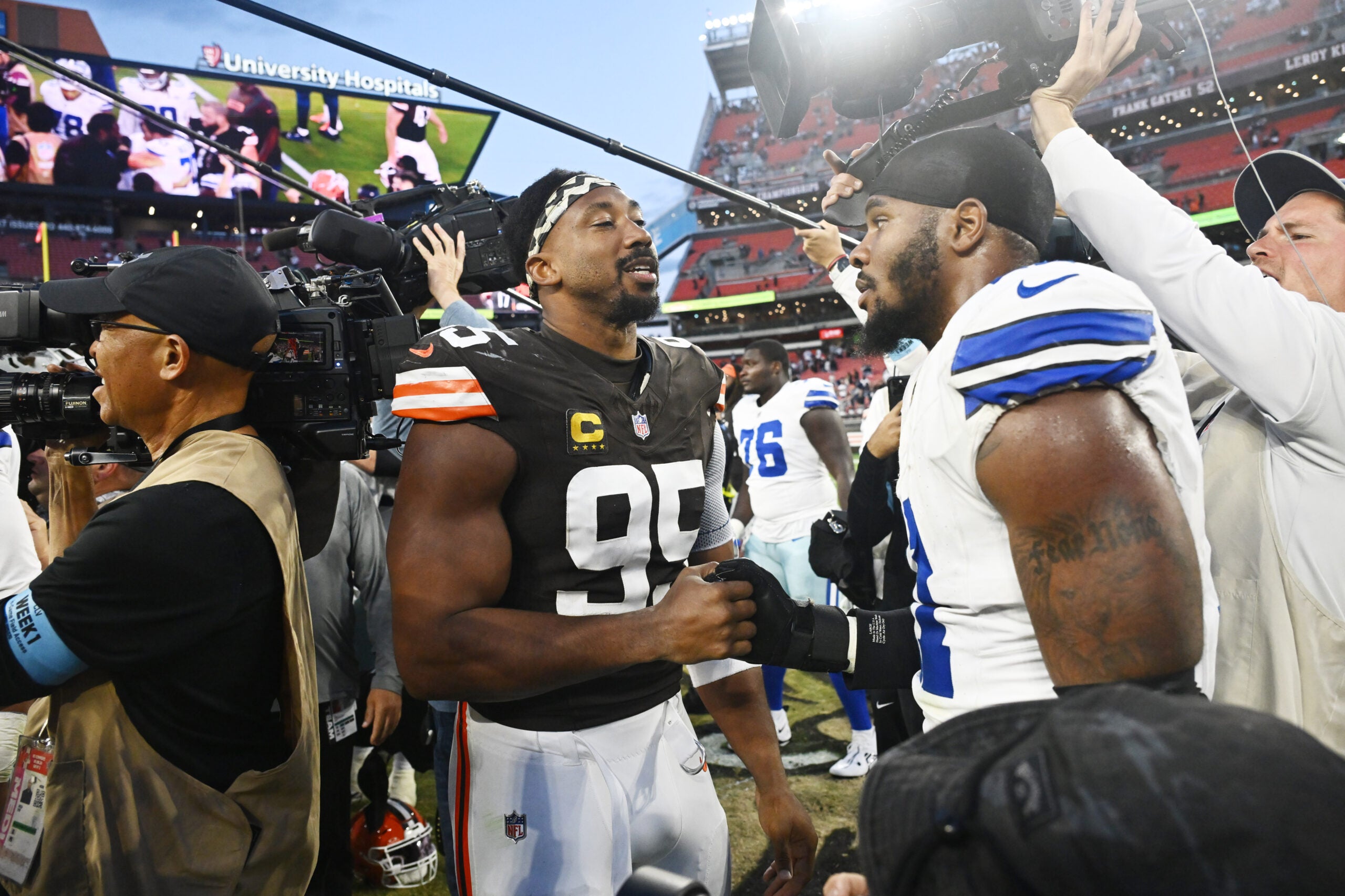
I wasn’t betting on writing about the Dallas Cowboys’ Micah Parsons trade on June 1, 2026. But here we are. In case you missed one of the loudest NFL days of the offseason, the Cleveland Browns traded superstar edge rusher Myles Garrett to the Los Angeles Rams.
And the return they got has many talking about how the Browns got much more than the Cowboys did despite Garrett being four years older than Parsons. Let’s add some much-needed context to the conversation.
Why the comparisons don’t make sense
First things first. The truth is the compensation package the Browns got for Garrett is certainly better than the one the Cowboys got for Parsons.
Sure, Cleveland only got one first-round pick while Dallas got two. But getting a first, second (2028), and third (2029) round pick on top of standout edge rusher Jared Verse is rich.
Keep in mind, Verse is two years into his rookie deal (which includes a fifth-year option) and is already rising as one of the best young players at the position. He won Defensive Rookie of the Year in 2024 and is two-for-two in Pro Bowl honors.
So, yes, the Browns got much more. But the reality is both age and even caliber of player pale in comparison to contract control when it comes to determining trade value.
Garrett’s deal was already in place. His cap hits over the next three years are very team friendly and the Rams have time to work out a solution. That makes him a more expensive player to trade for.
With Parsons, whoever traded for him was going to have to give up a ton of money to sign him to a contract extension. That’s what teams care about the most.
Just look at Jonathan Mingo. In 2024, with little career production to his name, he was dealt to Dallas for a fourth-round pick. In terms of quality of player, that was too much. Why were the Cowboys comfortable with it? Well, he had two and a half more years under contract.
Similarly, the most attractive aspect of the Rashan Gary trade was financial control. He cost a fourth-rounder despite rumors indicating the Packers planned to release him.
By giving up a pick for him, the Cowboys avoided a bidding war and were able to lower his cap hit for 2026. The lack of guaranteed money on Gary’s deal gave them leverage to renegotiate his contract. That’s valuable to front offices.
Now, trust me. I’m not trying to cut the Cowboys some slack here. They messed up the Parsons saga in many ways. That includes letting negotiations become personal to the point of urgently having to find a trade partner.
They could have handled negotiations professionally. They could have been proactive. But no. Instead, they could’ve held a bidding war for him earlier in the offseason to maximize value. I’m not defending any of that, promise.
But comparing the trade compensation between the Garrett and Parsons deals is a little misleading without the proper context. I hope this helped.
