
Packers send unusually strong message in response to latest comments about team’s future in Green Bay
The franchise issued a pointed response after recent discussion raised concerns about the long-term future of the organization.


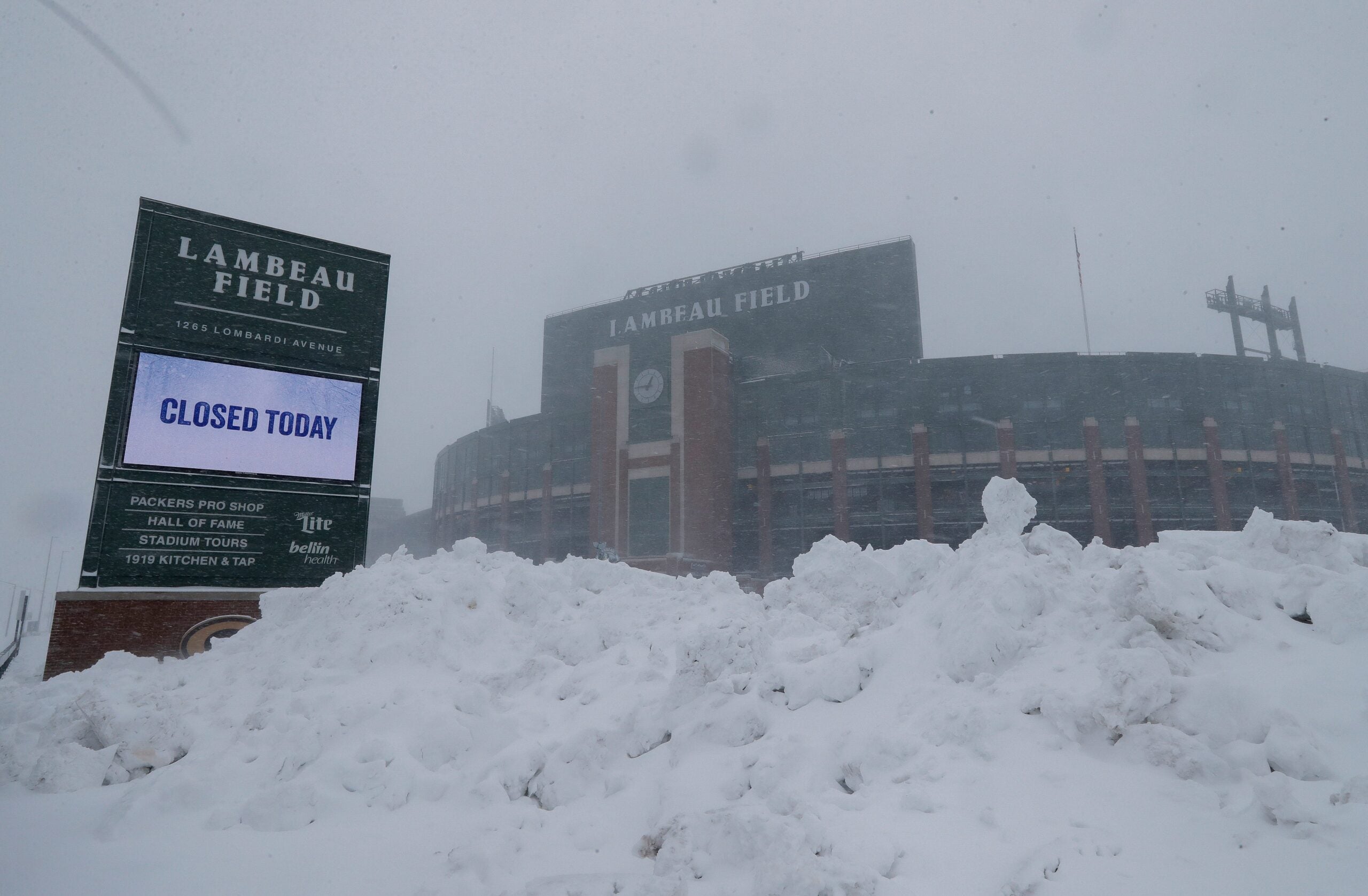
The Green Bay Packers offered strong opposition to significant changes to the Sports Broadcasting Act, the team said via statement on Tuesday. The act, established in 1961, allows the NFL to distribute equal shares of the national television contracts instead of teams individually negotiating deals with regional broadcast partners.
For the Packers, this means the ability to compete with the other 31 NFL teams despite being the smallest market.
U.S. Representative Scott Fitzgerald from Wisconsin’s 5th district led a House Judiciary subcommittee meeting and said the league could be violating the act. The House Judiciary Committee discussed the possibility of updating the law with the new reality of professional sports deals, including streaming platforms.
“Packers fans everywhere should be deeply concerned that Rep. Fitzgerald admitted to giving ‘zero’ consideration to keeping the Packers in Green Bay as he explores upending the 65-year-old Sports Broadcasting Act,” the Packers said in a rarely strong public statement. “Fans should be offended that Fitzgerald then went further, saying our concerns were ‘laughable.’ What is laughable is that a congressman from Wisconsin is leading this charge. Why threaten the team his community overwhelmingly cherishes and its ability to compete on a level playing field.”
“The tremendously successful model of pooling media rights and sharing revenue equally amongst teams has allowed the Packers to survive and thrive in the smallest media market in professional sports,” the franchise added. “This model is as foundational to the Packers’ existence as the very bricks in Lambeau Field. It is careless and unwise to rearrange the bricks of a foundation which has stood strong for over half a century.”
How it works
Thanks to the Sports Broadcasting Act, the NFL has the right to negotiate TV deals nationally and distribute equal shares of the earnings. In 2025, each team received $432.6 million. Previously, there was an understanding that league negotiations would violate the teams’ individual rights of negotiating contracts.
Currently, the NFL has broadcast agreements with NBC, CBS, Fox, ESPN/ABC, Prime Video, and Netflix. Fans have to pay different types of subscriptions to watch games on ESPN without an ABC simulcast, and the ones on streaming platforms like Prime and Netflix.
Rep. Scott Fitzgerald argues that it’s correct to reevaluate the act now that the NFL is not offering all games for free.
“Years later, it is fair for this body to ask whether the professional sports leagues have kept up their end of the bargain. In my opinion, they have not, and sports fans are paying the price because of it,” Fitzgerald said via Wisconsin Public Radio. “While the leagues are undoubtedly more popular than they were in 1961, because they do not follow America’s antitrust laws for television agreements, they can charge consumers inflated prices that would otherwise be illegal.”
The league argues that the model still allows the best watching experience for fans compared to the other major leagues in the United States.
“The NFL’s media distribution model is the most fan and broadcaster-friendly in the entire sports and entertainment industry,” the NFL said in a recent statement. “With over 87% of our games on free, broadcast television, including 100% of games in the markets of the competing teams, the NFL has for decades put our fans front and center in how we distribute our content.”
The fact is that if the law changes and teams start negotiating their own TV deals, the Packers won’t be able to make as much money as the other 31 teams in the NFL. That’s part of what makes the NFL special, and what makes a team from such a small team actually competitive in the long run.
