
Pros and cons of Packers potentially signing free agent edge defender Jadeveon Clowney
Green Bay has a need at edge with Micah Parsons set to miss the first month of the regular season, and Clowney is still available.


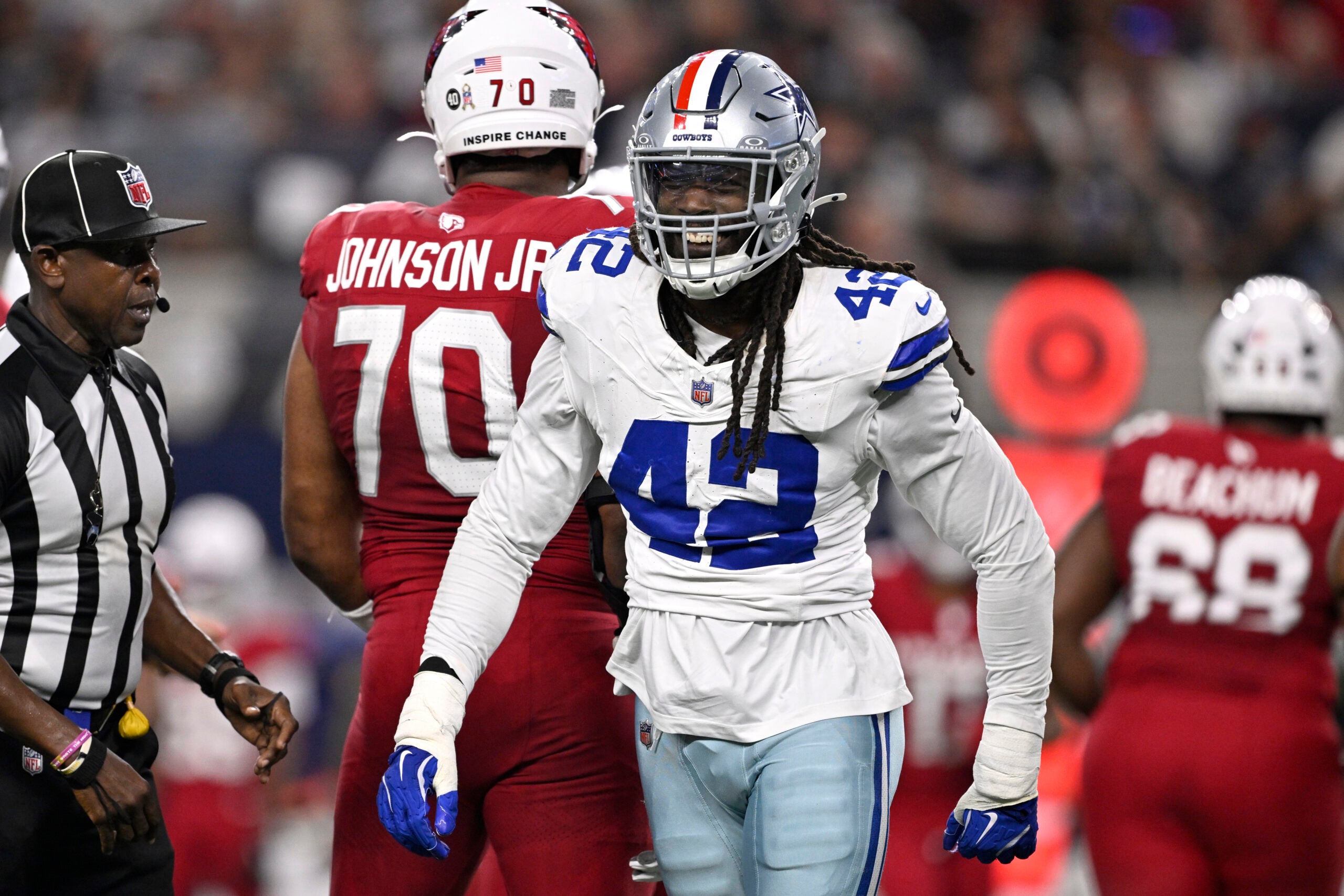
The Green Bay Packers could add edge rusher depth by signing former first overall pick Jadeveon Clowney in free agency. With Packers edge defender Micah Parsons expected to miss the first few games of the 2026 regular season while recovering from his ACL injury, rumors have surfaced about Green Bay’s potential interest in the veteran pass rusher. The move carries appeal from several angles, but it also presents real risk for a franchise that prioritizes young player development.
The case for signing Clowney
The most obvious benefit is depth at the position. Beyond Lukas Van Ness, the Packers lack proven options at edge rusher while Parsons is out. Based on the offseason program, former fourth-round pick Barryn Sorrell projects as the starter opposite Van Ness to open the season. Behind him, the backup options include rookie Dani Dennis-Sutton and rotational piece Brenton Cox. That group carries significant risk for the first month of the regular season.
The second pro extends beyond Parsons’ absence. Last season, when Parsons went down, Green Bay suffered from a lack of depth and production from its other edge defenders. That shortfall was a primary reason the Packers moved on from Rashan Gary, trading him to the Dallas Cowboys. With a player like Clowney, the Packers would have an experienced rotational piece even after Parsons returns. Edge defender is a position that generates constant rotation throughout games, and having another proven player in that cycle would be valuable.
Clowney’s versatility adds another layer. He has said this offseason that he has played under several different types of schemes, and that adaptability is a positive factor. He can affect both the run and the pass. Clowney has been an elite run defender throughout his career while also generating 40-plus pressures in each of the past few seasons. He may not have the elite sack numbers expected from a former first overall pick, but he remains a reasonably effective pass rusher.
The case against signing Clowney
The contract situation introduces the first concern. Clowney played last season on a one-year, $3.45 million deal with the Cowboys. If the price tag stays in that range, it would be manageable. But Green Bay is not operating with simple cap flexibility, and dedicating space to a veteran carries its own cost.
The vested veteran designation compounds that issue. If the Packers sign Clowney during training camp and he lands on the 53-man roster by Week 1, his base salary for the entire season becomes fully guaranteed. Green Bay would lose the ability to cut him and recoup cap savings after Parsons returns. If the idea is a short-term fix while Parsons is out, the vested veteran rule eliminates that flexibility and ties the Packers to Clowney for the full season.
The final concern is the one that matters most given how the organization operates. Signing a veteran like Clowney would block the development of young players. The Packers spent a fourth-round pick on Sorrell and a fifth-rounder on Collin Oliver last year, and a fourth-round pick on Dennis-Sutton this year. The expectation is that those players will develop into rotational edge defenders over time, and a veteran absorbing their snaps could slow that progression.
General manager Brian Gutekunst said after the draft that the Packers prefer giving young players time to develop through playing time and opportunities. That philosophy traces back to Ted Thompson’s tenure, and Gutekunst has followed the same path.
Balancing the decision
The question comes down to timing and evaluation. If the Packers feel during training camp that their young edge rushers are not performing at the expected level, a signing of that mold makes more sense. For now, Green Bay will likely let those players develop through camp. If the team needs more help later in the preseason or right before Week 1, that is when a move for a player like Clowney becomes a more realistic consideration.
