
Rival NFC executive highlights a problem that could become a serious issue for the Packers in 2026
Running back Josh Jacobs showed some early signs of regression in 2025, and this will be a key season.


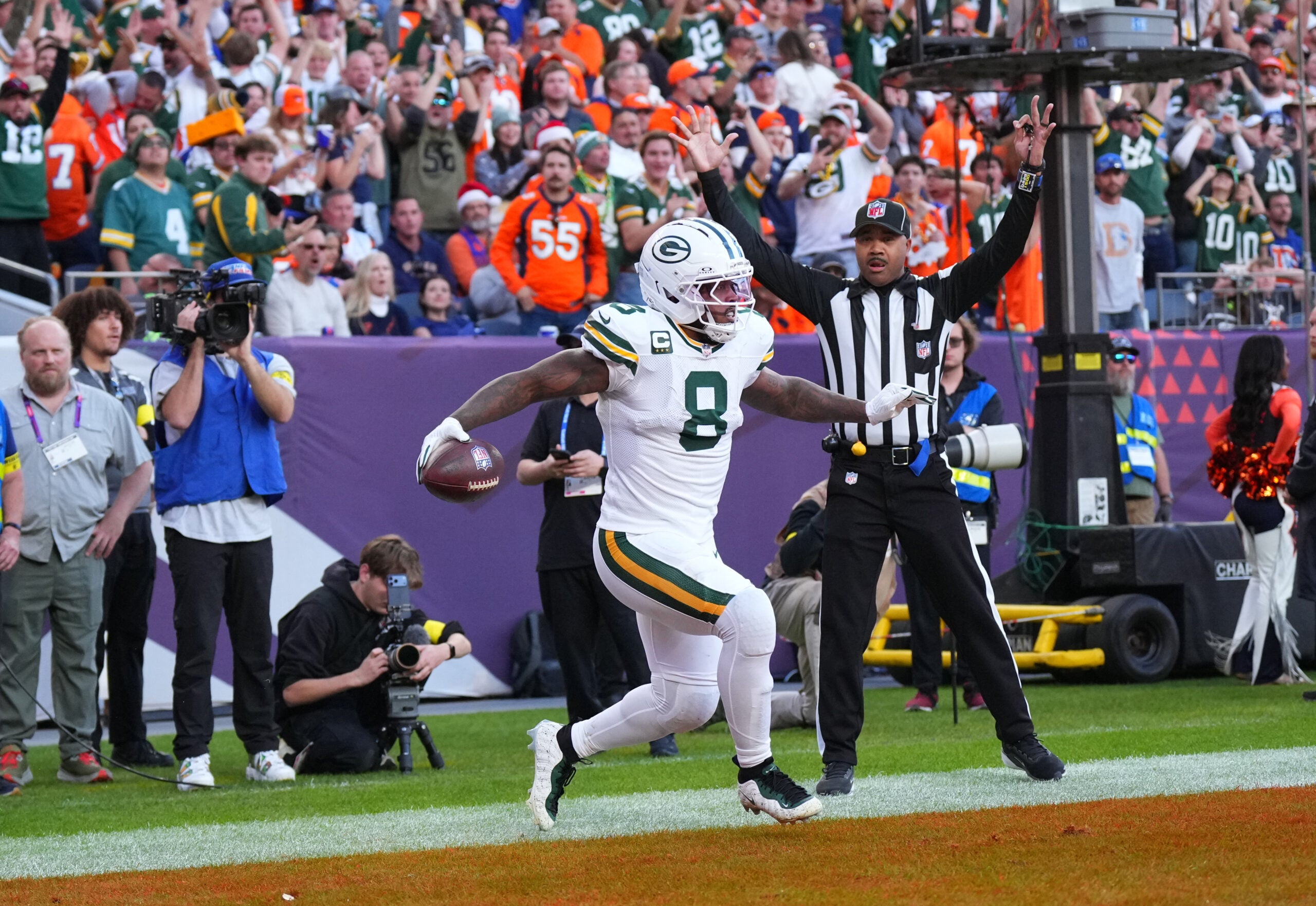
The Green Bay Packers running back Josh Jacobs dropped out of ESPN’s top 10 at his position after ranking sixth a year ago, and the regression in his advanced metrics paired with a thin depth chart creates a complicated situation for general manager Brian Gutekunst heading into an important season.
ESPN insider Jeremy Fowler released his annual positional rankings on Monday after polling executives, coaches, and scouts around the NFL. Jacobs landed as an honorable mention, 11th overall among running backs. One unnamed NFC executive offered a blunt assessment of where Jacobs stands.
“Still a really quality back but has probably slowed down slightly,” the executive said. “Can still hit singles and doubles, but not a lot of home runs as far as explosive plays. Still really good between the tackles.”
The numbers back it up
Jacobs did regress in 2025 compared to his stellar first season in Green Bay. His scrimmage yardage dropped from 1,671 to 1,211, and his total touchdowns went from 16 to 14. Those surface numbers still look solid, but the advanced metrics paint a sharper picture.
His PFF elusive rating fell from 87.1 to 61.3. His yards per route run dipped from 1.36 to 1.29. And his yards after contact per attempt dropped from 3.45 to 3.06. Those metrics are more reflective of individual play than team blocking, and they suggest Jacobs lost a step as a runner.
The Packers’ offensive line deserves some of the blame. Green Bay’s run blocking was worse in several metrics in 2025, and the tape confirmed that the team didn’t generate enough opportunities for Jacobs to produce at the level he reached the previous year. But the individual decline was real, and the executive’s evaluation aligns with what the data shows.
Contract and cap implications
This is where the situation gets truly difficult for the Packers. Jacobs doesn’t have any guarantees left on his deal. He is set to make $11.5 million this season and $13.5 million next year, but none of that money is guaranteed. Because of how Green Bay manages the cap, his 2027 cap hit is slated to be $16.625 million. If the Packers decide to release him, the dead cap would be only $3.125 million, creating $13.5 million in cap savings.
So the off-ramp exists. The question is whether the Packers would have anywhere to turn.
Depth chart concerns
Green Bay doesn’t have a great backup option or a long-term replacement ready behind Jacobs. MarShawn Lloyd could eventually become that player, but throughout his first two NFL seasons he dealt with injuries and barely played. It’s hard to count on him as a true volume option at this point. Chris Brooks is a viable third-down, rotational player because of his pass-blocking abilities, but he is limited as a runner. He is a role player.
Jacobs is 28 now, and running backs tend to start declining at that age. If he plays well in 2026 the way he did over his first two years in Green Bay, there will be enough evidence for the Packers to let him play out the contract. But if his regression continues, Gutekunst might have to rethink the strategy in 2027.
Jacobs was arrested earlier this offseason before a week of OTA practices in connection to a battery/domestic abuse case. He was released from jail and participated in part of OTAs and mandatory minicamp, but the case could still carry repercussions. A potential suspension would only magnify the depth problem.
The Packers could consider signing or trading for a running back before the season to build a security net. Without a reliable plan behind Jacobs for the short or long term, doing nothing carries real risk if his production continues to slide.
