
Minnesota Vikings’ biggest roster mysteries ahead of training camp are highlighted by Kyler Murray vs. J.J. McCarthy
When you look at the Minnesota Vikings roster going into the season, there are a lot of question marks, and it starts at quarterback.

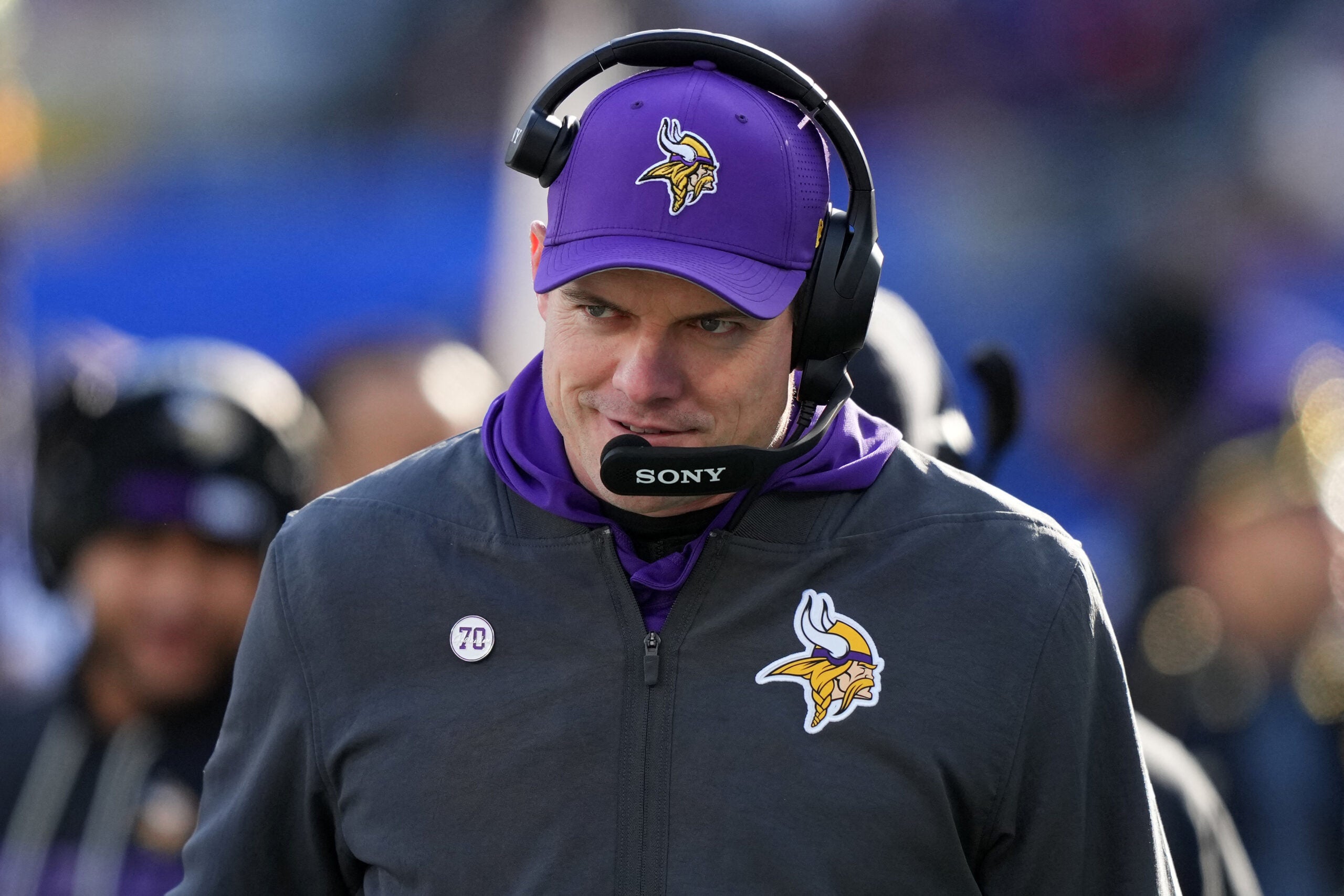
The Minnesota Vikings are entering training camp with questions at nearly every position group, from the quarterback competition between Kyler Murray and J.J. McCarthy to a defensive line room loaded with intriguing rookies. While there weren’t a lot of free agency additions for the Vikings, adding nine picks from the NFL Draft and 19 undrafted free agents does add some new blood to the roster.
As we head into training camp in three weeks, the roster has a lot of question marks, from how things will be structured and what is worth keeping an eye on.
Quarterback structure matters as much as who wins the job
Right now, the quarterback room is less about who starts and more about what happens after that decision gets made. Carson Wentz projects for me as the QB2 regardless of whether Murray or McCarthy wins the starting role. The loser of that competition likely ends up off the roster entirely.
If Murray doesn’t win the job, he likely requests a trade because he’s playing for what is probably his final big contract. For McCarthy, losing the competition would essentially eliminate his chance of being the long-term answer in Minnesota. In this scenario, Max Brosmer profiles as the developmental QB3 option.
The structure here is intentional. Keeping Wentz as the backup rather than the losing competitor removes the pressure of a starter constantly looking over his shoulder. That dynamic played a role in Sam Darnold’s success in 2024. Darnold never had someone breathing down his neck, and that mattered for his confidence and his play. Head coach Kevin O’Connell has talked about wanting to give the starting quarterback a long runway to be successful, and this is the likely path forward.
The running back room is better than people think
ESPN ranked Minnesota’s starting lineup 22nd, and one criticism centered on the running back room’s lack of additions. The real question is simple: what could the Vikings have done differently? They made inquiries on Travis Etienne and Kenneth Walker III but couldn’t afford either with their salary cap situation. Aaron Jones returned on a pay cut because they weren’t finding a better player at that price, and he likely wasn’t going to make more than $5.5 million in free agency.
Jordan Mason is the intriguing piece here. With the Frank Smith addition bringing more wide zone concepts, Mason could thrive. He excelled in that style of run game in San Francisco, averaging 3.5 yards per carry after contact throughout his career. He’s only accumulated 844 carries across college and the pros combined. Jonathan Taylor had more carries (926) at Wisconsin alone than Mason has had in eight total years of football. The lack of tread on the tires matters more than raw age.
The broader conversation about Kevin O’Connell not prioritizing the run requires more nuance than it typically receives. Quarterbacks have autonomy to audible out of run calls at the line of scrimmage, and those audibles almost always flip to passes. O’Connell gets blamed for low rush rates when Sam Darnold, Wentz, and McCarthy are the ones canning run plays based on defensive alignments. Yes, O’Connell is still responsible and he has issues with abandoning the run. However, it’s nowhere near as simple as it seems.
Jauan Jennings changes the offensive identity
Adding Jauan Jennings gives the Vikings something they haven’t had in years: a power forward at wide receiver. Justin Jefferson and Jordan Addison are finesse players who win with route-running precision and separation. Jennings is a bully who plays like Dennis Rodman. He can box out defenders on slants and contested catches.
That distinction matters most in the red zone. Minnesota struggled there because throwing to Jefferson and Addison against physical press coverage near the goal line is more difficult when defenders can jam them for 3 yards deep into the end zone. Jennings changes the play-calling dynamic entirely and gives O’Connell a curveball he’s never had.
The defensive line features a fascinating depth chart battle
Heading into training camp, Jalen Redmond is the only guaranteed starter. Rookies Caleb Banks and Domonique Orange project as eventual starters but may not win jobs immediately. Orange’s readiness as a nose tackle could translate faster than Banks’ higher ceiling at the 5-technique, but we won’t know until they hit the field.
The projected Week 1 starters could be Redmond, Levi Drake Rodriguez, and Elijah Williams, with Banks and Orange as rotational players early on. Williams came into the league at only 273 pounds out of Morgan State, but a full year in an NFL program has transformed his body and strength to match his already impressive baseline technique that he showed in limited snaps last year.
Edge rusher depth remains the roster’s biggest concern
If Dallas Turner or Andrew Van Ginkel gets hurt, the Vikings are in serious trouble. The case for signing Jadeveon Clowney remains strong. He’d likely cost only a few million dollars after making $3.4 million prorated over 16 weeks previously. His production (8.5 sacks, 12 tackles for loss, 40 pressures) on fewer than 400 snaps makes the cost-per-production ratio exceptional. Beyond the on-field impact, his frame and power elements could help Turner’s development.
Jake Golday at linebacker profiles as an off-ball player who can do edge rusher things, not the inverse. Think more Anthony Barr, not Van Ginkel. He can set an edge better than Eric Wilson, but expecting him to bend the arc as a pass rusher regularly is unrealistic. There’s a reason why Golday was moved away from being an edge rusher in his last season with Central Arkansas.

