
PFF QB Annual shows Cam Ward makes the hard stuff easy and the basics hard, leaving Titans’ Brian Daboll with a clear mandate in 2026
Cam Ward can clearly hang in the quarterbacking 201 and 301 classes. But it’s the curriculum from QB 101 that he needs to demonstrate mastery over this fall. New Titans OC Brian Daboll is here to make that happen.


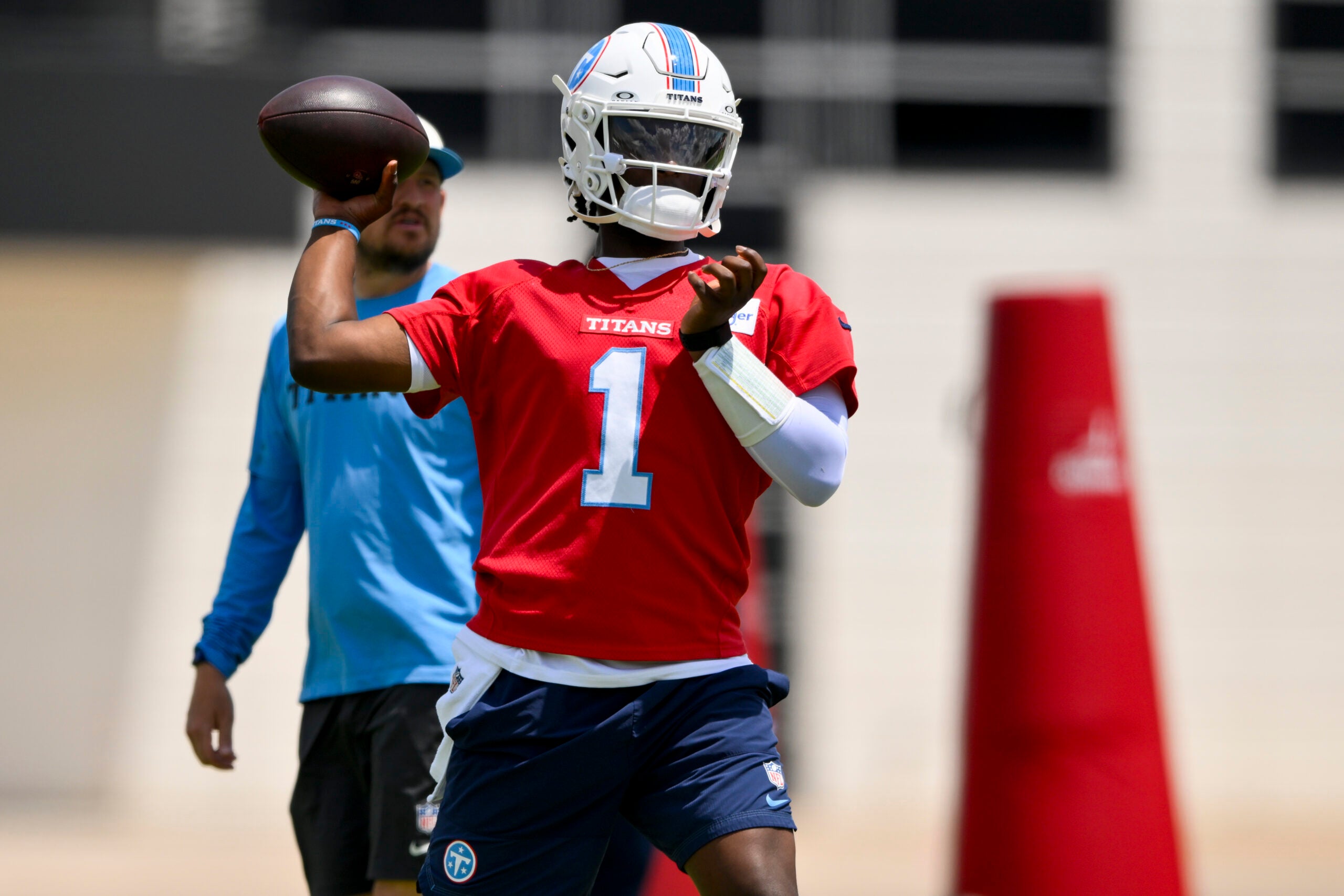
The PFF QB Annual is out, and Tennessee Titans quarterback Cam Ward’s numbers look pretty, pretty bad.
That shouldn’t surprise anyone who watched the 2025 season or paid attention to the metrics at any point over the past several months. Ward finished 39th out of 41 qualifying passers in both passing grade and wins above replacement. The big-picture numbers haven’t changed. What the annual does provide, though, is a more granular look at where Ward excels and where he falls short, and that breakdown tells a more nuanced story about what the Titans’ new coaching staff needs to prioritize this year.
Let me be clear: you can’t look at these general numbers and pretend they don’t exist. You also can’t pretend you didn’t see flashes through the muck last season that suggested there’s a real NFL quarterback in there. Both things are true, and the PFF Annual does a good job of illustrating exactly where Cam thrives and where he must improve.
The hard stuff comes easy, the easy stuff comes hard
The tab that jumped out to me most was the breakdown of Ward’s grades by read type. On scramble drills, he posted a 91.9 PFF grade, 3rd out of 43 qualifying quarterbacks. Your eyes could have told you that. When the play breaks down and Ward has to improvise, he’s electric. His second-read grade was a respectable 67.5. But on first reads, where rookie quarterbacks tend to live, he graded at just 51.1. And on checkdowns, the throws that should theoretically be the easiest part of the job, he was at 45.1.
That pattern is counterintuitive on the surface, but it tracks with exactly what evaluators flagged about Ward as a prospect. He makes the hard stuff easy and the easy stuff hard. His quick processing shines when defenses throw complexity at him. When the picture is vanilla and the answer should be obvious, the inaccuracy and fundamental issues rear their heads.
The situational splits reinforce this. Ward graded better against two-high safety looks and rotating coverages than he did against single-high and no-rotation looks. Opposing defenses knew they didn’t have to get creative against Tennessee’s offense last season. They could rush four, clog passing lanes, and play relatively simple coverage because they trusted their personnel to win one-on-one matchups. When the defense kept things simple, Ward struggled more.
Red zone, blitz, and pass-leading grades offer some hope
Not everything in the annual is doom and gloom. Ward posted an 11th-best 70.1 grade in the red zone. The caveat is that the Titans had only 58 red zone attempts all season, so the sample is small. But he also graded well against the blitz.
His grades on horizontal and vertical leading passes, the darts up the seam, the timing throws where he’s leading receivers with pace, were consistently higher than his grades on touch passes. The vertical back-shoulder pass earned a 46 grade. The over-the-shoulder pass sat at 57. Outside the numbers, he did not grade well. As it pertains to the roster changes around him, the Titans brought in wide receiver Carnell Tate and Wan’Dale Robinson specifically to give Ward targets with reliable hands and the ability to win with or without speed. If those additions can limit the drops on the bullets down the middle of the field where Ward is trying to lead receivers with pace, the passing game should improve as a whole.
What Brian Daboll has to do with all of this
The stable quarterback metrics that PFF tracks, the ones proven to correlate with sustained success, are all dreadful for Ward. Clean pocket grade, standard dropback grade, first-and-second-down grade, grade with no play action, grade at or beyond the sticks, negative graded play rate, sack rate. All bad!
Those are the 101-level fundamentals of quarterback play. And if the 101 class isn’t taught effectively, it doesn’t matter how good you are at the 201 and 301 material. Ward’s unstable metrics, the stuff that fluctuates year to year like play action grade, positively graded throw rate, outside-the-pocket grade, and his marks on third and fourth downs, are all much better. That’s his ceiling showing through. But you have to master the mundane before the special becomes sustainable.
The general theme of Brian Callahan’s offense last year felt like “take what they give you.” With Daboll, based on his track record in Buffalo and New York, the emphasis flips to “take what I’m giving you, because it’s going to be there.” Daboll’s philosophy of winning through play design should make life easier for Ward mentally, getting answers built into the play call before the snap so the quarterback isn’t freelancing on every dropback.
PFF also assigned 20.9% of Ward’s pressures, 43 total, as his fault. That’s hardly shocking for a rookie quarterback, but it has to improve.
Here’s the bottom line. We now have the baseline. Ward has to go out and look much better this fall. But he’s shown enough to make me thing he absolutely can do it.
