
Packers’ defensive front quietly became one of the team’s biggest offseason mysteries heading into training camp
The interior of the defensive line faces reconstruction as Jonathan Gannon’s defensive structure materially alters the group.


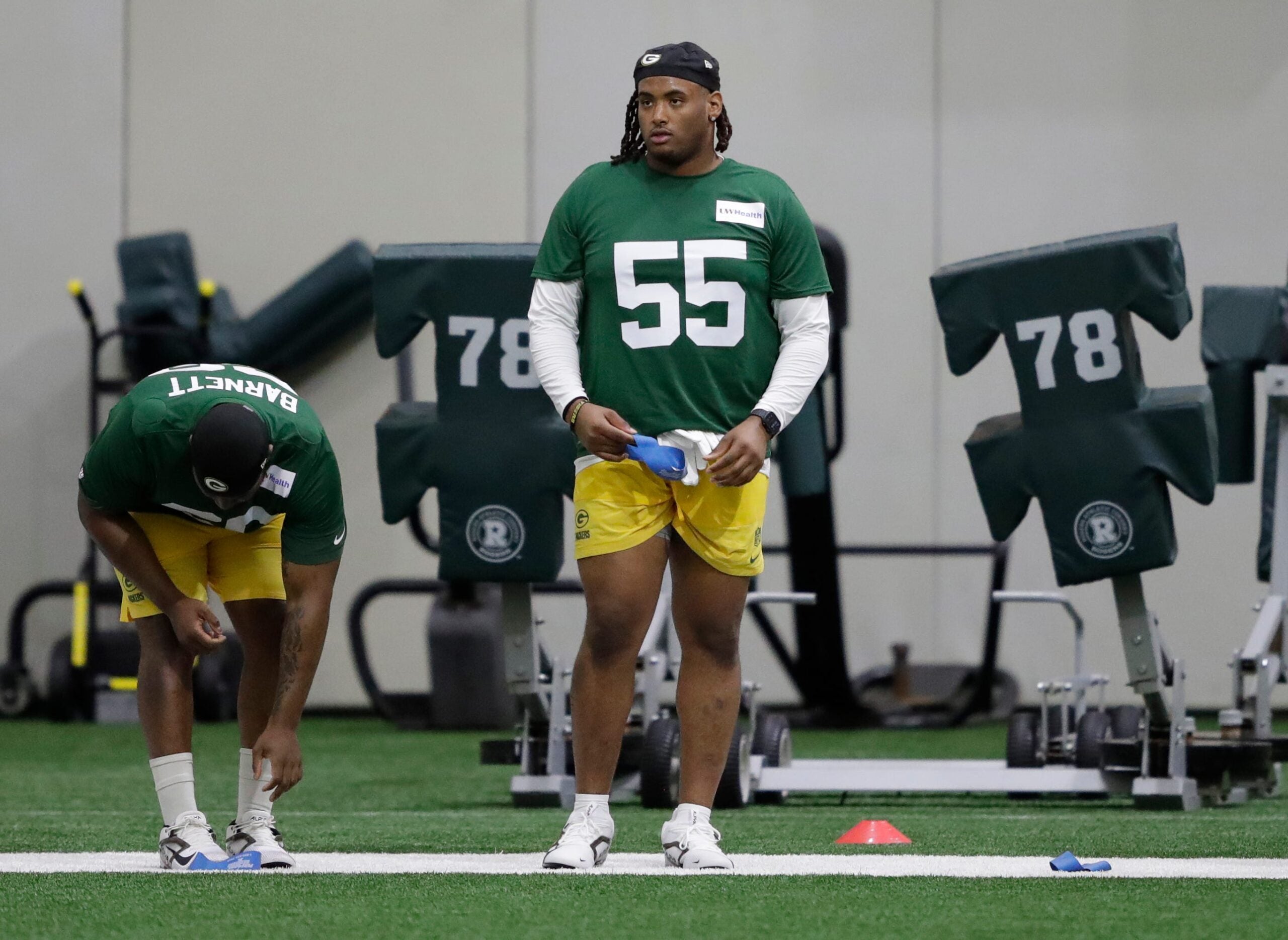
The Green Bay Packers enter 2026 with significant questions along the interior of their defensive line, a position group that lost three contributors over two offseasons and now faces a schematic overhaul under new defensive coordinator Jonathan Gannon.
The Packers traded Kenny Clark and lost TJ Slaton last year, then moved Colby Wooden this offseason. Green Bay responded by signing defensive tackle Javon Hargrave from the Minnesota Vikings and trading up in the third round of the 2026 NFL Draft to select Chris McClellan. Those additions anchor a retooled room that will look and operate differently than it did a year ago.
Scheme change splits the room
Last season under Jeff Hafley’s 4-3 base, the Packers grouped interior defensive linemen and edge defenders together in a single position room. Gannon’s 3-4 base changes that structure entirely.
Green Bay promoted Vince Oghobaase from assistant defensive line coach to defensive line coach, while DeMarcus Covington shifted to coaching only the outside linebackers who function as edge rushers.
The split gives each group dedicated attention, which matters for a defensive tackle room trying to establish continuity with several new faces.
Hargrave and McClellan lead the rebuild
Hargrave signed a two-year, $23 million deal after the Vikings released him. He is still a reasonably effective interior defensive lineman and projects as a starter alongside Devonte Wyatt, who is under contract through 2029 on a recently-signed three-year, $57 million extension.
The difference between Hargrave and what the Packers had previously is the combination of pass-rush production and competent ability to stop the run. Wyatt and Karl Brooks are essentially interior rushers, and Hargrave represents an upgrade in the run stuff area. But Green Bay’s bigger concern is still run defense, which is where McClellan enters the picture.
The Packers traded up to get McClellan in the third round because they believe he has the versatility to defend the run and rush the passer at the same time, which was lacking in the room. If McClellan can become a viable run stopper as a rookie, he will play a significant role from the start.
Depth pieces and developmental players
Behind the top three, Karl Brooks projects as the fourth defensive tackle in the rotation. He provides value as a pass-rusher but offers little against the run, which creates a question about his fit in Gannon’s scheme. Brooks earned the proven performance escalator, and his salary is no longer negligible. If he doesn’t fit what Gannon wants to do, Green Bay could consider moving on.
Warren Brinson, a sixth-round pick from the 2025 draft, profiles similarly as an interior rusher and remains a developmental piece. Nazir Stackhouse, the nose tackle who went undrafted last year, played more snaps than he probably should have as a rookie. The Packers hope to carve out a more adaptable role for him in Year 2.
Jonathan Ford adds depth at nose tackle. The Packers originally drafted Ford in the seventh round in 2022, and he spent time with the Chicago Bears before returning to Green Bay late last season when the team claimed him off waivers. Jordon Riley signed late last year but is working back from an Achilles injury, and his return timeline remains unclear. Anthony Campbell and Jaden Crumedy round out the group as players fighting for practice squad spots.
Ultimately, the Packers are banking on a top trio of Wyatt, Hargrave, and McClellan to stabilize an interior that produced underwhelming results last season.
