
Oklahoma Sooners head coach Brent Venables revealed what the plan for a successful season in 2026 would look like
The Oklahoma Sooners and their head coach Brent Venables are ready for the 2026 season, and they already know what needs to be done in fall camp.

The Oklahoma Sooners enter the 2026 season with legitimate National Championship aspirations after reaching the College Football Playoff last year for the first time in the Brent Venables era.
Oklahoma lost to Alabama in the first round, a game that stung because the Sooners controlled early momentum before letting it slip away. The roster lost several players to the NFL Draft and the transfer portal, but the core remains intact, and key additions on both sides of the ball could make this a better team than the one that made the playoff.
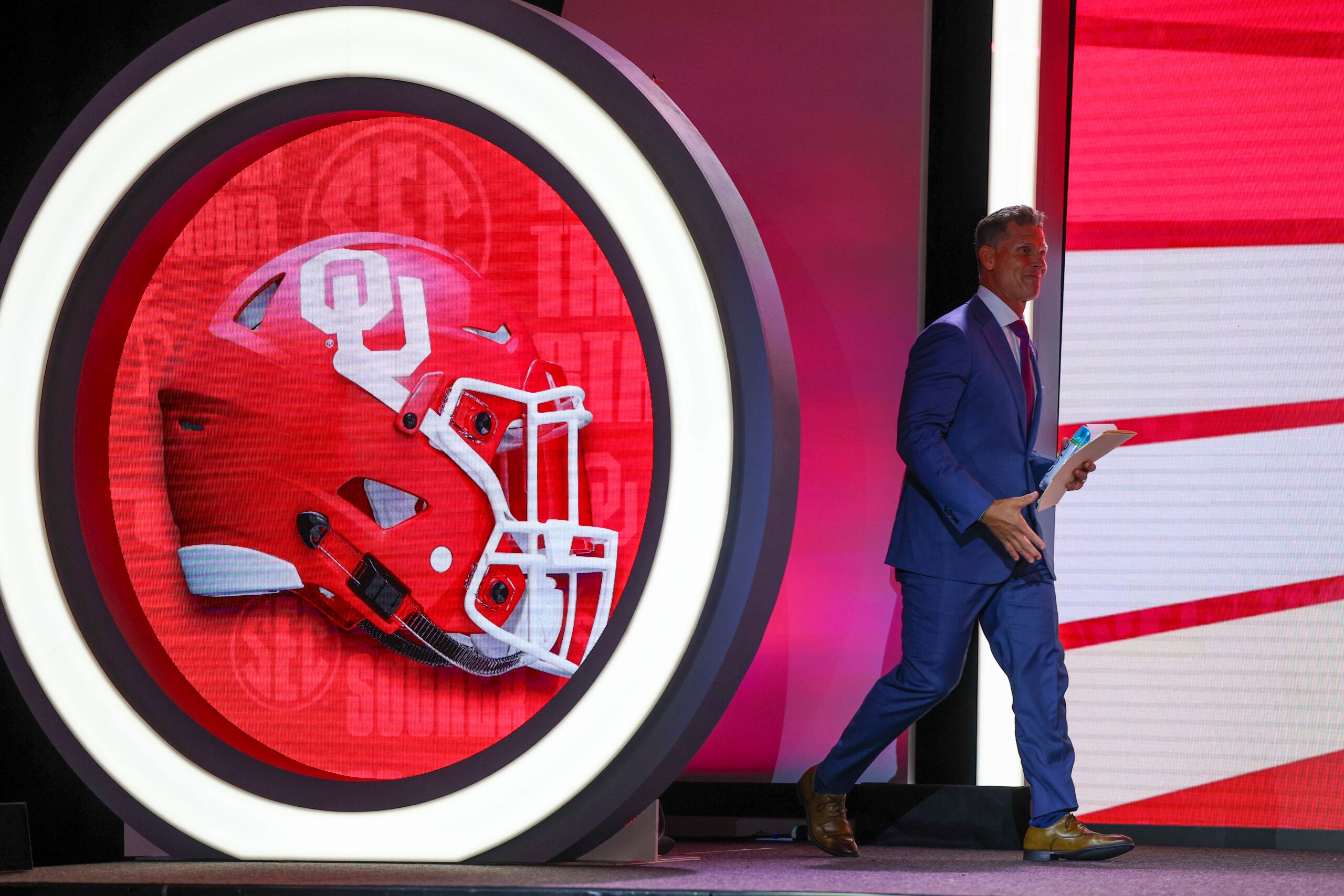
Venables addressed what needs to change at SEC Media Days, and his answer zeroed in on the two areas that held the Sooners back all season.
“We’ve really looked at the areas where we fell short, certainly in your 3 losses, turnover margin and running the football, being closer to 175 yards per game than we were,” Venables said. “That’s a vision of where we want to be. If we hit the target on those 2 spaces, we’ll be a much better football team.”
He hit the nail on the head. Those two problems defined Oklahoma’s ceiling last year, and both are fixable.
The run game has to improve
The Sooners’ ground attack was a liability in 2025. Oklahoma couldn’t establish any consistency running the football, and a big reason was health along the offensive line and at the skill positions. The tight end room also struggled to generate any push at the point of attack as blockers.
That should change. Oklahoma added Rocky Beers and Hayden Hansen at tight end, and both project as legitimate run-blocking weapons. Hansen stands about 6-8 and profiles as one of the best blocking tight ends in college football. Their presence alone should open running lanes that didn’t exist last season.
The offensive line should take a step forward as well. Three freshmen started up front last year, and another year in the system should produce tangible improvement. That group was raw in 2025 but showed enough talent to believe growth is coming.
Getting the run game closer to 175 yards per game, as Venables outlined, would transform the entire offense and take pressure off the passing attack.
Turnovers cannot happen at the same rate
Oklahoma’s turnover margin was brutal, and it showed up at the worst times. The Sooners actually improved at creating turnovers in the second half of the season after a slow start, but they gave the ball away far too often. The LSU game stands out as the low point, when quarterback John Mateer threw four interceptions. That kind of performance is unacceptable for a team with playoff aspirations.
Mateer dealt with a hand injury last season that contributed to his inconsistency, though it wasn’t the only factor. If he’s healthy, he should be better. The weapons around him have improved too. Wide receivers Trell Harris and Parker Livingstone give Oklahoma more options in the passing game, which should help the quarterback avoid forcing throws into tight windows.
The defense is still the backbone
Oklahoma’s defense remains the foundation of this team. The Sooners lost some pieces, and depth is a question mark heading into fall camp. But the starters on that side of the ball are talented enough to carry the unit. Venables’ defensive identity is well established at this point, and the players returning understand what’s expected.
The talent is there on both sides of the ball. Oklahoma has the roster to compete for a national championship in 2026. The question is whether this team can fix the specific problems that cost them games last year. Turnover margin and the run game aren’t abstract concerns — they’re concrete, measurable areas where the Sooners fell short in all three of their losses. Fall camp will tell a lot about where this team stands and whether the additions at tight end, wide receiver, and along the offensive line have truly closed those gaps.
