
The Ben Johnson narrative around the Lions offense falls apart under one thing: context
Detroit Lions’ offense without Ben Johnson has become one of the NFL’s biggest talking points. There’s one part of the conversation that keeps getting left out.


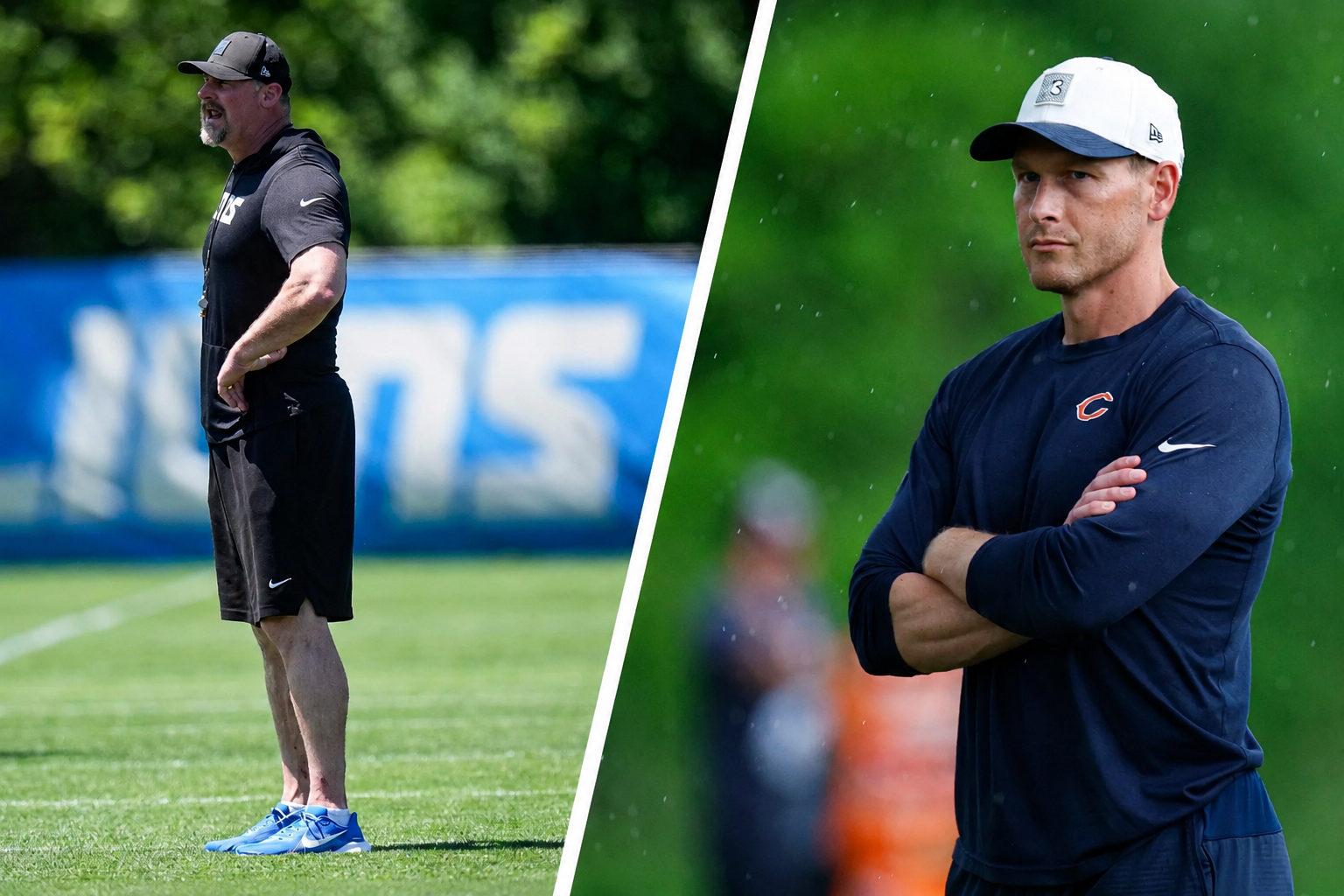
The Detroit Lions offense without Ben Johnson has become the NFL’s favorite narrative heading into 2026. Social media crowned the Lions as “Ben Johnson merchants” after Chicago made the playoffs and Detroit didn’t. The idea that the Lions offense fell off a cliff after Johnson left for the Bears is one that doesn’t survive contact with the actual numbers. And with new offensive coordinator Drew Petzing now in town, this conversation deserves a reality check before training camp gets rolling.
The 2024 baseline
You have to understand how dominant the Lions offense was in 2024 with Johnson calling plays. Detroit finished first in points per game, second in total yards per game, second in passing yards per game, third in rushing yards per game, second in yards per play, first in first downs, fourth in third down percentage, third in red zone touchdown percentage, second in EPA per play, and first in success rate. That is an all-time caliber offense. Nobody is disputing that Johnson was very good at his job.
But here’s the thing. The idea that his departure was the primary reason the Lions offense took a step back in 2025 ignores everything else that happened.
The real reasons the offense dipped
Ben Johnson leaving was probably the fifth worst thing that happened to the Lions offense last year. For starters, Frank Ragnow retired abruptly. Ragnow himself admitted recently that retirement wasn’t the original plan, and the Lions didn’t know it was coming until summer, when they had nothing to replace him with. Then Kevin Zeitler, their starting right guard, left. Graham Glasgow slid over to center despite never starting there full-time. Two rookie guards in Christian Mahogany (playing one game in formal rookie year where he did not participate at training camp and 75% of the season essentially made 2025 his rookie year) and Tate Ratledge were thrown into the fire. Taylor Decker spent the entire season on the injury report and eventually started getting the Ragnow treatment, sitting out one practice day per week just to make it to game day.
And that was just the starting point. Sam LaPorta went down about halfway through the season. Then Brock Wright went down. The Lions were rolling with Anthony Firkser at tight end. Glasgow got hurt, forcing Kingsley Ekguakun and Trystan Colon into the lineup at center. Decker got hurt, and Giovanni Manu and Dan Skipper had to start at left tackle. Detroit finished 31st in adjusted games lost to injury. They were one of the most injured teams in recent NFL history.
The numbers still held up
Despite all of that, the Lions offense in 2025 still finished fifth in points per game, fifth in total yards per game, third in passing yards per game, 13th in rushing yards per game, third in yards per play, 11th in first downs, eighth in red zone touchdown percentage, 15th in sacks allowed, sixth in EPA per play, and sixth in success rate. The drop-offs in rushing yards and sacks allowed tell the story of a decimated offensive line, not a missing coordinator.
Take the best offensive line in football, which is what everyone called the 2024 group, strip it down to spare parts, and the Lions still produced a top-six offense. That should tell you everything.
Context is not an excuse
People love to bring up the Vikings game as evidence that Jared Goff can’t win big games. In that game, Goff had Kingsley Eguakun (39.5 PFF grade), Dan Skipper at left tackle (now retired), and Kayode Awosika rotating in because someone else got hurt. Penei Sewell and Ratledge were the only two healthy linemen. Context matters. The best quarterback or the best offense in the world is going to look worse when half the unit is injured. “Next man up” is a nice motivational phrase coaches use, but the next man up is not as good as your starter. That’s why he’s not starting.
Some people tried to cherry-pick the Lions’ losses, pointing out Detroit averaged 18.7 points in 7 of their 8 losses. You can mold the story any way you want if you remove the right games and add in the right ones. The Lions averaged 19.3 points per game in their losses, which ranked 12th in the league. The Bears, for the record, averaged 22.6 in their losses. Not an absurd gap. And the Lions still finished with a better offense than Chicago in nearly every statistical category.
This isn’t a Ben Johnson vs. no Ben Johnson story. It’s a story about a roster that got gutted by injuries, lost its offensive line anchor with no warning, and still fielded a top-five scoring offense. With Petzing now running things and a healthier roster on the horizon, the Lions offense should be in good shape. Let’s see how it plays out.

Detroit Lions News