
We did the math on the Lions paying Brian Branch and Sam LaPorta after Jahmyr Gibbs. The answer is almost ridiculous
Detroit Lions fans keep asking how Brian Branch and Sam LaPorta get paid after Jahmyr Gibbs. We ran the cap math, built the projections and tested the scenario. The results were eye-opening.

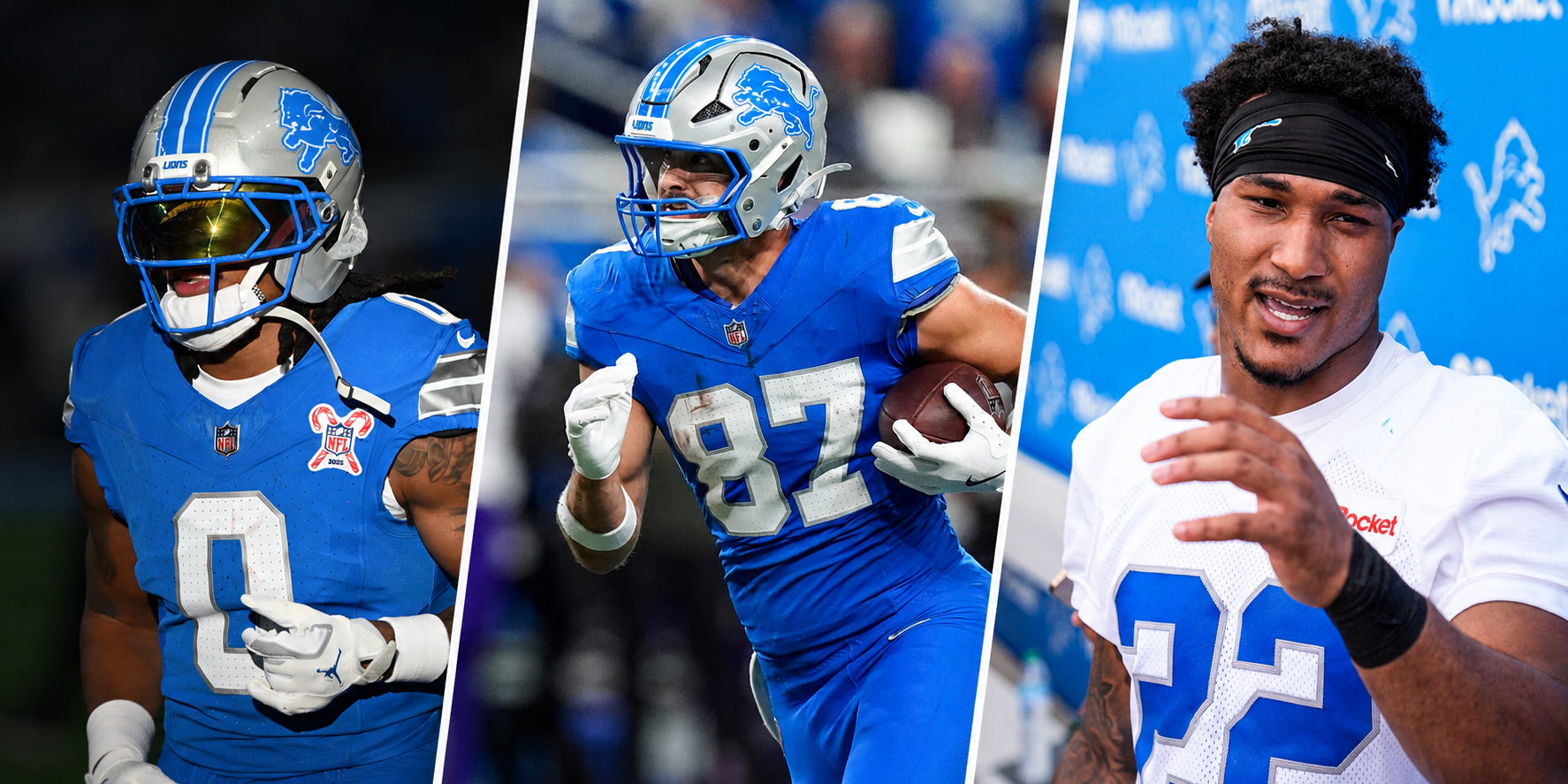
The Detroit Lions made Jahmyr Gibbs the highest-paid running back in NFL history, and the reaction from Lions fans was predictable. Sure, the payday is massive, but the concern isn’t about Gibbs. It’s about what comes next. Safety Brian Branch and tight end Sam LaPorta both need extensions soon, and both are expected to command market-setting money at their positions. That’s got some fans freaked out, and you can understand why.
Look at what Detroit already has on the books. Amon-Ra St. Brown’s massive deal. Penei Sewell’s massive deal. Jared Goff, Jack Campbell, Aidan Hutchinson. The Lions have put over a billion dollars into keeping this core together. And by the way, I don’t know why people keep thinking general manager Brad Holmes is cheap. A billion dollars is a billion dollars, man. Not a whole lot of other teams are doing that.
So the question is: how do they keep LaPorta and Branch? The answer is yes and easily. Let me show you how.
The Gibbs deal is built for flexibility
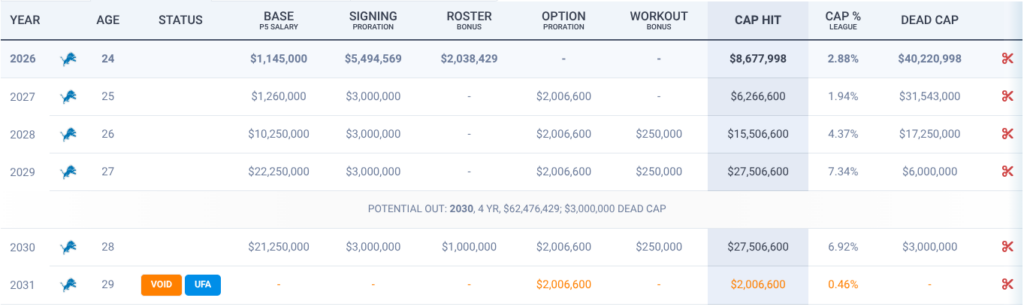
The first thing you need to understand is how team-friendly Gibbs’ contract structure actually is. The Lions did what they always do with extensions: low cap hits up front, high dead money up front, with the majority of the guaranteed money loaded into the early years. They also added one void year to help stash extra cash, and the fact that it’s only one void year is remarkable. For comparison, Bijan Robinson’s deal has five void years. The Lions aren’t afraid to use void years (they rank third among all NFL teams in total void years on their contracts), but they use them strategically.
In 2026 and 2027, Gibbs is still under his original rookie deal and fifth-year option. Because the Lions extended him, they were able to convert some of that fifth-year option money into a signing bonus, bringing the 2027 cap hit down from the original $15 million projection. The extension officially kicks in at 2028 with a $15 million cap hit. The big numbers come in 2029 and 2030, but between those two years, Detroit has an escape hatch where they could get out after 2029 for roughly $3 million in dead money.
Here’s the thing: this contract is really built for 2029. Gibbs will be 27 years old. If he’s still balling out, you extend him again, smooth out those 2029 and 2030 cap hits, and buy more time. It puts the Lions in a great position.
The math works for Branch and LaPorta
I ran an experiment. I took the 2026, 2027, and 2028 Lions cap tables, entered in hypothetical deals for Branch and LaPorta as the highest-paid players at their respective positions, and maneuvered the numbers around. The result? It works.
How Detroit can pay everyone
Illustration using the projected contract structures we’ve built.
For 2027, the projected NFL salary cap is around $323 million, per sites like Spotrac and Over the Cap. The existing Lions roster accounts for roughly $260 million. Add in Gibbs’ $6.27 million cap hit, Branch at around $10 million, and LaPorta at around $8.55 million, and you’re left with $37.57 million to spend. That’s with both guys getting paid. Right off the bat, if you structure Branch and LaPorta the same way (low cap hits, high dead money, a void year or two), you can do all three extensions at the same time.
Now, 2028 might look scary at first glance. The remaining cap space drops to about $15.33 million, which doesn’t leave much room for free agency. I get it, that looks concerning. But here’s a simple fix: a restructure of Goff’s contract that year opens up approximately $30 million. Suddenly the Lions have around $45.7 million remaining to play with. You could even do that Goff restructure in 2027 instead and save about $30 million there, too. There are different levers to pull.
How Detroit can pay everyone in 2028
This projection includes market-setting deals for Brian Branch and Sam LaPorta, Jahmyr Gibbs’ extension and a restructuring of Jared Goff’s contract.
The Lions’ contract philosophy is working
When you get to 2029 and 2030, it’s harder to predict because we don’t know everybody who’s going to be on the team. But every extension the Lions have done, whether it’s Gibbs, Campbell, Goff, Hutchinson, or St. Brown, has been built the same way. By year three or four of these deals, Detroit has options: extend again, get out, or restructure. This is really good work from Holmes and cap strategist Mike Disner. The Lions have found a way to kick the can down the road while kicking it to a position where they can feel comfortable managing other contracts, spending in free agency, signing draft picks, and doing everything they need to do.
The one caveat is that stacking void years does create dead money risk. But the way Detroit manages it, I don’t see it becoming an issue. The Eagles? That might be different. Philadelphia has something like $474 million tied up in void-year obligations right now. That’s a lot. The Lions aren’t anywhere near that territory.
So if your concern has been that Detroit can’t keep both Branch and LaPorta, stop worrying. It’s just not accurate. If the Lions continue structuring deals the way they’ve been structuring them, they should absolutely be able to get it all done, plus do other things.

Detroit Lions News