
Packers’ stunning loss to the Vikings exposed a problem that Micah Parsons’ eventual return cannot solve by itself
The Green Bay Packers had a bizarre performance against the Minnesota Vikings in Week 1. There is a bigger concern to consider.

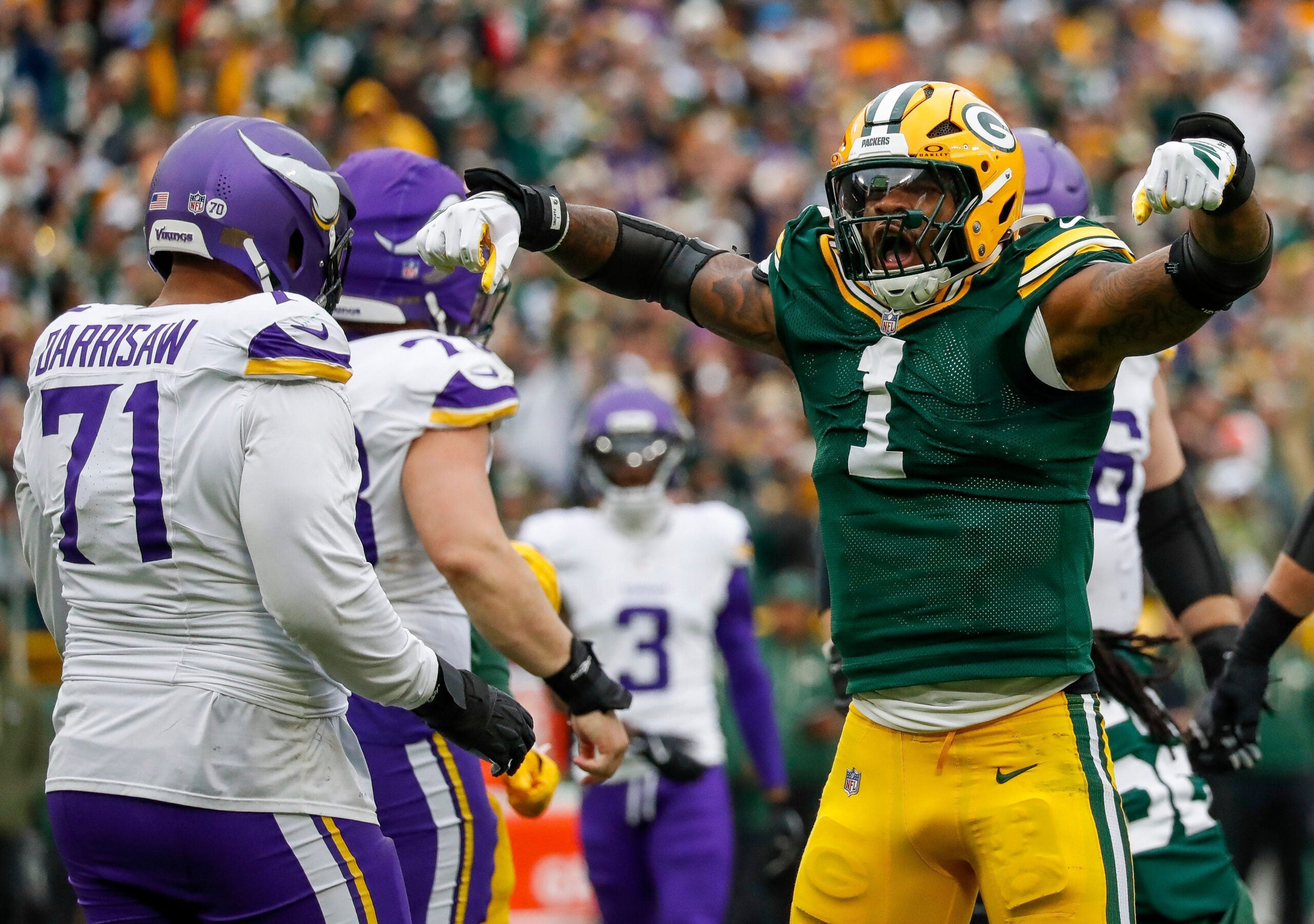
The Packers’ defense was not the primary culprit in this collapse. This was a team-wide meltdown fueled by special teams breakdowns, offensive turnovers, poor field position and an inability to maintain any semblance of balance on offense.
And while Green Bay certainly has defensive questions to answer, the bigger takeaway from this game is that the Packers have problems on both sides of the ball that will not simply disappear when Micah Parsons or Josh Jacobs returns.
The 39 points are misleading
Look at the four late touchdowns Minnesota scored at the end of the third quarter and into the fourth.
The Vikings’ scoring drives were:
- 28 yards
- 83 yards
- 1 yard
- 14 yards
One of those is not like the others.
Three of those four touchdown drives started because Green Bay handed Minnesota a short field. That is not simply a defense problem. That’s an offense problem. That’s a special teams problem.
It started immediately after the Packers took a 22-10 lead with a field goal. A big kickoff return put Minnesota in scoring position, and suddenly the Vikings cut the deficit to 22-17.
Then Green Bay turned the ball over on downs. The comedy of errors continued from there.
The Packers repeatedly gave Minnesota short fields, and the Vikings did exactly what a competent NFL offense should do with those opportunities: they scored. That distinction matters when evaluating Green Bay’s defense. The box score says 39 points allowed. The game script says something much more complicated.
Green Bay’s self-inflicted wounds were the real story
There is a fluky element to what happened in Minnesota.
Turnovers and sudden swings in field position are inherently volatile. They can completely change the complexion of a game in a matter of minutes, and that type of sequence isn’t something you should automatically expect to repeat itself week after week.
How many games are the Packers going to play where they repeatedly hand their opponent the ball deep in their own territory? Probably not many. That is why Green Bay should not overreact to this game and conclude that it is simply a terrible football team.
But there is an important counterargument made by my A to Z Sports colleague Easton Freeze. You can’t dismiss everything that happened as bad luck.
The Packers were up 12 points. Their special teams broke down. Their offense stopped functioning. Their quarterback couldn’t sustain drives. Turnovers and failed fourth downs changed the field-position battle. And the defense ultimately couldn’t stop the bleeding.
All of that happened within roughly an hour of football. That’s where the coaching questions begin.
Matt LaFleur has to answer for the unraveling
Matt LaFleur is not a first-year head coach. He has been through playoff races, big games and moments where his team has faced adversity. A coach of his caliber has to find a way to settle his team when everything starts going sideways.
On back-to-back plays, things went wrong. The Packers happened to recover the first fumble, and then the wheels completely came off. That’s difficult to explain.
LaFleur doesn’t need to panic, and this isn’t an argument that Green Bay should suddenly blow up its season after one loss. The Packers showed early in this game that they can compete with Minnesota.
But closing out games from a position of strength is part of being a good football team. And Green Bay failed that test spectacularly.
The bigger concern might actually be the offense
The defensive discussion is going to dominate the conversation because the Vikings scored 39 points. But Green Bay’s offensive situation deserves just as much attention.
Jordan Love completed only 50% of his passes, but still threw for 387 yards. That’s an unusual statistical profile, and it tells you something about how this offense is functioning.
The Packers are relying heavily on Love and the passing game to generate explosive plays. That can produce some eye-popping numbers. It can also create tremendous volatility.
When the passing game is your primary method of generating offense, you need another mechanism to protect leads once you get ahead. Right now, Green Bay doesn’t appear to have that mechanism.
The running game is a major problem
Marshawn Lloyd averaged just 2.8 yards per carry against Minnesota. That’s not good enough for an offense that wants to control the clock, protect a lead and keep its defense off the field.
When the running game isn’t working, the quarterback has to sustain drives through the air. That puts enormous pressure on Love to consistently make plays, particularly in situations where Green Bay simply needs to bleed clock and move the chains.
And that’s where the absence of Josh Jacobs becomes so significant.
The Josh Jacobs absence looms large
We don’t know when Josh Jacobs is coming back. That uncertainty creates a significant problem for Green Bay’s offensive identity.
Jacobs is the type of running back who can establish physicality, consistently create positive yardage and allow an offense to play a different style of football. The Packers aren’t going to find someone off the street who can simply replicate what he provides.
That caliber of running back doesn’t just appear on the waiver wire. Until Jacobs returns, Green Bay has to figure out how to create a functional rushing attack without him. Because right now, too much of the burden is falling on Love.
The absences on both sides are magnifying the problem
And that’s what makes the Packers’ roster situation so interesting. They’re missing key difference-makers on both sides of the football.
Without Jacobs, the offense has less ability to control games on the ground.
Without Parsons, the defense has less ability to create game-changing pressure and shorten the field for itself.
That leaves Love carrying an enormous portion of the responsibility. And that’s a dangerous formula. If Green Bay has to rely on explosive passing plays to build leads, but doesn’t have a reliable running game to protect those leads, the offense becomes cyclical:
Pass for explosive plays → build a lead → fail to run the clock → put the defense back on the field → eventually give the opponent opportunities to respond.
That’s not sustainable over a 17-game season.
The Packers have a lot to fix — but they’re not doomed
The important thing is not to walk away from this game believing the Packers are either a great team or a terrible team. They’re somewhere in between.
The talent is clearly there. Love can make explosive plays. The Packers showed they could move the ball against Minnesota, and their defense shouldn’t be judged solely by a 39-point total when so many of those points came after catastrophic field-position situations.
But the Vikings exposed something real. Green Bay needs to become a more complete football team.
They need better special teams. They need to protect the football. They need to find a way to run the ball effectively without Jacobs. They need their defense to hold up when the offense inevitably makes mistakes.
And most importantly, LaFleur needs to make sure a game like this doesn’t snowball again. The Packers don’t need to panic after one loss. But they do need to recognize what this game actually was.
It wasn’t simply a 39-point defensive failure. It was a complete team collapse that exposed how dependent Green Bay currently is on Jordan Love and explosive passing plays — and how little margin for error this roster has while key pieces are missing.
