
The Titans have been horrendous on kickoffs this season; Joey Slye told me why, and the plan he has to fix it
Tennessee’s kickoff touchback rate is more than triple the league average, and Slye’s honest explanation of why exposes a fascinating risk-reward puzzle with the new rules.


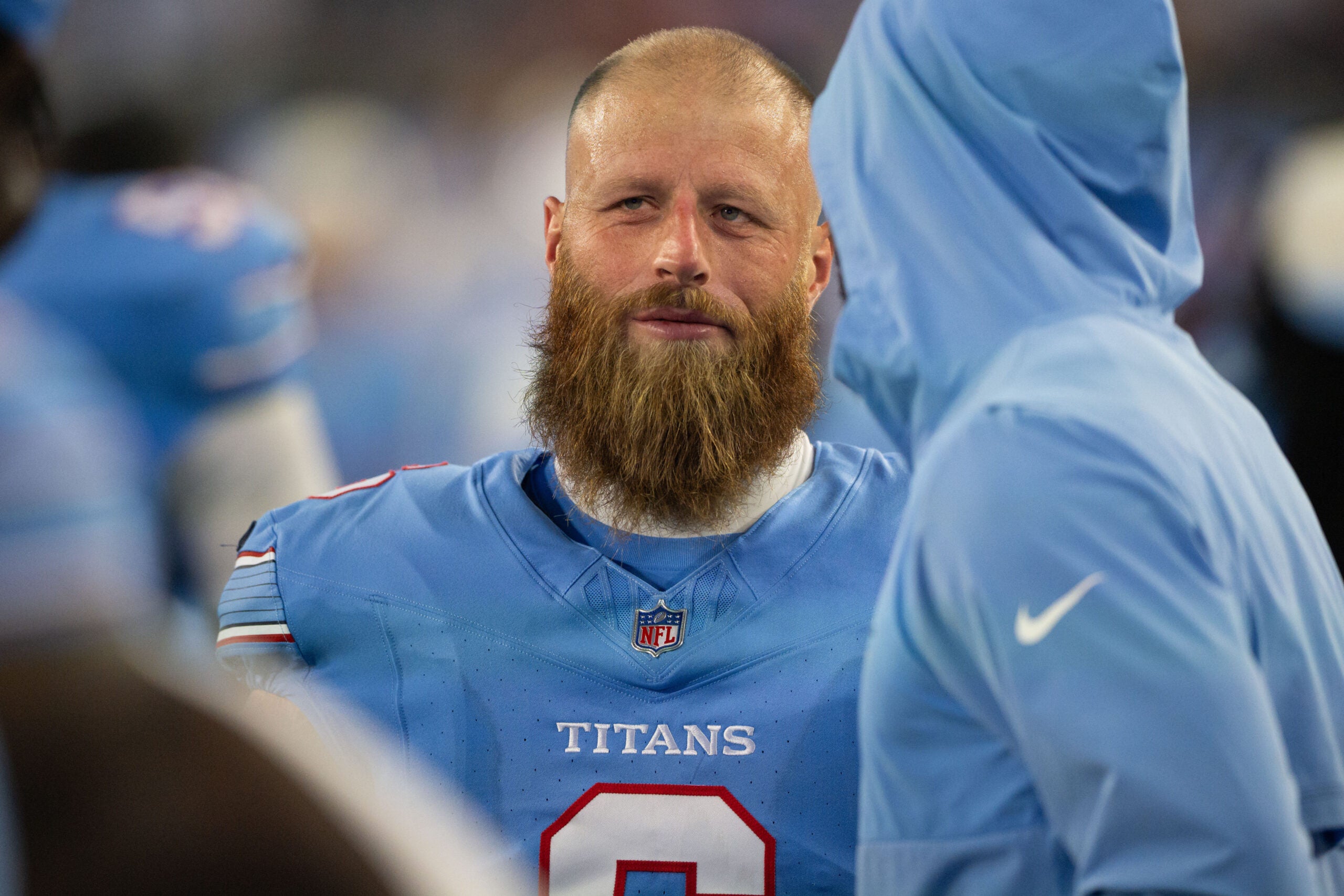
The Tennessee Titans have had some real low moments so far this season on offense and on defense, but the most surprising disappointment from this team through two weeks is the special teams.
The Titans kickoff unit has been a liability both by the eye test and on paper. It’s jarring just how much field position they’ve given away to opponents. I talked to Titans kicker Joey Slye about what exactly they’re trying to do, and he gave some thoughtful answers about their intent, the new kickoff rules, and why the execution hasn’t matched the plan.
When you look at it on paper, the Titans simply can’t figure out kickoffs right now. Tennessee has kicked touchbacks 57% of the time. The league average is just 16%.
They’re giving away heaps of field position, and the consequences have already shown up in a meaningful game situation.
The Eagles game exposed the problem in real time
The game-winning drive in Week 2 was started by the Eagles on their own 35 after Slye kicked the ball out of the back of the end zone, giving Philadelphia a touchback. With the new rules moving the touchback up to the 35, that’s a pretty brutal forfeiture in a close game.
I came into my conversation with Slye thinking the touchback was a directive from the coaching staff. Maybe he was just told to kick it out of bounds and let the defense handle it. But when I asked him if that was what he was told to do, his answer surprised me.
“No, everything for me, even game situations too, like put one in play that’s able to take time off the clock, put them in a situation where they get to return it. That was all. The aspect of what we were trying to accomplish. I just mis-executed,” Slye said.
When I clarified and asked if that last kickoff was supposed to stay in play, he confirmed it.
“Yep, still trying to hit that spiral turnover, and just the way that I was hitting it was carrying super deep into the end zone,” Slye said.
I appreciate his honesty about something that is really, really not great! The rest of our conversation took me into the details of what he’s trying to do and why it’s not working, and it’s important to hear if you’re perplexed by this terrible start.
Slye explains the ‘dirty ball’ strategy and why it’s backfiring
For those unfamiliar, a “dirty ball” is a kickoff that doesn’t have bit hang time sailing through the air. That’s no longer a necessary element now that coverage teams start downfield instead of running the length of the field. A dirty ball is a low-flying kick that lands in the landing zone and is difficult to field, forcing the returner to take time to secure the ball before taking off. That buys the coverage team time to close gaps.
Slye explained the risk-reward calculation driving the approach.
“yeah, so obviously with the new kickoff rule, with the touchback now being 35 instead of 30, when you go into the end zone, the risk-reward for hitting a dirty ball, getting the ball down, getting the tackle obviously inside the 25 is huge for us.”
This was his charge in the offseason: perfect the dirty ball kickoff. “I was hitting them well in the preseason,” he said, “I was hitting them well even into the first game. And then that first ball of the year, it hit the landing zone like I wanted it to and just kind of scurried off out of bounds. The second ball hit in the landing zone and went inside the 20. So I was able to get some stuff on the ground.”
Things got worse in Week 2. “Last game was still trying to get that kind of spiral ball to turn over. It just wasn’t turning over and was working on some stuff. Just how can I get that ball if it’s mishit, which they were in that game, to not carry as deep? I have a strong leg. I understand that. And so some of the balls that I was trying to hit just that mishit likelihood of going in the end zone is a little bit too high. So I’ve been working on some of it today, getting a little bit more in the field of play and finding balls that obviously, if we need to just leave one that’s more in play to give our guys an opportunity— myself, I was getting a little bit too cute with some of it, trying to hit some balls on the ground and really just need to give our guys a little bit better opportunity to go down there and make a play,” Slye said.
‘Too cute’ means relying too heavily on his perfect kick
When I asked Slye what he meant by getting “too cute,” he clarified it wasn’t about the dirty ball concept itself. It was about one particular version of it.
His ideal kick is a spiral turnover that hits the ground and is extremely difficult for returners to field. When it’s executed perfectly, it’s a weapon. Head coach Robert Saleh The problem is when it’s mishit, it carries deep into the end zone. And that was happening far too frequently against the Eagles.
“so the too cute, the too cute part is like my perfect ball that I can hit that has a spiral turnover that hits the ground. It was really hard for returners to get to. When it’s mishit, it has a tendency to carry deep, and that was obviously shown this weekend. Getting too cute is just trying to hit that ball too many times. That might need to be a club in the bag that only comes out occasionally, and having one that’s a little bit more the mishit, a little bit more where the mishit is playable and the best ball is not as good as maybe the one that would hit where it spirals over and kind of kicks in. But just more in play for our guys,” Slye said.
It is funny, side note, how kicking talk always devolves into golf language.
When I asked whether the spiral turnover ball is a work in progress or just always going to be a lower percentage shot, Slye clarified:
“It was honestly working pretty well for me throughout (camp). I mean, I’ve been hitting that in practice really, really well. It was just when it doesn’t work out, it’s going into the end zone.”
That is happening way too frequently, and Slye admitted as much. He isn’t ordered by the coaches what kind of ball to hit when he runs out there, so the accountability falls on him. He knows what the best version of the kick can do. He also knows a mishit means a touchback.
He opened up about his mindset on this issue of, it seems, trying to fly too close to the sun.
“I also have an ability to just say, hey, I’m going to throw this one out there, keep it in play and let the guys go out and do it. So not selfishly on my part, but kind of mis-execution on my part. I was maybe trying to do a little bit too much for me and take some of the load off the guys. I need to give the guys an opportunity to go down there and make plays. We have what— we have great special teams players on our team that can change the dynamics of the game. And so me just giving a little bit more consistency that’s able for them to play versus trying to put so much onus on me of making a crazy play. With a perfect kick at the end of the day,” Slye said.
The numbers demand a change, and Slye knows it
The bottom line, and the Titans clearly understand this based on my conversation with Slye, is that he has to be more consistent with getting the ball to land in the landing zone, even if it’s not the perfect kick. It sounds like that’s something he was already working on this week. He came into the locker room late when I got to talk to him, as he and the special teams guys had apparently been out at the stadium practicing.
My sense is he had already been working on putting that perfect ball “club” back in the bag and only breaking it out for specific situations, because right now it’s not working well enough.
The metrics around the league are so much better than what Tennessee has right now. Not only have 57% of their kickoffs been touchbacks, but of the non-touchback kicks, one went out of bounds and one landed short of the landing zone. Both of those results put the opponent on the 40, not the 35.
The defense is being set up to fail by the kicking game right now, and that has to change.
