
Packers’ inaction on obvious weaknesses throughout the offseason is catching up with them in the worst way
Green Bay’s refusal to address well-known roster holes during the offseason left the team scrambling for patchwork fixes that won’t move the needle.


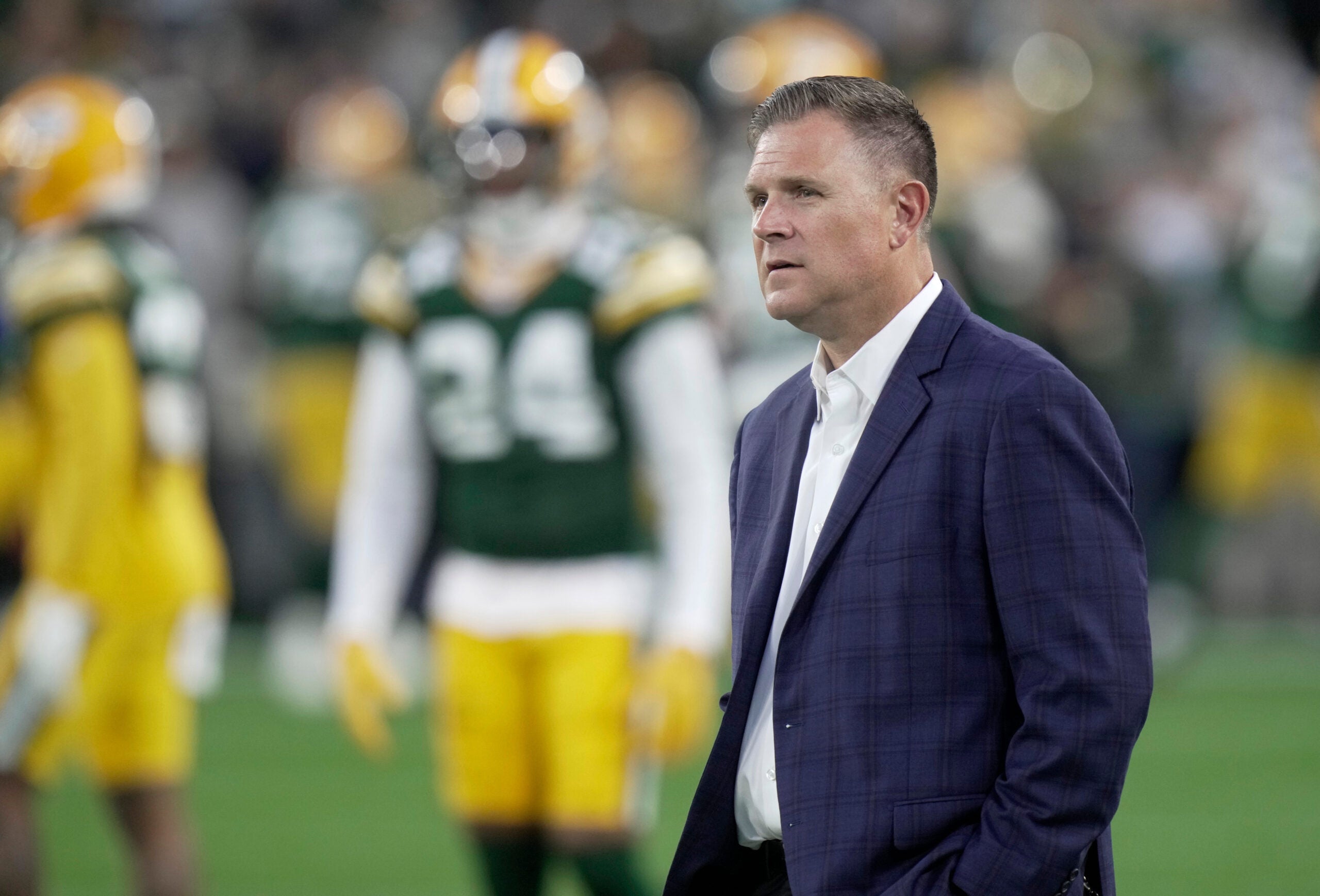
The Green Bay Packers are struggling through the early weeks of the 2026 season, and the problems dragging them down are the same ones everyone identified months ago. The offensive line, the cornerback position, the running back room. None of these are surprises.
Packers general manager Brian Gutekunst knew his team had holes, the people around the Packers knew that as well, and the organization chose not to fill them. Now the consequences are playing out on the field, and there is no easy fix available.
The offensive line was always going to be a problem
Going back to the end of last season and throughout the offseason, Green Bay’s offensive line was a known weakness. The Packers allowed Rasheed Walker to walk in free agency, where he signed a one-year, $4 million contract with the Carolina Panthers. They released Elgton Jenkins and decided to keep Aaron Banks at $18.1 million. The only addition to the offensive line was fifth-round pick Jager Burton.
That was never going to be enough, and the Packers decided not to address it in time.
Now, they can potentially add a veteran like Kevin Zeitler. They brought in Cordell Volson last week and signed Laken Tomlinson over the weekend. But the offensive linemen available in September and October are not the ones who solve a broken unit. These are mitigation moves at best, not definitive solutions. Teams do not trade good offensive linemen during the season because they are too hard to find. The Packers simply chose to keep things as they were and keep the problem. Obviously, Zach Bako-Bewele’s injury doesn’t help, but the issues were there even with him on the field.
Cornerback investments fell short
The Packers did invest in the cornerback position by drafting Brandon Cisse in the second round, but the overall investment was not enough. Keisean Nixon is still a starter, and opposing offenses are targeting him on every important down with good results. Nixon at this point cannot be a starting-caliber cornerback. He projects as a solid depth piece and special teamer, but he is starting for the Packers right now.
Maybe it is time to play Benjamin St-Juste, but Carrington Valentine is not the answer either. Green Bay simply did not invest enough in the position to mitigate the issues from last season.
The running back situation has no real answer
Josh Jacobs was arrested in late May. It has been four months since the arrest, and the Packers waited throughout training camp and the preseason with MarShawn Lloyd and Chris Brooks as their running backs without a definitive answer. Lloyd never showed why he was a third-round pick. Injuries were part of the equation, but even when he had opportunities, the production was not there. His vision as a running back at the NFL level has been underwhelming.
The Packers eventually traded for Kaleb Johnson, a player the Pittsburgh Steelers were prepared to cut. While Johnson brings something to the table, probably more than Lloyd, he is not a long-term solution either. Green Bay waited to see if its developing players would step up in camp, and by the time the organization realized they would not, it was too late to find reasonable alternatives.
No answers, no path forward
The Packers sit without a strong roster and without their first-round pick because they traded it to acquire Micah Parsons. The Parsons trade was fine, and Green Bay will certainly improve once he returns from his ACL injury. But Parsons alone will not make this team good because there are too many problems.
The lack of action extends beyond the roster. Even those who believe Matt LaFleur is a good head coach can acknowledge the staff behind him needed adjustments. The Packers retained offensive coordinator Adam Stenavich and offensive line coach Luke Butkus, coaches who are not delivering the results a franchise with championship aspirations should demand. LaFleur is comfortable with them, and the organization has no answers beyond that comfort.
Three weeks into the season, it is difficult to find a path where the Packers become a viable, above-average team fighting for a playoff spot. Saying the season is over while Parsons remains out feels premature, but it is genuinely hard to see a playoff route. The first few games, even without Parsons, represented the easiest portion of the schedule. The opponents ahead are only going to be tougher, and nothing on the field so far suggests the Packers can compete at the level required.
