
Jonathan Gannon has a crucial lesson to learn from Jeff Hafley’s regression once Micah Parsons returns from ACL injury
Green Bay’s defense has thrived under its new coordinator without the star edge rusher, and Jeff Hafley’s final season offers a clear warning about what comes next.


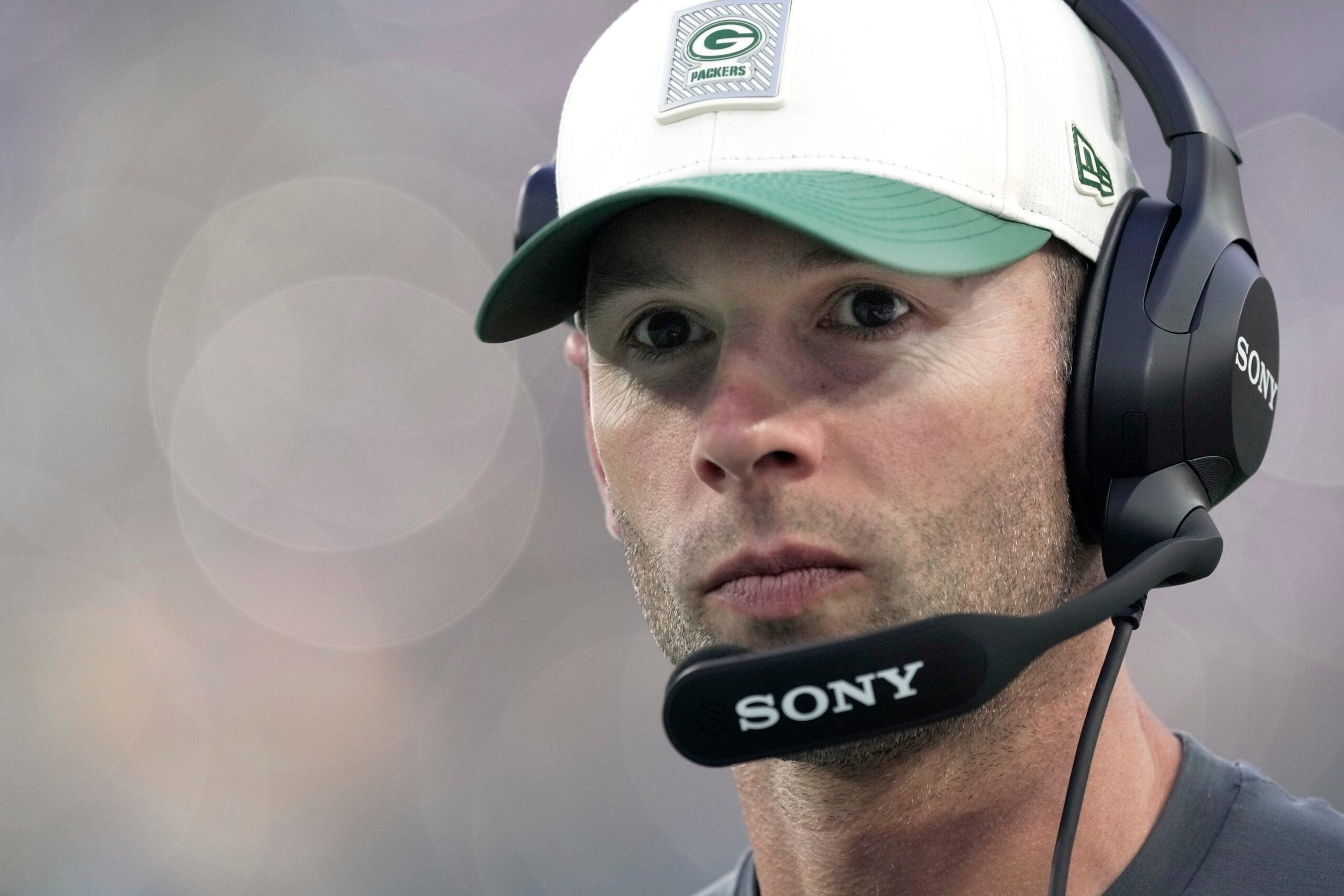
Green Bay Packers defensive coordinator Jonathan Gannon has a big lesson to learn from his predecessor, Jeff Hafley, and it will matter a lot once Micah Parsons returns from his knee injury. Hafley was a solid coordinator in his two seasons under Packers head coach Matt LaFleur. But one of his main issues made the defense worse with Parsons in the lineup.
That sounds strange to say, since Parsons was individually productive last season. Still, the unit as a whole regressed from 2024 to 2025.
How the Packers defense regressed under Jeff Hafley
The Packers ranked fourth in EPA per play in 2024. That number leaned heavily on interceptions and big plays, which weren’t necessarily sustainable because the success rate numbers weren’t nearly as good. Nevertheless, the defense was highly productive, in large part because Hafley adapted his scheme to the roster.
Hafley comes from the Robert Saleh and 49ers’ tree. His base defense is essentially a Pete Carroll Cover 3 scheme with a four-man front out of a 4-3 base look. In 2024, Green Bay didn’t have premier edge rushers. Rashan Gary wasn’t playing at his highest level, and Kingsley Enagbare and Lukas Van Ness were no more than rotational pass rushers.
As a consequence, Hafley got creative with disguises and simulated pressures. It worked, and that created the groundwork for the secondary to exploit offenses and generate turnovers.
Everything changed when Green Bay acquired Parsons right before the 2025 regular season. Part of the issue was timing, because the trade was executed after training camp. But more than that, Hafley didn’t feel the same need to be creative because he finally had a premier pass rusher. The defense became much more vanilla, with players aligning and rushing without as many disguises or games up front.
Parsons did run stunts and occasionally lined up on the interior to put himself in position to succeed. In terms of sending extra rushers and disguising who dropped into coverage, though, Hafley wasn’t nearly as creative. The Packers finished 22nd in EPA per play in 2025.
That ranking is a little harsh because the final three weeks were rough after Parsons got hurt. But even from Weeks 1-15, with Parsons on the field, Green Bay still ranked only 16th. The defense wasn’t creating explosive plays, and the efficiency from 2024 wasn’t there.
Jonathan Gannon has built something different
This version of the defense has been solid in 2026, and Gannon’s specific gameplans have worked. Before the Dallas Cowboys game, the common argument was that Green Bay had only faced bad or backup quarterbacks: Kyler Murray and Carson Wentz, then Geno Smith, Michael Penix, Jalon Daniels, and a combination of Tyson Bagent and Case Keenum.
Against Dallas, the Packers delivered one of their best performances. The Cowboys have Dak Prescott at quarterback with CeeDee Lamb and George Pickens at wide receiver, yet Green Bay held them to 13 points. Dallas had only seven until late in the fourth quarter, when the game was essentially over.
The big aspect of Gannon’s defense is creativity. He has shown five- and six-man pressure looks before dropping players into coverage, and he has sent cornerbacks and safeties on blitzes. Evan Williams has been a key piece in creating those mismatches and exotic looks.
That wasn’t necessarily expected. Gannon ran a fairly vanilla defense as the Philadelphia Eagles’ coordinator. With the Arizona Cardinals, defensive coordinator Nick Rallis ran a creative scheme, but the creativity lived more in the back end than in generating pressure. Gannon appears to have gone back to his days as a defensive backs coach under Mike Zimmer with the Minnesota Vikings, where he picked up the double-A gap blitzes and games up front he’s using now.
Why the Packers should stay aggressive with Parsons back
The question is whether Green Bay keeps this approach once Parsons returns or goes back to a more vanilla look. The Packers should stay aggressive to avoid the same regression Hafley’s unit suffered.
Brian Flores’ defenses in Minnesota show that elite players shouldn’t stop a coordinator from being creative. If anything, extra attention on a star should push the play-caller to exploit it.
Parsons can be used in multiple ways. He can drop into coverage as an off-ball linebacker, the position he played at early in his career with the Cowboys. He can also move around the line and rush from the interior. Even on the edge, if an offense commits two or three blockers to him, Gannon can overload the other side with Devonte Wyatt, Van Ness, and blitzers such as Javon Bullard, Evan Williams, or linebacker Ty’Ron Hopper. If offenses shift attention toward those blitzes, Parsons gets more one-on-one opportunities.
Parsons’ return could theoretically free up extra bodies for coverage, since sending fewer rushers means more help in the secondary. However, the back end has played well on its own. The Packers have been one of the best teams in football in passer rating allowed when the quarterback is pressured.
Green Bay potentially has the best safety trio in the NFL with Xavier McKinney, Williams, and Bullard, while Keisean Nixon and Brandon Cisse have played well too. Secondary coach/pass game coordinator Bobby Babich has the group coached at a high level and communicating well. The Packers may not need to reinforce the secondary much when Parsons is back, and they can keep sending pressure.
For the most part, the formula is already in place. Green Bay can maximize its defense with Parsons on the field without changing what has worked while he was out.
