
Titans found a reason to trade Jeffery Simmons, and Derrick Henry’s existence shows why it could work
The Titans studied blockbuster trades before moving Jeffery Simmons. Their own 2016 draft deal shows how this can work, and why the return is only the beginning.


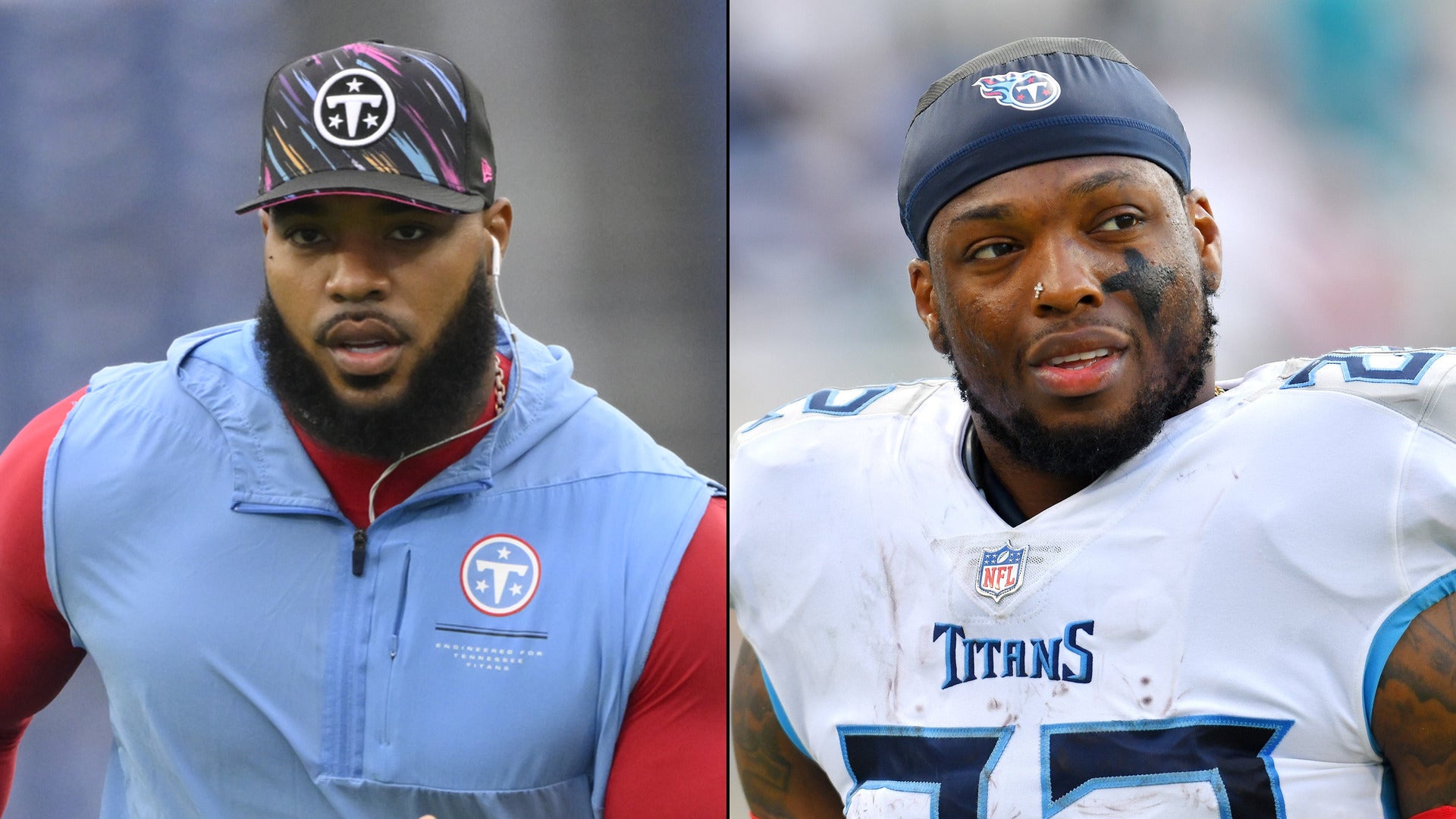
The Tennessee Titans fan base is still working through every stage of grief after Thursday’s Jeffery Simmons trade. Tennessee sent its All-Pro defensive tackle to the Chicago Bears for one of the biggest hauls a defensive tackle has ever fetched in the Super Bowl era.
The Bears sent back a 2027 first-round pick, a 2028 first-round pick, and a 2027 fourth-round pick. The Titans added a 2028 fifth-round pick to the deal along with Big Jeff.
Sports Illustrated’s Albert Breer did a great job walking through how the trade came together. His reporting reads like it came straight from the two men who made the deal: Titans GM Mike Borgonzi and Bears GM Ryan Poles. It’s well documented that Borgonzi and Poles were once roommates while climbing the ladder in Kansas City. Eagles coach Nick Sirianni lived in that same house back in those days.
Borgonzi described the call from Poles as coming from an old friend he trusted. Tennessee had fielded maybe 50 calls on Simmons since Borgonzi took over as GM on Jan. 25, and Chicago brought the first serious offer.
The Titans’ research on blockbuster trades
The most important part of the article, to me, is the research Tennessee did ahead of time and what it means for the long-term future of the franchise. Here’s what Breer writes on SI.com:
“Because of so many calls, Borgonzi, assistant GM Dave Ziegler and the Titans brass had done their homework on such a big trade, knowing Simmons was really the only piece on their roster who’d bring home that sort of haul.
What they found: Teams were able to accelerate rebuilds through them. Houston landed Will Anderson Jr. (they packaged multiple picks to move up to No. 3 and draft the All-Pro edge in 2023) and multiple selections in the Deshaun Watson trade. The Lions got Jared Goff and picks that became Jahmyr Gibbs, Sam LaPorta and Jameson Williams in the Matthew Stafford trade. The Seahawks got Charles Cross, Boye Mafe, Devon Witherspoon and Derick Hall in the Russell Wilson trade. Even their opponent last week, the Browns, got young talent from the Travis Hunter deal.”
Good. That makes sense to me.
I’ve been saying this for a while. Most quick rebuilds happen because some type of big trade accelerates them. That’s no secret. And the Titans have a case study of their own sitting right there in the franchise history books.
The 2016 Rams trade built the Titans’ last great stretch
No, it didn’t involve a player like Simmons, Watson, Stafford, Hunter, or Wilson. But it’s the closest thing Tennessee has to a blueprint.
The Titans went 5-27 across the 2014-15 seasons and earned the 1st pick in the 2016 NFL Draft. They had a young quarterback in Marcus Mariota coming off his rookie year. First-time GM Jon Robinson and interim-turned-head coach Mike Mularkey had a chance to set the table entering that offseason.
They did exactly that.
Robinson sent the 1st pick, plus fourth- and sixth-round picks, to the Los Angeles Rams in what was coined a “king’s ransom.” That pick became Jared Goff, who later shows up in this story again when the Rams shipped him to Detroit for Stafford.
Tennessee’s return:
– A 2016 first-round pick (15th overall)
– Two 2016 second-round picks (43rd and 45th overall)
– A 2016 third-round pick
– A 2017 first-round pick
– A 2017 third-round pick
That capital let the Titans maneuver. They moved up from 15th to 8th to draft right tackle Jack Conklin, who was really good until injuries derailed his future in Tennessee. He eventually got paid by the Cleveland Browns, ironically, since the Browns keep popping up in this conversation.
Then there’s Derrick Henry.
Henry would not have been a Tennessee Titan without that trade. He was the last of the Titans’ three second-round picks in 2016. They used their own on Kevin Dodd, then the first of the Rams’ seconds on Austin Johnson. The Titans went 1-for-3 in the second round. . . and the one that hit became a Hall of Fame-caliber back and arguably the most important piece of the franchise’s next stretch.
Kevin Byard was Tennessee’s own third-round pick that year, but he was part of the same wave. The Rams’ 2017 first was used on Corey Davis, while Tennessee’s own first was Adoree Jackson.
All told, the trade for the 1st pick produced Conklin, Henry, Johnson, Davis, tight end Jonnu Smith, and depth cornerbacks LeShaun Sims and Kalan Reed. Sims and Reed aren’t names anyone remembers, but they had roles during a run that turned the franchise around.
The Titans went 9-7 in 2016 and made the playoffs in 2017. Mike Vrabel arrived, and Tennessee reached the AFC Championship Game in 2019, the first of three consecutive playoff seasons.
The Browns just showed the Titans what the other side looks like
Tennessee didn’t have to look far for a modern example. The Browns, who beat the Titans on Sunday at Nissan Stadium, traded the 2nd pick to the Jacksonville Jaguars so they could take Travis Hunter.
Mason Graham, the fifth pick in that same draft, was the one who stopped Cam Ward on the third-and-goal play-action pass at the goal line. Then three Cleveland skill players ran up and down the field for over 300 yards from scrimmage: running backs Quinshon Judkins and Dylan Sampson, plus 2026 first-round wide receiver KC Concepcion, who broke out with eight catches for over 120 yards.
So the Titans have the right philosophy. Now they have to pick the right players. They HAVE to pick the right players.
The bigger question is whether Borgonzi and Ziegler, the group that did all this research, will be the ones who actually see it through. That’s what everybody is asking, and nobody knows yet, because that decision belongs to owner Amy Adams Strunk.
