
Packers’ trade deadline approach comes into focus, but 3 factors reveal why Brian Gutekunst may take an unexpected path
Packers general manager has checked prices around the league ahead of the deadline, and his track record points toward a familiar approach in Green Bay.


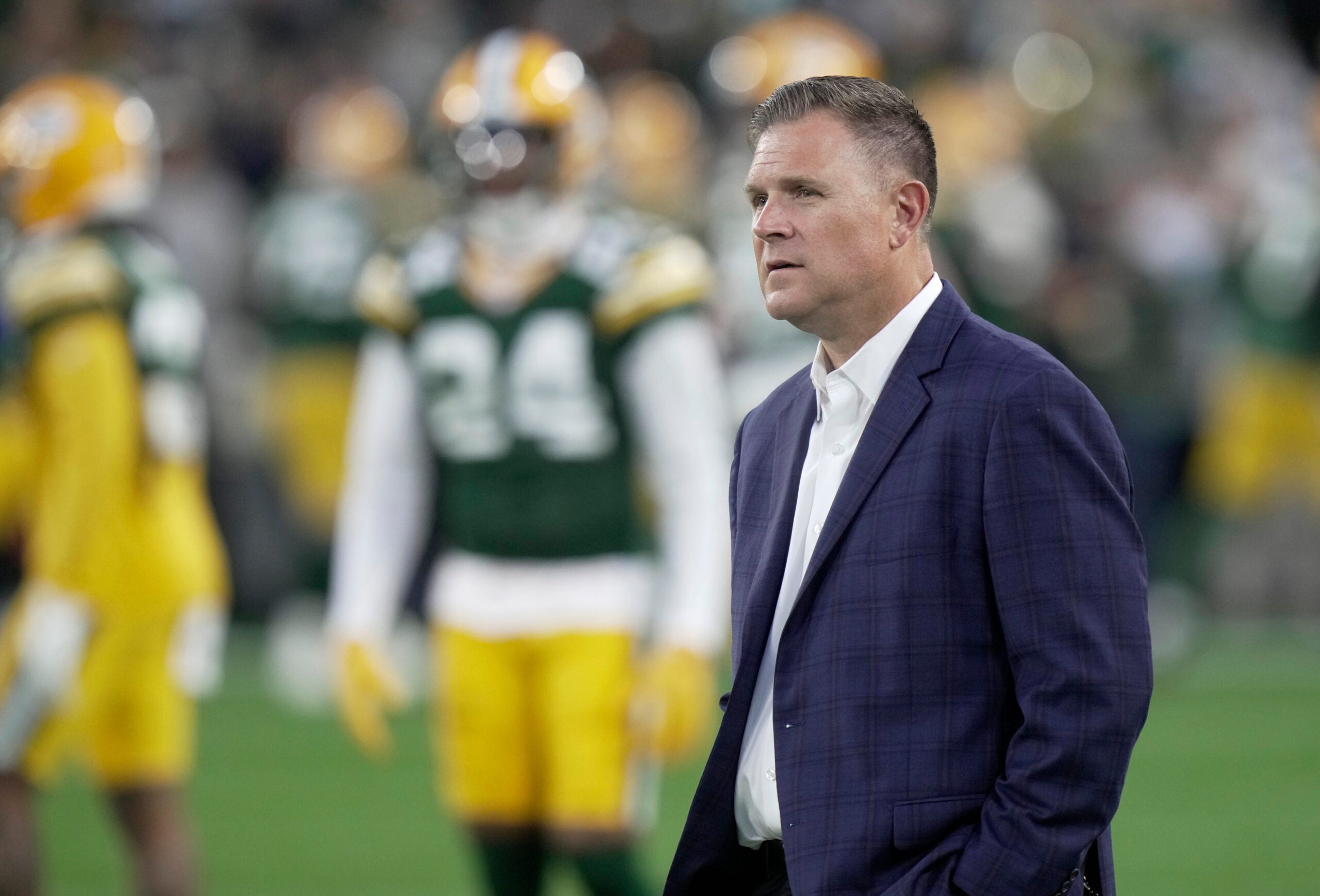
Trade ideas and deadline scenarios are always exciting, but the reality is that the Green Bay Packers are highly unlikely to make a big move before the NFL trade deadline next week. General manager Brian Gutekunst rarely acquires players at the deadline, and a combination of factors makes this year no exception.
So, let’s discuss why the Packers will more likely than not stand pat over the next few days.
Midseason additions rarely deliver
First, players acquired during the season generally don’t pan out as well as teams hope. Green Bay has an example on the current roster: guard Kevin Zeitler.
The Packers signed Zeitler to a one-year, $4.05 million deal with the expectation that he would become a starter. That hasn’t materialized so far. Football is a team sport, and individual impact is so diluted that it’s hard to measure how a player fits in a new system after arriving midway through the year. An elite contributor like Micah Parsons is a different story, but most additions don’t move the needle the same way.
The same pattern shows up across the league, even for teams that end up successful. The Seattle Seahawks are a good example from last season. Wide receiver Rashid Shaheed made some important plays after arriving, but his production and volume were limited. New players need time to learn the system and understand the locker room dynamics, and a midseason arrival rarely gets enough of it.
Draft capital is already stretched
For Green Bay specifically, the bigger issue is the combination of draft capital and cap considerations. The Packers had only six draft picks in 2026, and they need more cheap players coming into the pipeline because the roster is expensive.
Several young defenders will soon be in line for extensions, including Evan Williams, Javon Bullard, Edgerrin Cooper, and potentially Lukas Van Ness. That creates a scenario where Green Bay needs cheap labor to balance the books.
Next year, the Packers will have some extra picks. They are slated to receive four compensatory picks, and they own an additional fourth-rounder from the Rashan Gary trade with the Dallas Cowboys. However, they don’t have a first-round pick because of the Parsons trade, and they sent their 2027 sixth-rounder away last year to acquire offensive lineman Darian Kinnard.
The extra picks help, but the pool is still limited. Keeping that capital matters even more with a 2027 draft class that is expected to be strong. Green Bay has also already traded its 2028 sixth- and seventh-round picks, the sixth to acquire running back Kaleb Johnson and the seventh to acquire tight end Mark Redman. After spending that much draft capital on trades, sending more picks out for veterans becomes hard to justify.
The Gutekunst philosophy
The other factor is philosophical. Gutekunst generally doesn’t like to move picks for veteran players, and that’s for two connected reasons: salary and cost control.
A veteran makes more money than a player on a rookie contract. A draft pick also offers the possibility of landing a good player on a cheap deal for four years. Trading that pick swaps long-term value for a more expensive player who may only help in the short term. Sometimes the veteran contributes, but a team still needs to build its core with affordable players.
Parsons is the clear exception. Gutekunst has also historically been comfortable trading sixth- and seventh-rounders. Beyond that, it’s rare for him to give up picks between the second and fifth rounds, because that range is where he finds value and builds the core of his roster.
What could motivate the Packers to change the approach
The Packers have some needs on the roster. They could look at an offensive lineman, a defensive lineman, or possibly a running back, and they’ve talked to teams around the league to understand the price.
Green Bay has shown interest in running back Jonathan Taylor, defensive tackle DeForest Buckner, and guard Quenton Nelson. Philadelphia Eagles guard Landon Dickerson could also be a fit.
Still, the most likely scenario is that the Packers stand pat, see what they have through the rest of the year, and count on growth from within the roster. The reinforcement Parsons provides is the most important one Green Bay could possibly have, and holding on to its financial flexibility and draft capital gives the team the best path to build a consistent winner over the next few years.
