
Jonathan Taylor trade frenzy could open the door for a Titans Tony Pollard sale, forcing two big answers to questions Mike Borgonzi has kept quiet on
At least six teams are chasing Jonathan Taylor ahead of the deadline. Only one walks away with him, which puts Tony Pollard’s future squarely in play. Two big Titans questions will be answered:


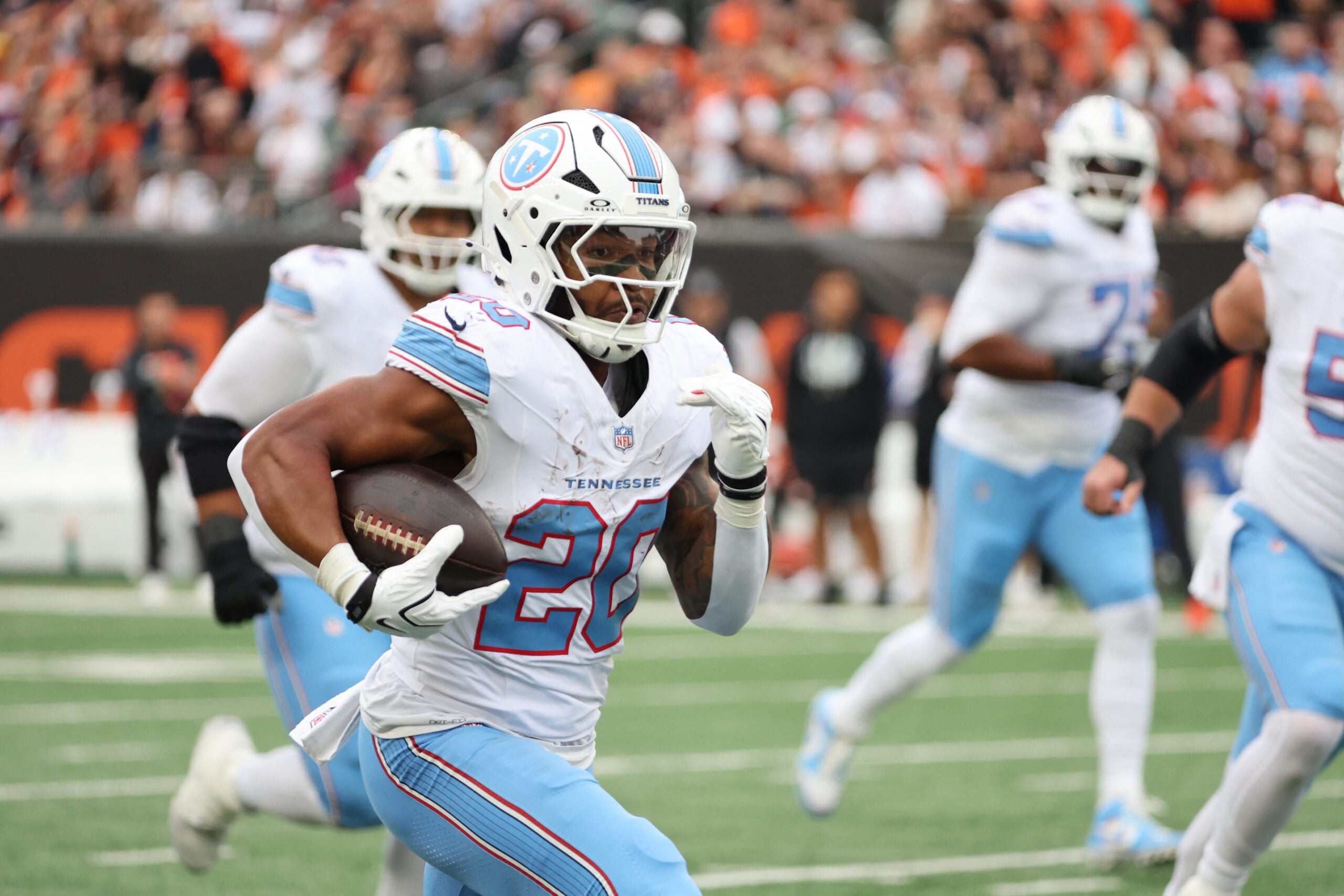
You have to hand it to the Indianapolis Colts.
They’ve been patient and demanding in their messaging around a potential trade of running back Jonathan Taylor, and they’ve worked the NFL trade deadline market into a real lather over their star back, at least based on public reporting.
As of Monday evening, NFL insider Jordan Schultz counted six teams publicly vying for Taylor’s services at varying levels: the Giants, Packers, Broncos, Seahawks, Eagles, and Vikings. Schultz added that he expects the Taylor trade to cost a second-round pick and then some, which has been most prognosticators’ expectation all along.
So what does that have to do with the Tennessee Titans and Tony Pollard? Quite a bit, actually.
Why the Jonathan Taylor sweepstakes matters for the Titans
If this many teams want a running back at the deadline, as many as five of them will be left wanting once Indianapolis finally sends Taylor to the lucky winner. Those teams will have to ask themselves a simple question. Was their interest in Taylor about landing a top-flight finishing piece, or was it about improving and stabilizing the position?
Tennessee can’t offer a back of Taylor’s caliber. What the Titans can offer in Pollard is a running back who’s playing his best football in a couple of years, and a model of consistency for a contender that needs reliability on a deep playoff run. He’s been Captain Reliability for more than a presidential term at this point.
As I’ve said before, Pollard’s trade deadline story feels like Groundhog Day. Every year we hear he’s available and that teams are inquiring, and then we get to the other side of the deadline and he’s still a Titan.
This year feels a little bit different, though. Pollard’s contract expires after the season, and it has seemed since the offseason that Tennessee planned to enjoy one last year of his services before moving on to a younger, long-term option. This is about as gettable a market to sell a running back as there has been, and Pollard is showcasing his skills in the best possible way to maximize the return.
If the Titans do sell, it answers two big questions I have about their thought process.
Question 1: Who gets the credit for the run game?
How much of the recent run success does the front office attribute to Pollard, and how much to the offensive line? The run game is more than just your running back. A big part of the trade calculus is the drop-off behind him.
Tyjae Spears isn’t a back you want handling volume between the tackles. His skill set is better tailored to getting the ball in his hands in space, both in the run and passing game, where he’s an impact player. He’s also injury-prone and has missed the past couple of games with an injury that doesn’t have a public timeline.
Beyond Spears, Michael Carter is a veteran who doesn’t offer much inspiration. Second-year back Kalel Mullings has done relatively little in Tennessee. Rookie Nick Singleton is the one fans are most excited about, but he’s been a healthy scratch for weeks while the staff gets him up to speed as a well-rounded NFL back, particularly in pass protection.
That’s a ragtag island of misfit toys when it comes to bell cow duties. Any replacement plan would almost certainly come in the aggregate, and I think the consistency would drop off.
That said, the offensive line deserves real credit for the past two weeks. The Titans have been road grating, getting push at the line of scrimmage, and opening clean creases for Pollard to hit. What he’s done at the second and third levels is more credit to the back, but the blocking is where it starts. We’ve seen great backs stuck behind terrible lines, and we’ve seen pumpkins of running backs look terrific behind good ones.
The shift toward more of a gap-scheme run game has been something of a revelation the past couple weeks. If Tennessee moves Pollard, it tells me the front office believes the blocking is a very big part of this, and that it can prop up the lesser backs behind him.
Question 2: What’s Cam Ward’s environment worth?
The second question, and perhaps the more obvious one, is how instrumental the Titans believe Pollard is to Cam Ward’s development. More pointedly, what’s the price of an ideal developmental environment?
Ward is coming off arguably the best game of his career in the overtime loss to the Bengals. He has nine more games to prove he’s the franchise guy and to set the front office’s offseason agenda. Will Tennessee shop the draft pool of quarterbacks, the bridge and backup market, or the veteran starter market? Is Ward the franchise, getting competition, or getting replaced? Those answers will take shape over the next nine games.
A steady run game keeps the offense on schedule and stops defenses from teeing off on a young quarterback. Pollard has been a big part of Ward’s upward trajectory over the past three games.
My understanding is that the conversation needs to start at a third- or fourth-round pick, and that’s why Pollard hasn’t moved in past seasons. No team has made an offer in that territory. Perhaps the desperation of this market and Pollard’s recent play push an offer in that neighborhood. If a third-rounder lands on the table, I think Tennessee has to consider it, even if the front office hates the idea of playing without him down the stretch.
Some will argue that even a third isn’t worth jeopardizing Ward’s environment. Maybe the front office disagrees. If the Titans do move Pollard, the price they accept will tell us plenty about how they view both questions.
