
The Detroit Lions shouldn’t overlook the 1-6 Miami Dolphins, and one concerning stat shows exactly why this game could get ugly
Miami’s record suggests an easy matchup, but its ability to pressure quarterbacks without blitzing, create third-down problems and challenge Detroit’s injured defense could make Sunday more difficult than expected.


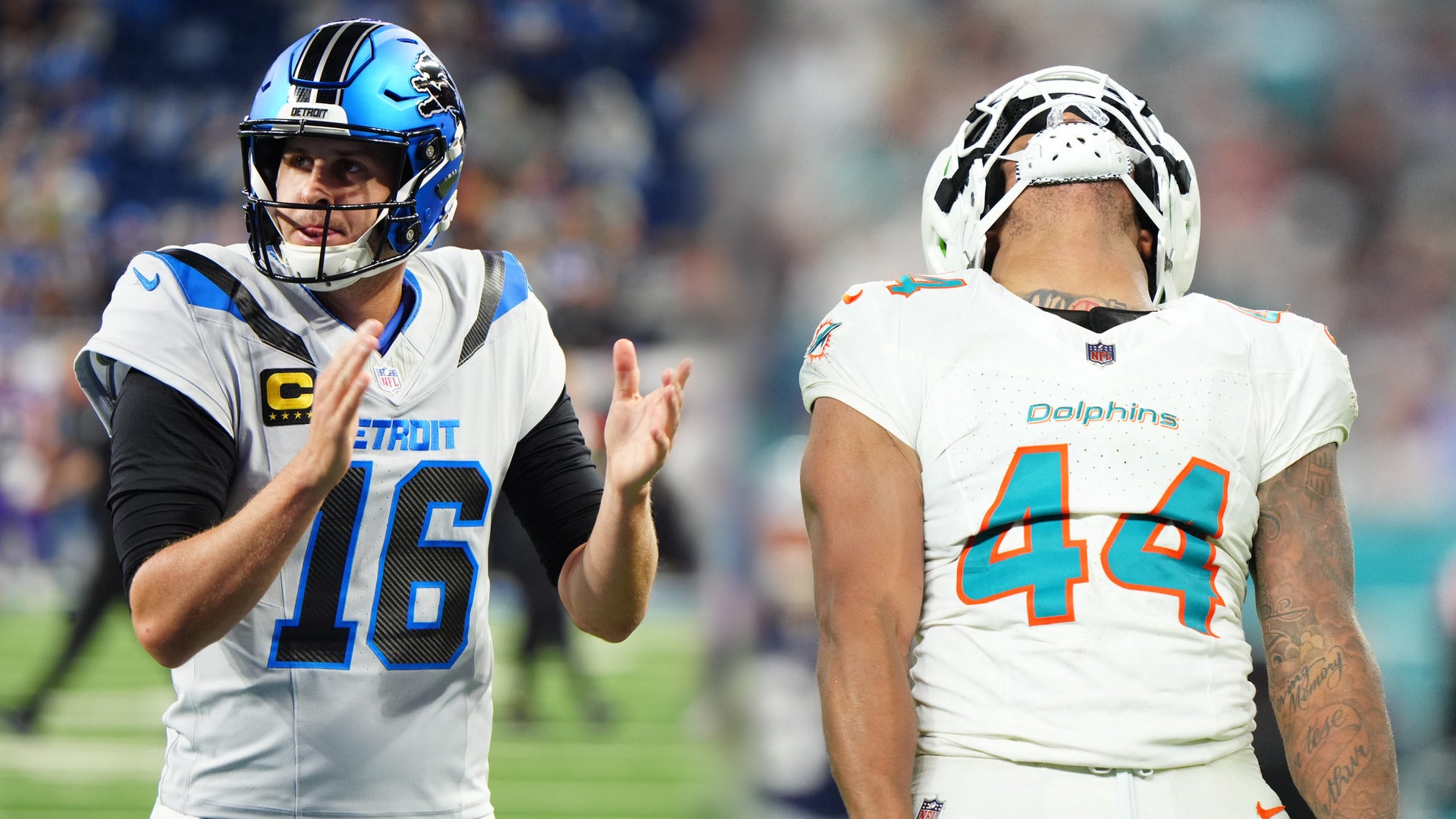
The first thing to know about the Miami Dolphins for the Detroit Lions is that this game could be a lot more uncomfortable than their record makes it look. The Dolphins are 1-6. You see that next to the Lions on the schedule and you start thinking this is a chance for Detroit to breathe a little.
Not so fast. Last Sunday, Miami had New England down 13-3 at halftime before losing 24-19. The week before that, the Dolphins went on the road and beat the Jets for their first and only win of the season. There are some things here that deserve your attention, and the biggest one is how Miami can get after Jared Goff without sending everybody to do it.
Miami doesn’t need to blitz to get home
When we talked about Minnesota last week, a huge part of the conversation was the blitz. How many guys are coming? Where are they coming from? Can Detroit identify it and get the ball where it needs to go?
Miami gave New England a different problem. According to Next Gen Stats, the Dolphins pressured Patriots quarterback Drake Maye on 57.1% of his first-half dropbacks last Sunday. They blitzed him once in that half. One time.
That’s the part I want you to remember. Miami was making the quarterback uncomfortable while keeping defenders available in coverage.
Dolphins edge rusher Chop Robinson had eight pressures and two sacks in that game. Miami’s official breakdown, citing Next Gen Stats, has his pressure rate at a league-leading 26.6% through Week 8. That’s somebody Detroit has to account for.
My concern for the Lions is what happens when the protection needs help. If you keep a tight end in, you’ve taken a receiving option out of the play. If the running back has to stay and protect, that’s another player who isn’t immediately available for Goff. Those can be necessary decisions, but they have a cost. That’s especially true when the defense hasn’t had to empty out its coverage to create the pressure.
That’s why I’ll be watching Detroit’s early-down offense so closely. Can the Lions keep enough of the playbook available that Miami has to respect the run? Can they create manageable passing situations? Can Goff get an answer quickly when the defense wins a matchup? Detroit shouldn’t spend the afternoon in obvious passing situations, asking its protection to hold up over and over.
There are big plays to be had
There’s an important second half to this conversation. Miami lost that New England game, and there were opportunities against its defense. Maye threw two touchdown passes that went for more than 40 yards in the second half.
Dolphins head coach Jeff Hafley acknowledged afterward that a handful of big plays accounted for a substantial part of New England’s passing production. He also pointed to missed chances to finish plays on the ball.
So my read is that Detroit should prepare to attack those opportunities. You don’t have to turn every possession into a deep-ball contest. Still, if the protection holds and Jameson Williams gets a favorable matchup, that’s the chance you want to take. The challenge is giving that route time to develop without spending the entire game waiting for it.
That’s the balance I’m looking for from Lions offensive coordinator Drew Petzing. Give Goff answers he can use immediately, make Miami defend the run, and have something ready when a big opportunity presents itself.
Malik Willis makes third down a problem
Now we have to talk about the other side, because Dolphins quarterback Malik Willis is making this offense worth paying attention to.
Miami converted seven of its 14 third downs against New England. Through that game, the Dolphins were converting 42.7% for the season, ninth in the league. Willis accounted for six of those seven conversions Sunday, both through the air and on the ground.
You have to understand what that means for Detroit. Getting Miami to third down doesn’t automatically mean you’ve taken control of the possession. You can cover the initial route and still have to deal with Willis moving. You can get pressure and still have to make sure there’s somewhere for that pressure to send him.
My concern would be defenders getting impatient. Everybody sees a chance to make a play, somebody leaves his responsibility, and suddenly the quarterback has an escape route. Just like when the Lions faced Bryce Young, that pressure has to mean something. Otherwise, this is a guy who can get out, get around, and make you pay. I’d take a controlled rush that forces a difficult throw over a near sack that turns into a first down.
Miami has shown it can be physical on the ground, too. Against the Jets, the Dolphins ran for 156 yards. They took possession with 3:17 remaining, protecting a three-point lead, and New York never got the football back. Willis converted the fourth-and-1 that finished it.
The Lions will also have a different linebacking corps in this game. Jack Campbell did not practice Wednesday as he continues to recover from the neck injury he suffered against Minnesota. At this point, we still don’t know whether he’ll play Sunday.
We also don’t know if cornerback D.J. Reed and safety Brian Branch will play. Reed did not practice Wednesday because of his hip injury, while Branch was limited as he works through the concussion protocol.
A shorthanded Detroit defense against a team that’s good at converting on third down is a spot where Miami can make you pay. It also happens to be a spot where the Lions have had some trouble.
The Dolphins are 1-6, and they feel like a beatable team. But Miami has a few counterpunches that could make Detroit feel uncomfortable Sunday. We’ll see what happens.
